Exhibitions
The infinite dialogue between matter and space by Lee Ufan
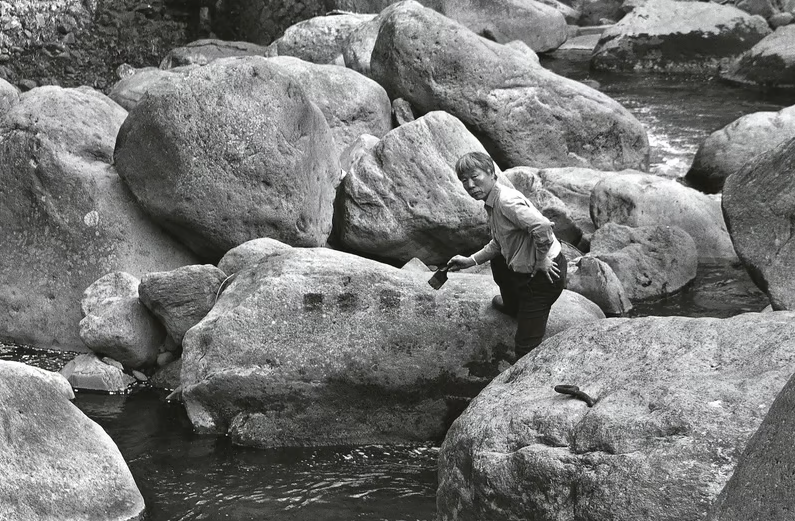
The work of Lee Ufan (South Korea, 1936) invites us to pause, observe, and discover what lies between things. Stones, steel plates, glass surfaces, and isolated brushstrokes articulate an artistic language in which matter ceases to be a passive element and becomes the protagonist of a perceptual experience. Under the title Fragments of Infinity , the Serralves House and Park in Porto present the first major exhibition in Portugal, running until March 2027, of one of the key artists and thinkers of postwar art, whose career has questioned the limits of the art object and its relationship with the environment.
A central figure and leading theorist of the Japanese Mono-ha movement, which emerged in the late 1960s and early 1970s, Lee Ufan helped shift the focus from representation to a direct encounter with materials. Artists associated with this movement worked with raw materials—stone, wood, metal, or glass—arranged through minimal intervention. The aim was not to transform matter, but to reveal its properties, its presence, and the relationships it establishes with the surrounding space.
This quest also finds an echo in his connection to Dansaekhwa , the Korean monochromatic painting movement that developed during the 1970s. In his canvases, Lee employs restrained, often single, brushstrokes on carefully prepared surfaces. Each gesture acquires a temporal and meditative dimension: the brushstroke engages in dialogue with the void, while the rhythm of the execution opens a space for contemplation. The painting does not merely depict an image, but rather makes visible the time and presence that sustain it.
In the realm of sculpture, the concept of Relatum , adopted by the artist in the early 1970s, is essential to understanding his thinking. The term shifts attention from the isolated object to the relationships established between different elements. Large natural stones, understood as condensations of geological time, come into contact with industrial materials, such as steel plates or glass. From these combinations arise situations in which gravity, tension, and distance acquire a presence as significant as the materials themselves.
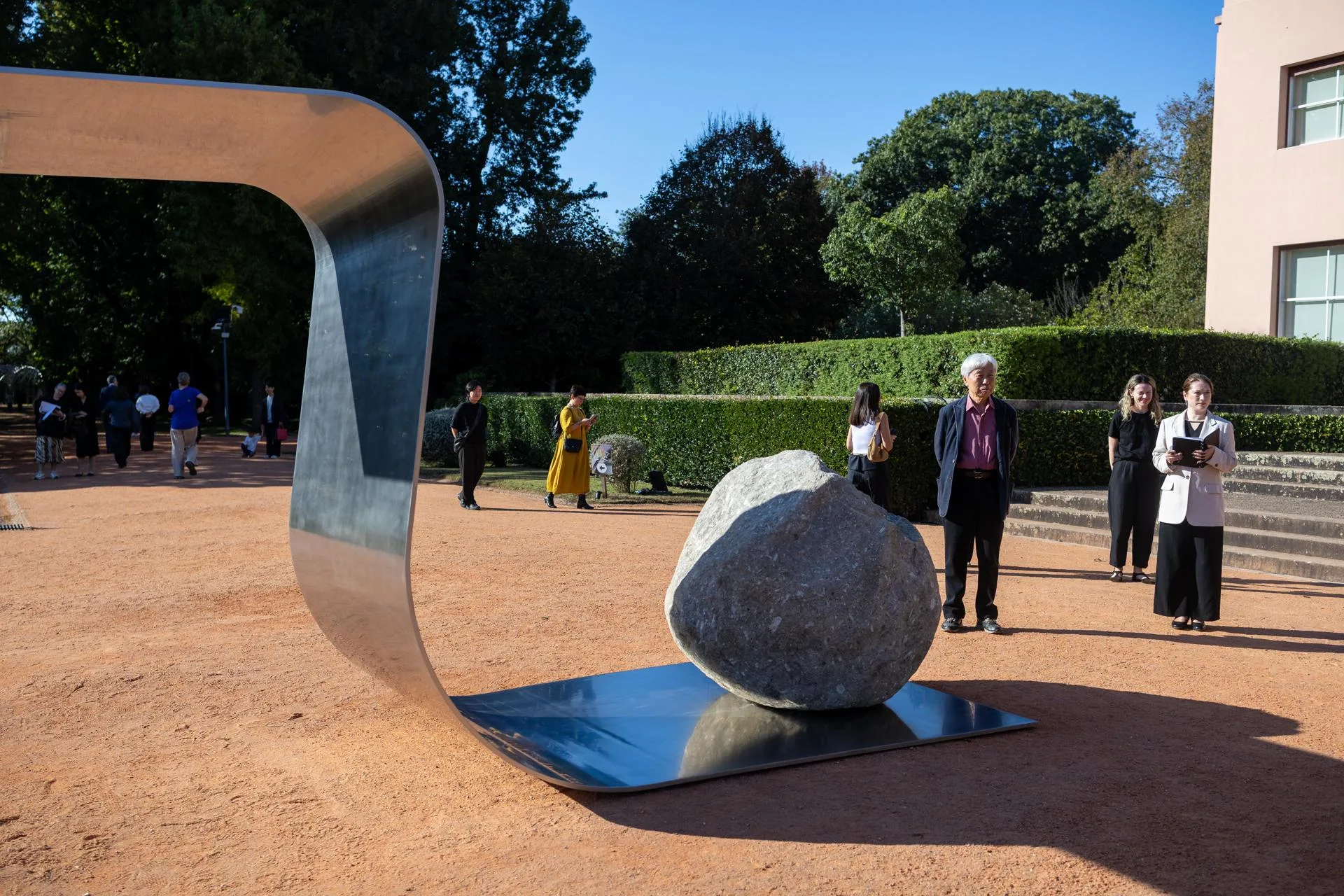
The work is thus constructed from a network of correspondences. Stone and steel, brushstroke and surface, object and viewer participate in a dialogue that does not seek a definitive conclusion. Meaning emerges in the space between, in that which connects the elements and modifies our perception of them. Absence does not constitute a sterile void, but rather a condition that allows us to recognize presence; likewise, interior and exterior cease to be opposing categories and become realms of exchange.
In Fragments of Infinity , this research unfolds between the architecture of the Serralves House and the park landscape, establishing a route in which the works relate both to their locations and to those who contemplate them. The exhibition brings together three outdoor sculptures, conceived to foster direct encounters between stone, steel, and the natural environment; six paintings, one of them created specifically for the site; and three sculptures installed inside the house.
The arrangement of the pieces reveals how the same investigation takes on different forms depending on the context. In the park, the materials interact with the vegetation, the light, and the variations of the landscape. In the architectural interiors, the sculptures and paintings establish new tensions with the building's structure, altering the perception of its spaces. Each work offers a unique experience, but all share a desire for openness toward their surroundings.
Throughout his six-decade career, Lee Ufan has developed a practice that questions the autonomy of the artwork and asserts its capacity to activate relationships. In Serralves, this idea takes on a particularly significant dimension: the house and the park become settings for a conversation between nature and construction, matter and emptiness, presence and absence.

You may be
interested
...