News
Six Colombian museums rebel against the ideological removal of works from the National Museum
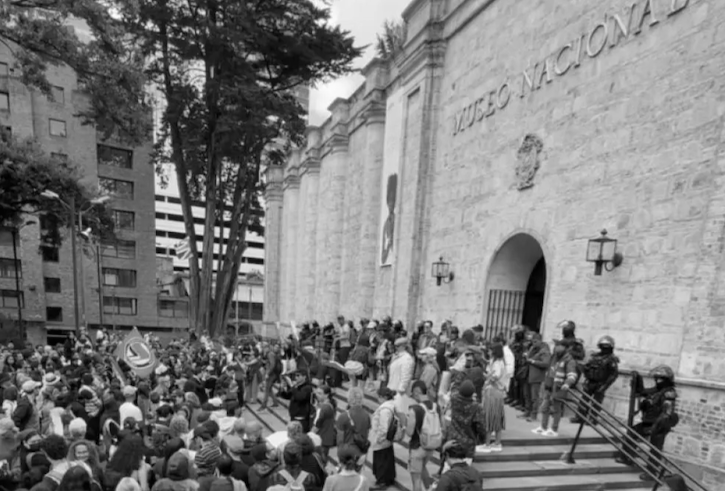
The removal of artworks and documents from the National Museum of Colombia has opened a new front in the debate surrounding historical memory, cultural freedom, and the role of museum institutions in constructing the collective narrative. Six modern art museums in the country have publicly expressed their rejection of the removal of various pieces from their permanent collections and have called on the Ministry of Cultures, Arts, and Knowledge to guarantee the autonomy of these institutions to decide how they document, interpret, and present Colombian history.
The joint statement, addressed to the public and the Minister of Culture, Paola Holguín, is signed by the Museum of Modern Art of Bogotá (MAMBO), the Museum of Modern Art of Barranquilla (MAMB), the Museum of Modern Art of Cartagena, the Museum of Modern Art of Medellín (MAMM), the Rayo Museum in Roldanillo, and the Museum of Modern Art of Tolima. The six institutions warn that removing artworks from public view for ideological reasons limits the understanding of the past and excludes experiences, struggles, and trajectories that form part of our shared memory.
The conflict became visible on Thursday, October 15, when several rooms at the National Museum in Bogotá appeared empty after the removal of approximately thirty works of art and objects. The pieces were related to feminist and LGBTQ+ movements, victims of political violence, the Patriotic Union, and the 2016 peace agreement between the Colombian government and the FARC. To date, the museum has not officially confirmed the total number of items removed nor provided details about the reasons for each decision.
The timing of the event, coinciding with President Abelardo de la Espriella's visit to the Ministry of Culture, has intensified the criticism. During that meeting, the president announced a campaign against what he called "Wokism" and stated that he had instructed the minister to remove from public spaces any representations that, in his opinion, constituted an exaltation of terrorism. Among the figures mentioned was Carlos Pizarro Leongómez, former commander of the M-19 guerrilla group and presidential candidate assassinated in 1990. The president described the Ministry as the future epicenter of a "cultural counterrevolution."
According to reports published by Colombian media, the items removed included a gay pride flag belonging to activist Elizabeth Castillo, a piece of lesbian content from a 2006 LGBTI march campaign, a photograph by Humberto Rincón Perfetti taken during a demonstration by the group, and a printed material from the Sí Mujer Foundation dedicated to women's reproductive rights.
The intervention also reportedly affected political and historical documents. These included campaign posters for Bernardo Jaramillo Ossa, the Patriotic Union candidate assassinated in 1990, and Carlos Pizarro. Additionally, it has been reported that objects related to the signing of the 2016 Peace Agreement were removed, along with numerous photographs from the so-called "Wall of Diversity," designed to reflect on the country's cultural, social, and political pluralism.
In light of this situation, the six museums emphasize that the role of a cultural institution is not to impose a single interpretation of the past, but to create spaces where diverse memories and perspectives can coexist, confront one another, and engage in dialogue. They maintain that even when the narratives presented are uncomfortable or provoke disagreement, their presence contributes to a more complex understanding of society.
The controversy, therefore, transcends the discussion of specific pieces. It affects the responsibility of public museums in the preservation of documentary and artistic heritage, the representation of historically marginalized groups, and the possibility of critically examining conflictive episodes in national history. When a work disappears from a gallery, not only does the exhibition change: the framework from which a society can recognize itself and discuss its past is also altered.
You may be
interested
...