
Exhibitions
Where the memory of the dead dwells
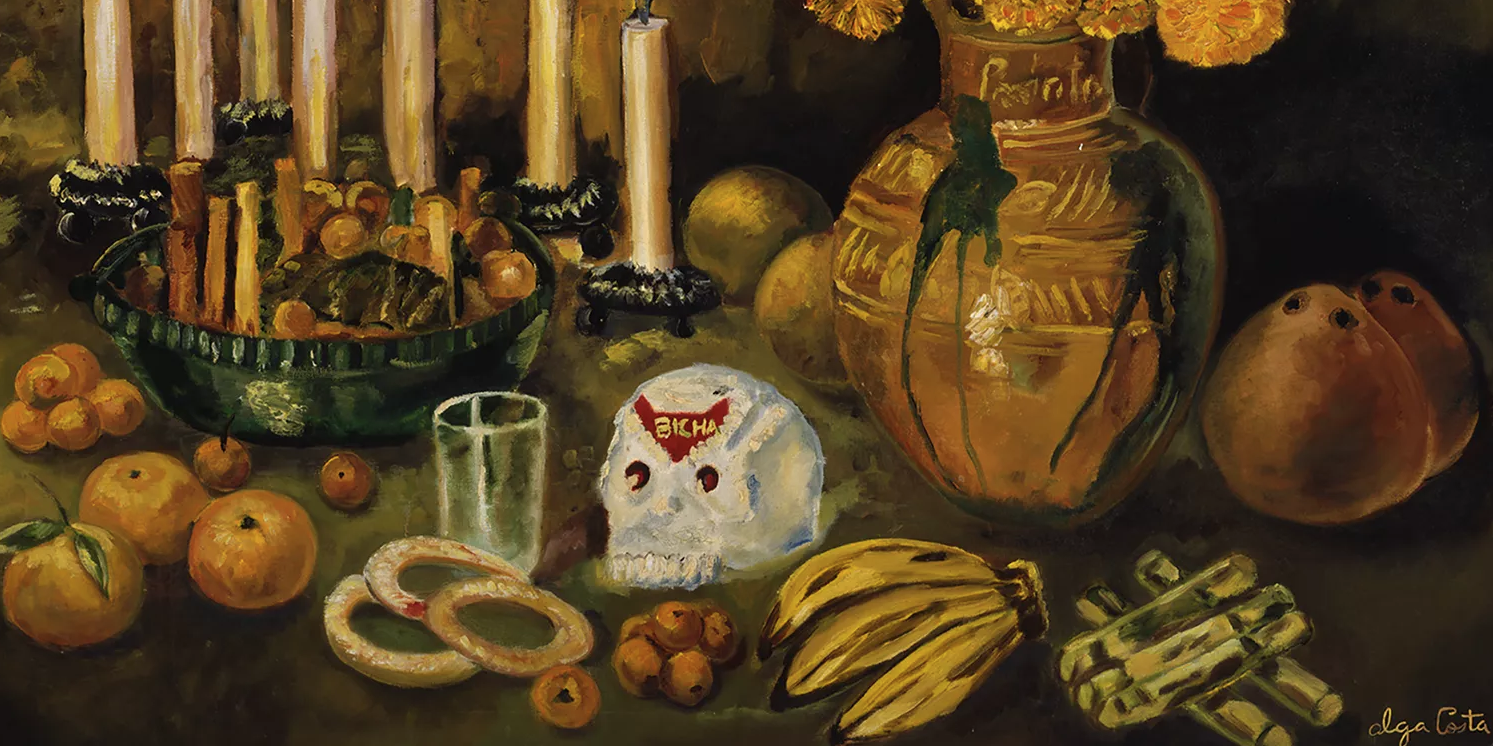
Memory does not disappear with death: it finds refuge in the objects, images, rituals, and stories that a community transmits from generation to generation. This idea forms the basis of Where Memory Lives: 40 Years of Día de Muertos , the exhibition with which the National Museum of Mexican Art in Chicago commemorates four decades of its annual celebration dedicated to one of the most deeply rooted traditions of Mexican culture. Open from September 25 to November 29, 2026, the exhibition offers a retrospective look through the museum's permanent collection to examine both the artistic evolution of this holiday and the institution's own history.
Curated by Dolores Mercado, Elisa Soto Sánchez, and Cesáreo Moreno, the exhibition establishes a dialogue between art, identity, and memory. Just as the Day of the Dead celebrations keep those who have passed away present, the museum preserves cultural memory through the conservation and dissemination of artworks. Four decades of exhibitions allow us to observe how a living tradition has been reinterpreted through different languages, generations, and contexts, without losing its connection to the communities that maintain it.
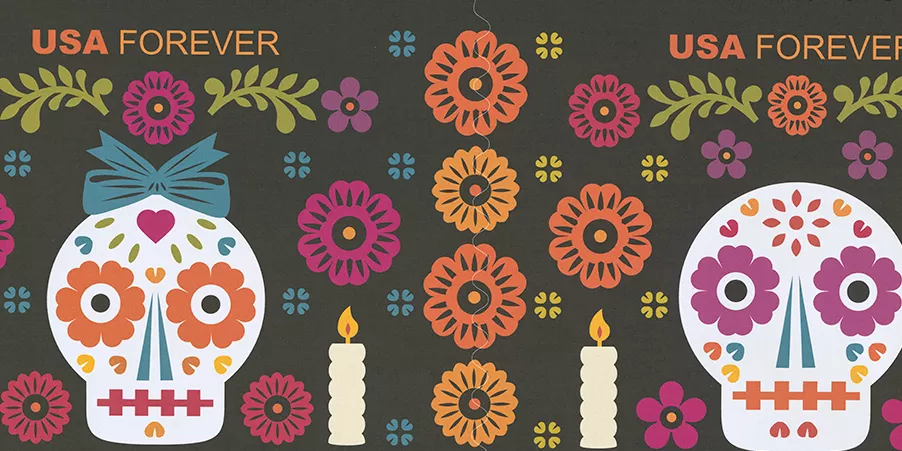
Rooted in ancient Mesoamerican beliefs and Catholicism, the Day of the Dead has evolved over the centuries, incorporating customs and practices from different regions of Mexico. Every November 1st and 2nd, Mexican families from both sides of the border and from other parts of the world gather to symbolically welcome the souls of their loved ones and renew the bonds of affection that survive their absence. The offerings, images, and commemorative objects are not merely ritual expressions: they are ways of narrating life, transmitting knowledge, and reaffirming cultural identity.
The exhibition brings together works by a wide range of artists, including Josefina Aguilar, Leonora Carrington, Olga Costa, Nicolás de Jesús, Carmen Lomas Garza, Manuel Manilla, Leo Matiz, Roberto Montenegro, José Guadalupe Posada, Patssi Valdez, and Alfredo Zalce. The presence of artists from different eras allows for the tracing of a visual genealogy in which popular representations, contemporary approaches, and the multiple interpretations of death within Mexican culture coexist. The selection also includes artists such as Elena Climent, Ester Hernández, Alejandro Nava, Emmanuel C. Montoya, and George Yepes, among many others, broadening the spectrum of sensibilities and perspectives gathered around this celebration.
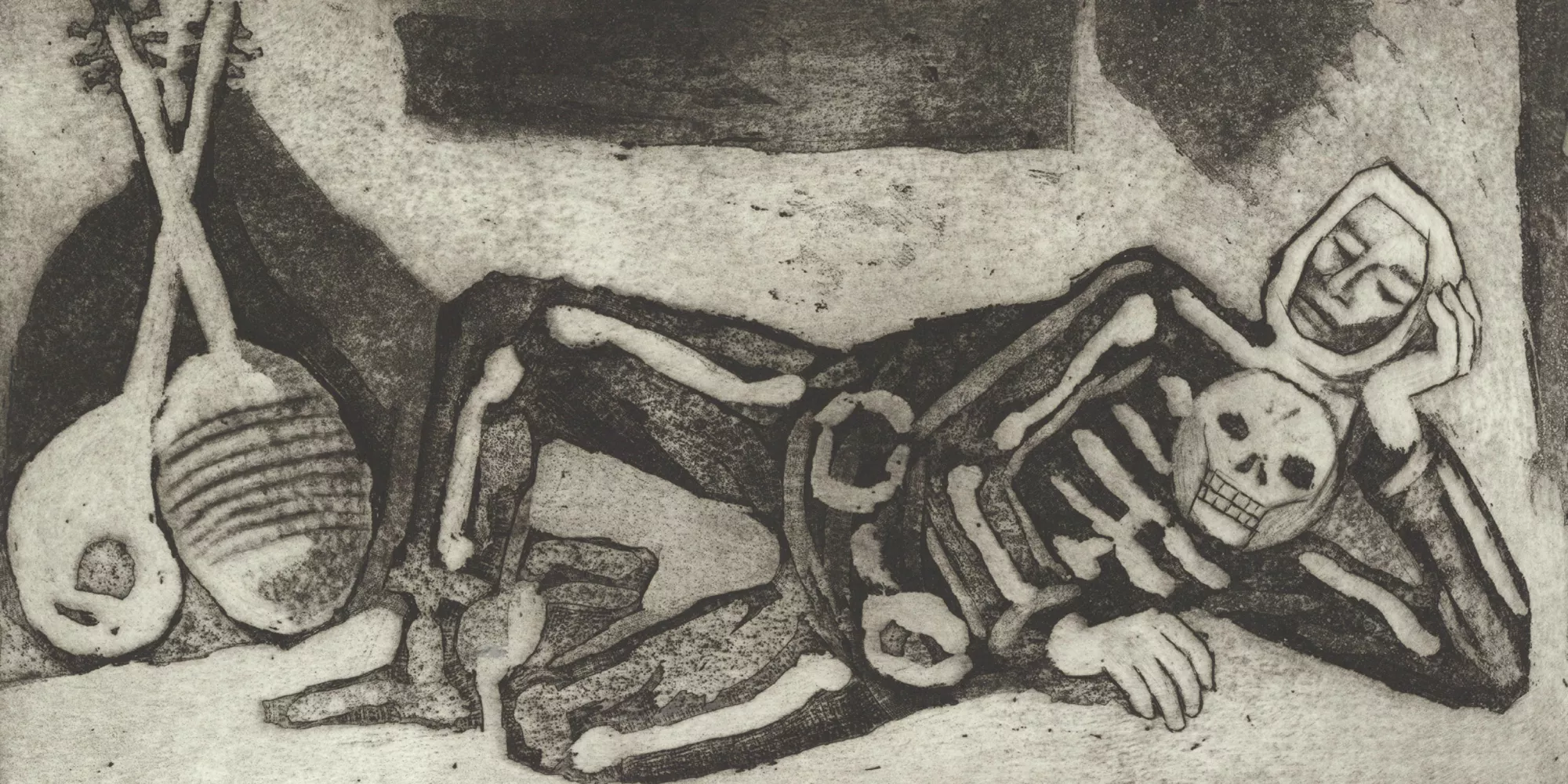
The installations and offerings also occupy a central place along the route. The mural by Miguel A. Del Real and the contributions of Demetrio García Aguilar from Oaxaca; the Ricardo Linares family from Mexico City; David Rios from Washington; Fuentes Rojas, also from Mexico City; CHema Skandal! from Chicago; the Institute for Latino Studies at the University of Notre Dame; and Robert Valadez and Gregorio Gómez from Chicago, showcase the diverse ways in which this tradition manifests and is transmitted. The participation of artists, families, and collectives further underscores the communal nature of a celebration that finds in the act of remembering a form of cultural continuity.
More than a commemorative retrospective, Where Memory Dwells offers a reflection on the role of museums as spaces for transmitting and safeguarding heritage. By bringing together four decades of artistic production linked to the Day of the Dead, the National Museum of Mexican Art highlights that traditions do not remain static: they transform, incorporate new voices, and acquire new meanings as the communities that sustain them change.

You may be
interested
...