
Opinion
Producing the border: art, mediation, and the public sphere
In 2019, a boat over thirteen meters long crossed the center of Cúcuta with more than a thousand people. It had crossed the Táchira River daily between Colombia and Venezuela and, transformed by Adrián Preciado and Juan Carvajal Franklin into MiSsÉxodo / Estandarte para golondrinas (My Exodus / Banner for Swallows) , it led the Caravan of Brotherhood. A survival infrastructure occupied the city as a public work. The scene posed a question: what does it mean to produce art from a border and participate in the forms that make it visible?
Life in Cúcuta is intertwined with Venezuela through bridges, informal crossings, trade, and binational families. In August 2015, the government of the Bolivarian Republic closed the border crossings in the state of Táchira; deportations and forced returns separated families and disrupted this daily routine. The subsequent Venezuelan exodus transformed the city into one of its main corridors. If the border regulates bodies, rights, and resources, interpreting it from Cúcuta allows us to question hierarchies between center and periphery, the intersection of scales, and the friction between art, social action, representation, and agency.
Fundación El Pilar has been working since 2011 on the material, visual, social, and institutional structures that shape this territory. From the 2015 upheaval emerged JUNTOS APARTE, selected for the first BIENALSUR in 2017 and since then part of its permanent program. Three biennial editions as an international event have brought together museums, heritage buildings, and public spaces; since 2023, it has functioned as an ongoing platform for research-creation, training, and outreach.
More than 120 artists from 43 countries, at different stages of their careers, have worked within the same curatorial framework. In this framework, Cúcuta modifies artworks, fosters relationships, and redirects international attention toward the region's creative scene. Thus, artists from the border region develop their careers, visitors return at different stages of their careers, and from these encounters emerge new works, collaborations, and exchange networks. Among these connections, the collaboration with the Institut Ramon Llull has sustained a cultural exchange between Cúcuta and Catalonia since 2017.
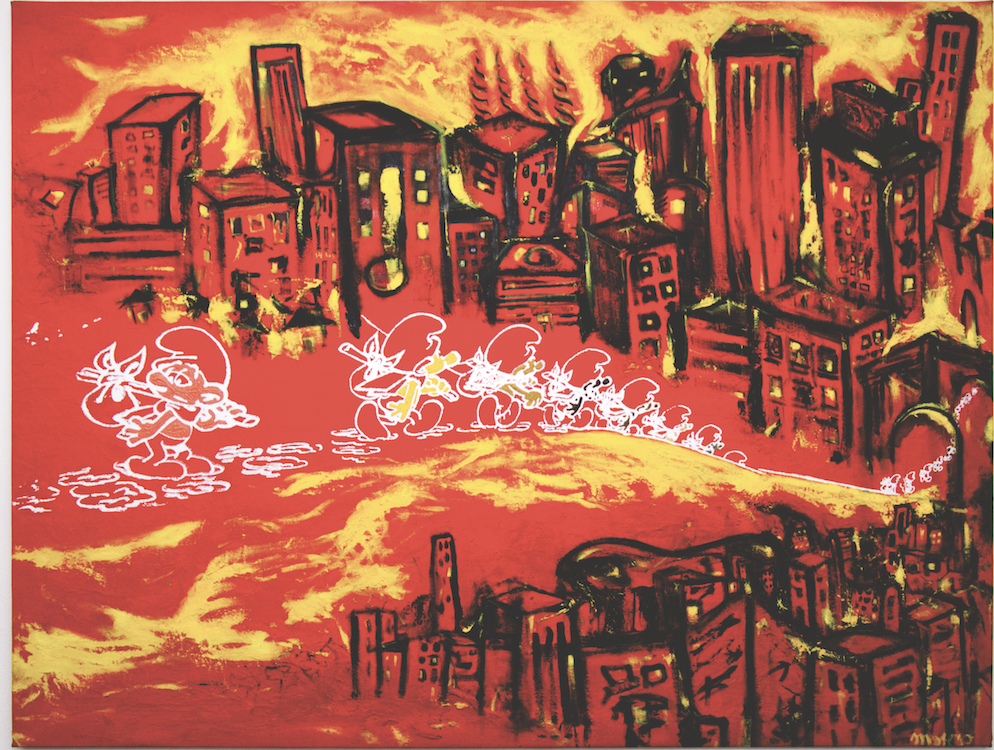
Goodbye Sweet Home, by Andrés Moreno Hoffmann, to the collective exhibition Es-ta-do-na-ción, to the Museo Norte de Santander and in different countries of the city of Cúcuta, within the framework of JUNTOS APARTE 2019.
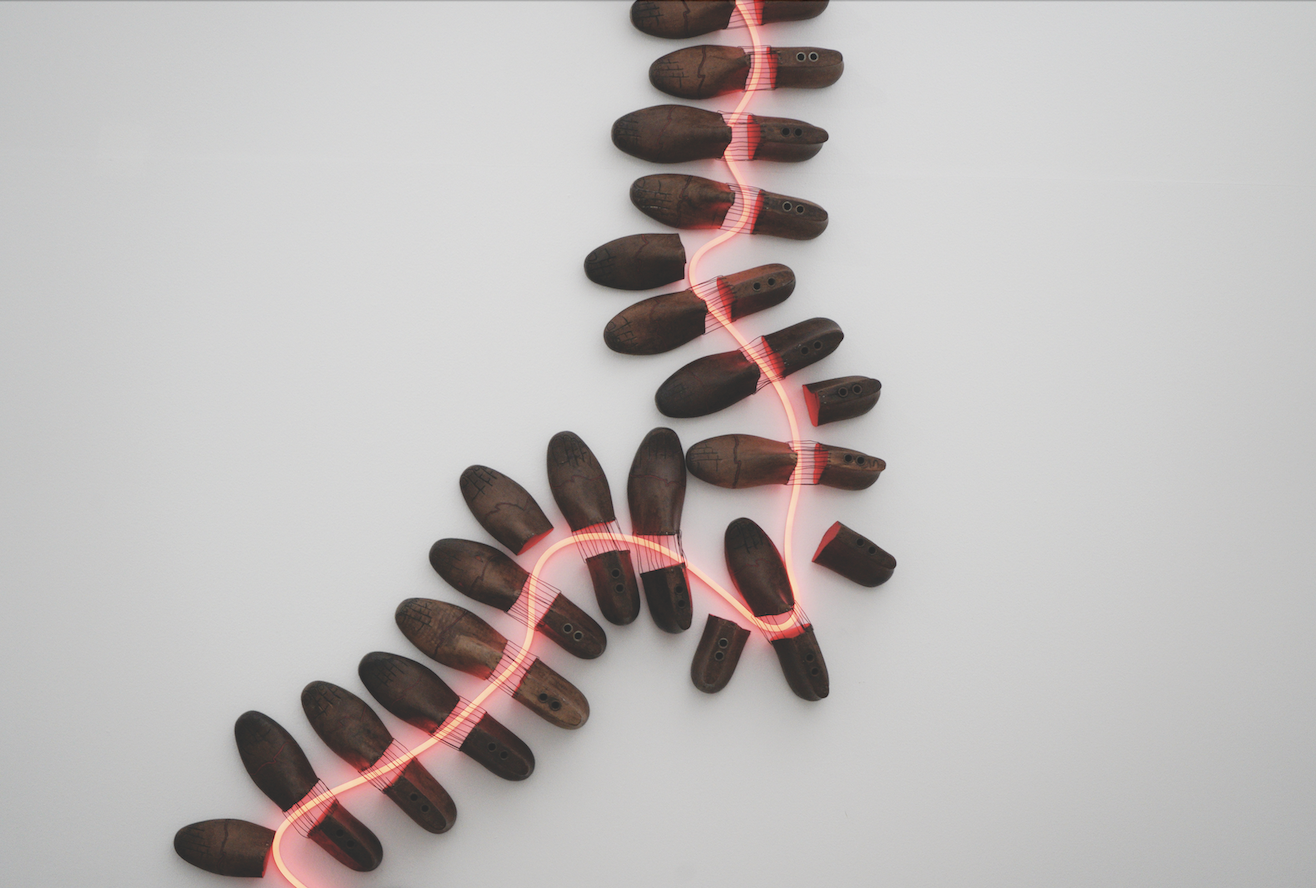
Sometimes, installing a work of art also involves altering its form. In 2019, as part of their Social Geometry series, the Spanish collective PSJM produced Colombian Immigration to Venezuela and Venezuelan Immigration to Colombia from 1970 to 2018 , a mural that made the historical shift of both migration flows legible. Each venue required reworking its support: a freestanding wall avoided intervention at the Clock Tower Museum House in Cúcuta; at the National Museum of Colombia in Bogotá, the wall was raised and suspended; at MUNTREF – Museum of Immigration and Center for Contemporary Art, in Buenos Aires, the artwork intervened directly on the wall. In the case of Betsabée Romero, the local shoemaking tradition and the wounded feet of migrants led to a reformulation of a previous work. In Your Footprint Is the Path and Your Path Is of Peace , a neon line traces the border and passes through wooden shoe lasts carved with feet and stitched with wire. Both processes show that the border also acts on the forms that seek to represent it.
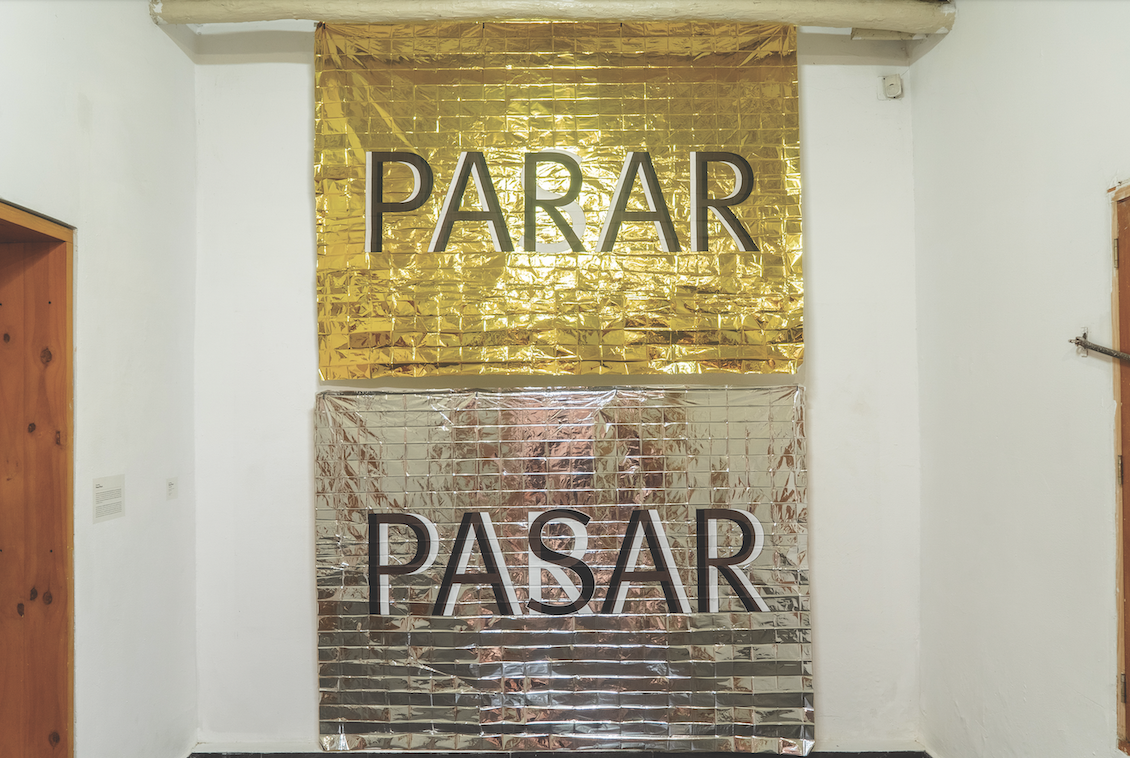
Pass Stop, by Teresa Mulet, at the individual exhibition Control of Flows, at the Norte de Santander Museum and in different countries of the city of Cúcuta, within the framework of JUNTOS APARTE 2025.
Antonio Caro arrived at JUNTOS APARTE with a body of work that had been developing for over twenty years. In 1996, Luis Ángel Parra and Ricardo Benaim had sent him, for Proyecto MAPA, a map without borders between Colombia and Venezuela. Caro expanded it to include Ecuador and Panama, thus restoring the outline of Gran Colombia, a republic formed by territories that today correspond to the four countries. In 2017, he revisited this gesture in Cúcuta and began the Gran Colombia trilogy with a participatory action alongside citizens of those four nations. Two years later, he developed a visual creativity workshop with emerging artists from the border region, which resulted in the exhibition República Andina (Andean Republic ). In 2021, within the framework of JUNTOS APARTE and the bicentennial of the Constitution of Cúcuta, the Gran Colombian Artistic Encounter concluded the trilogy as a posthumous tribute. Caro's sketch was interpreted by forty-four artists, and their proposals took the form of large-format flags raised in the Gran Colombiano Park of Villa del Rosario, where the Constituent Congress of 1821 met.
A single landscape brought together proposals from Antoni Muntadas, Cecilia Vicuña, Cildo Meireles, Luis Camnitzer, Jordi Colomer, Ángela Bonadies, Taller El Hueco, Wilmer Useche, Fernando Bryce, and Amparo Cárdenas, among many others. Two centuries later, these flags returned this border territory to the center of the continental imagination.
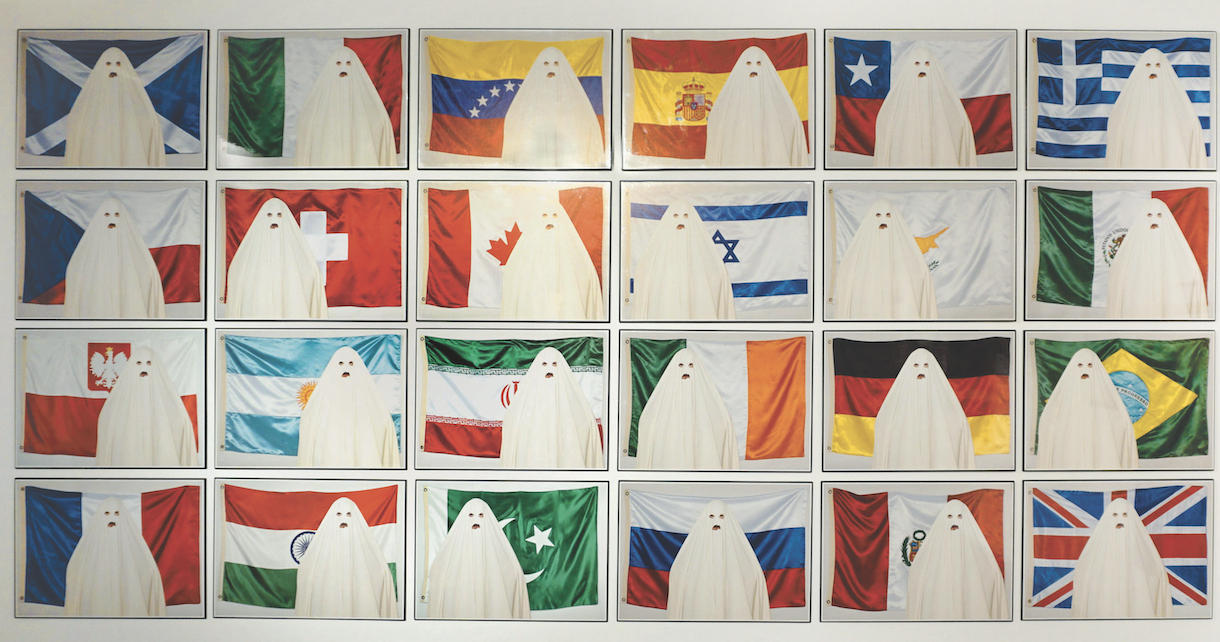
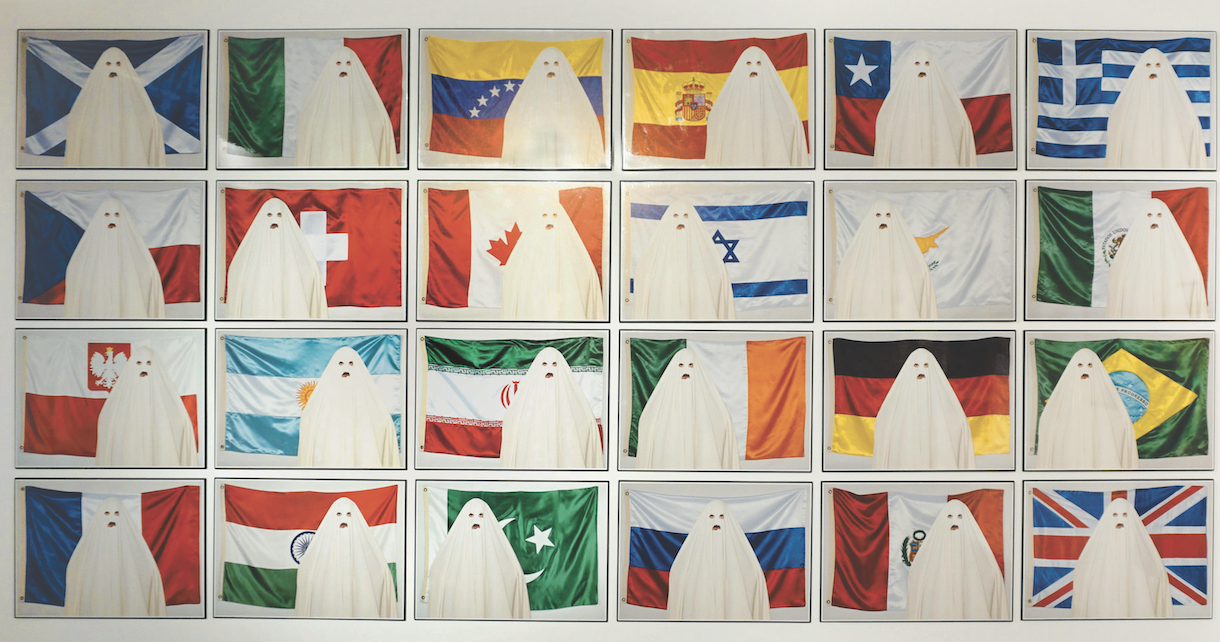
miMundoscuro, by Juan Pablo Echeverri, at the collective exhibition Entre nosotros y los otros, at MUNTREF, in Buenos Aires, within the framework of JUNTOS APARTE 2021.
Public space enters the works through those who sustain and traverse it. In 2017, Teresa Margolles began an investigation with the women who transported goods between Colombia and Venezuela to survive. From this process emerged Carretilleras sobre el Puente Internacional Simón Bolívar (Women Cart Drivers on the Simón Bolívar International Bridge ). In Grabado a fuego (2025), by Farrah Karapetian, thirteen women leaders from the city walked linked by a rope to La Victoria Plaza. Dressed in ponchos with cyanotypes representing their own experiences, they composed an ephemeral mural with their bodies. Artists such as Giuliana Racco, Carmen Ludene, Fernando Arias, Melle Smets, Sebastián Sánchez, Ángel Machuca, Teresa Mulet, Xavi Muñoz, Ramón Mateos, Avelino Sala, Jorge García, Mauricio Sánchez, Yosman Botero, Armando Ruíz, Samir Quintero, Viruzs, Gabriel Castillo, Fabián Romero and Yann Gross have also developed long-term in situ processes, along with the duos formed by José Luis Zúñiga and María Villacorta, and by Ana María Millán and Andrés Sandoval.
International circulation extends what the place contributes to the works. In the series Open the Bridges , Marcelo Brodsky intervened in images by the Cúcuta-born photojournalist Juan Pablo Cohen. This movement reached the national heritage when El Pilar donated eleven works from JUNTOS APARTE to the National Museum of Colombia, destined for Casa Común , a future gallery dedicated to the country's plurality. The border thus enters into the institutional infrastructure with which Colombia constructs its own image.
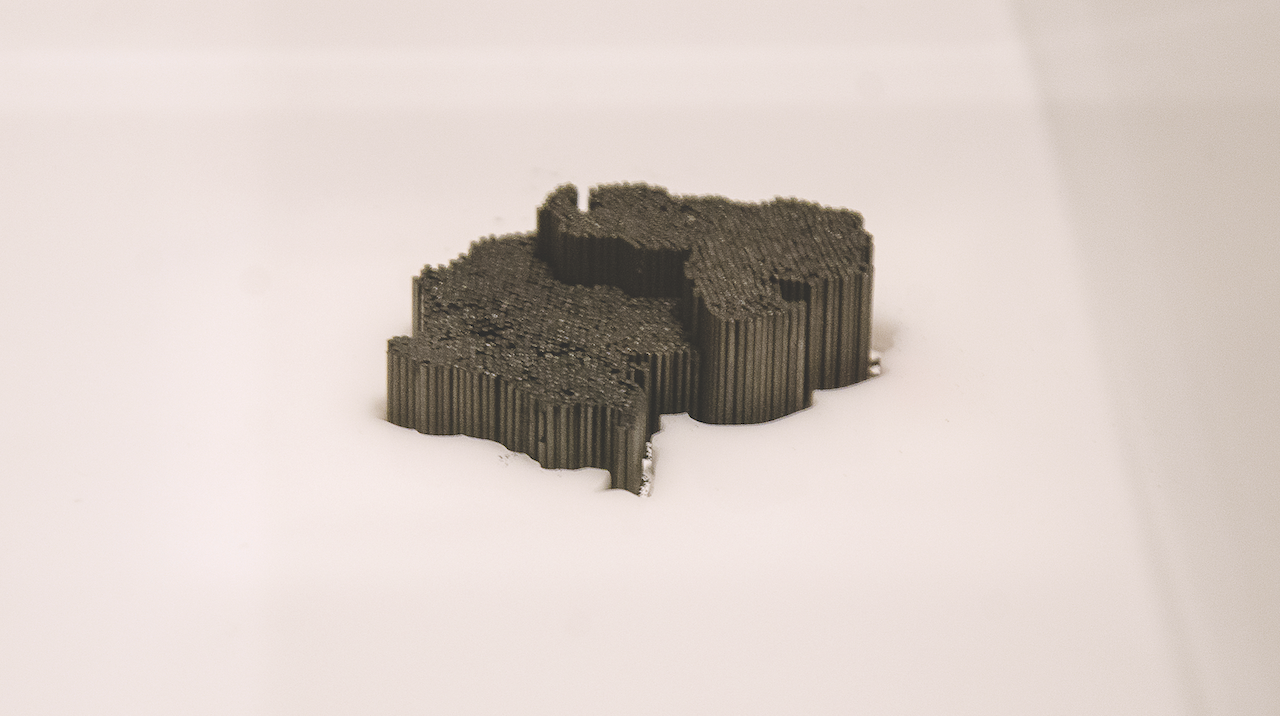
Alternancia, by Yosman Botero, to the collective exhibition JUNTOS APARTE, to the National Museum of Colombia, to Bogotà, within the framework of JUNTOS APARTE 2021.
At El Pilar, mediation connects curatorial practice with education and psychosocial support. This relationship is developed in projects such as KAIRÓS - School of Integration and Civic Culture, where children and adolescents explore rights, identity, care, and human mobility through six artistic languages; psychosocial support extends to their families. These experiences have guided other initiatives, including the mediation of Hay Futuro Si Hay Verdad (There Is a Future If There Is Truth) , an exhibition of the Final Report of the Colombian Truth Commission, for which the Foundation trained mediators and designed a guide and a protocol for psychological first aid.
Care transforms the conditions of artistic production. Exhibitions are dismantled; relationships, images, and their effects remain. Each project leaves concrete consequences for those who participated, for the representation of the territory, and for what institutions choose to preserve. Producing the border implies acknowledging these consequences and taking a stand in the struggle for the public sphere.
You may be
interested
...