Exhibitions
The limits of the gaze and things as they are
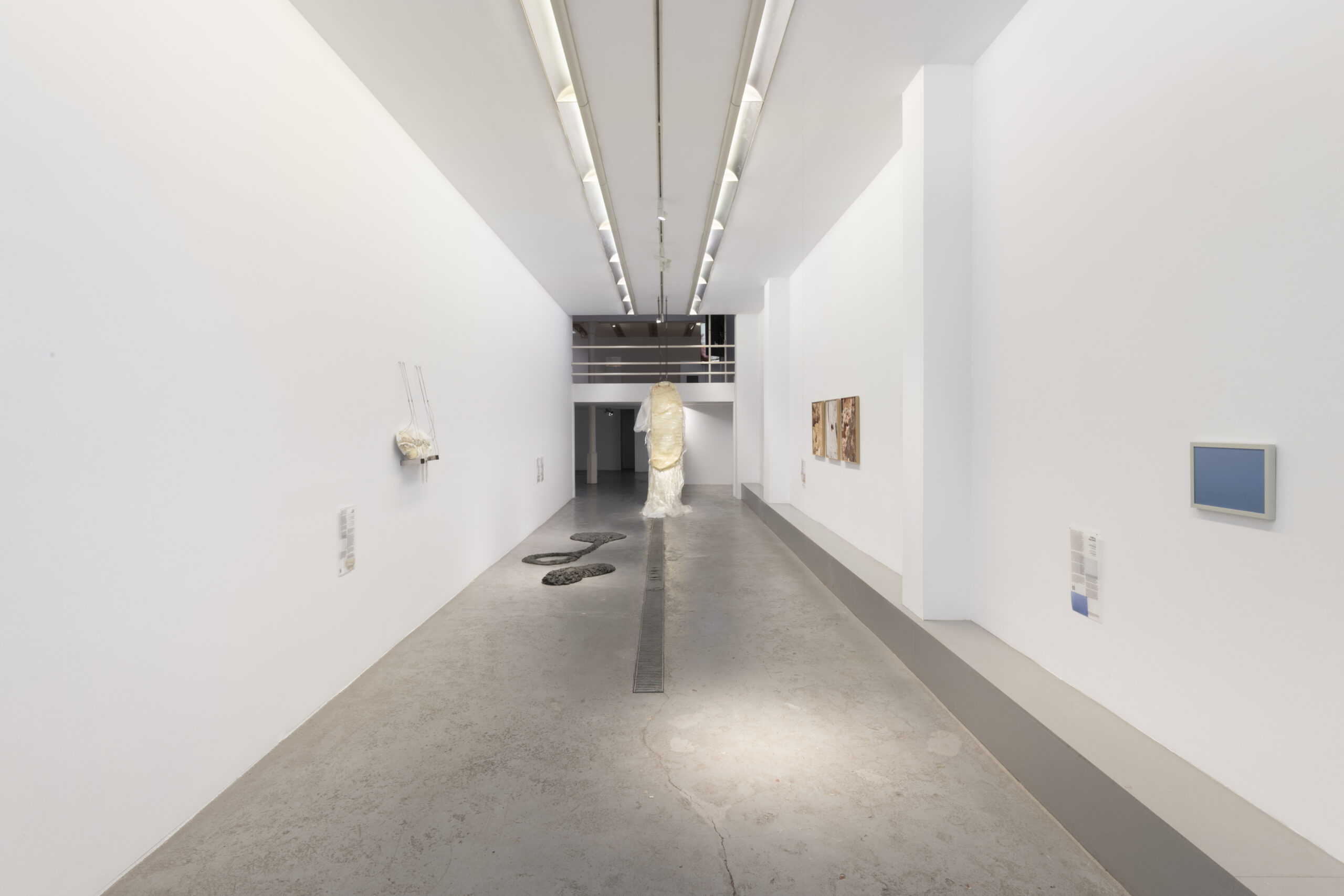
Fundació Úniques, under the curatorship of Mariella Franzoni, presents Les coses com són , a multidisciplinary exhibition that brings together nine artists from different generations and backgrounds, and which will be on display until December 19.
This is a sample that takes as its starting point the dilogy of the word “thing” understood both as a material entity and as an indeterminate subject; a word that is both elusive and common which, either due to imprecision or what is often determined as lexical poverty, usually takes the place of another word that is often more rigorous or determining. However, this precision circumscribes the meaning and, therefore, becomes delimiting and can fix identities. The “thing” or “things”, on the other hand, offer an imprecision from which poetic correlations and diverse conceptual affinities can converge, capable of opening borders and expanding meanings.
From this hinge, Franzoni configures an exhibition in which the subject becomes the main motive for creation and essayistic proposal of the artists Rosa Amorós, Paula Artés, Lucía C. Pino, Carmen Calvo, Júlia Creuheras, Agnès Essonti Luque, Teresa Gancedo, Violeta Mayoral and Sejal Parekh.
Since matter, at first glance and reading, can be anything that occupies a space and lends itself to a form, the exhibition takes advantage of this semantic breadth to navigate and bring diverse practices and subjectivities into dialogue. The “thing” here acquires a material presence without this concretization exhausting its initial indeterminacy.
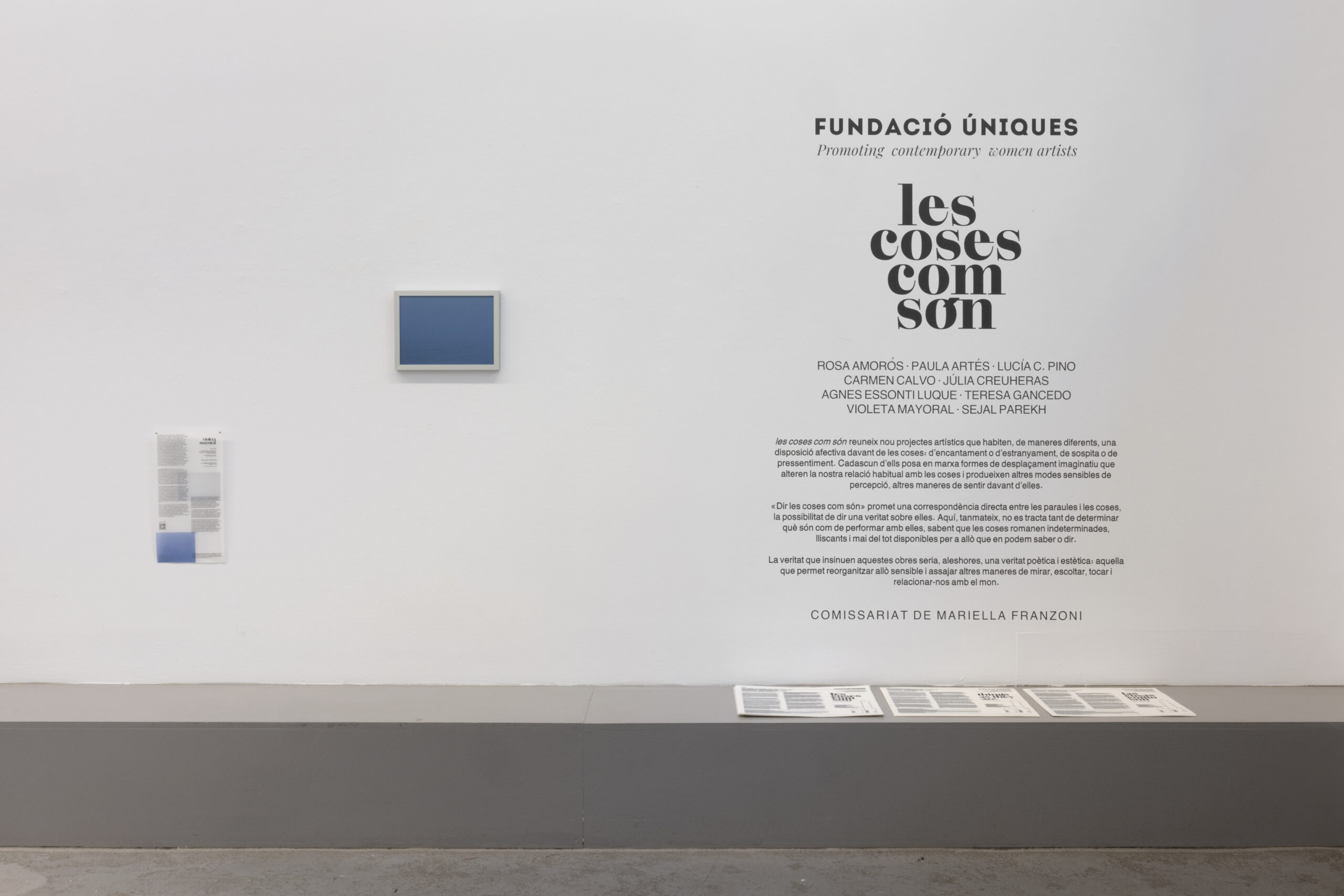
The relationships that the artists weave with everything that is significant to them take shape in the exhibited pieces, where processes, memories and attributions that go beyond the immediately perceptible qualities of the material itself converge at the same time. For this reason, despite the imprecision from which the exhibition seems to conceptually start, the exercise gains solidity through bibliographical care and the contextualization of the pieces. In Les coses com son Franzoni opts for the most traditional exhibition format: curatorial text, exhibition posters and explanatory dossier that situate the works and propose correspondences between them. This curatorial mediation facilitates reading, of course, but at the same time guides the possible interpretations that may arise from them.
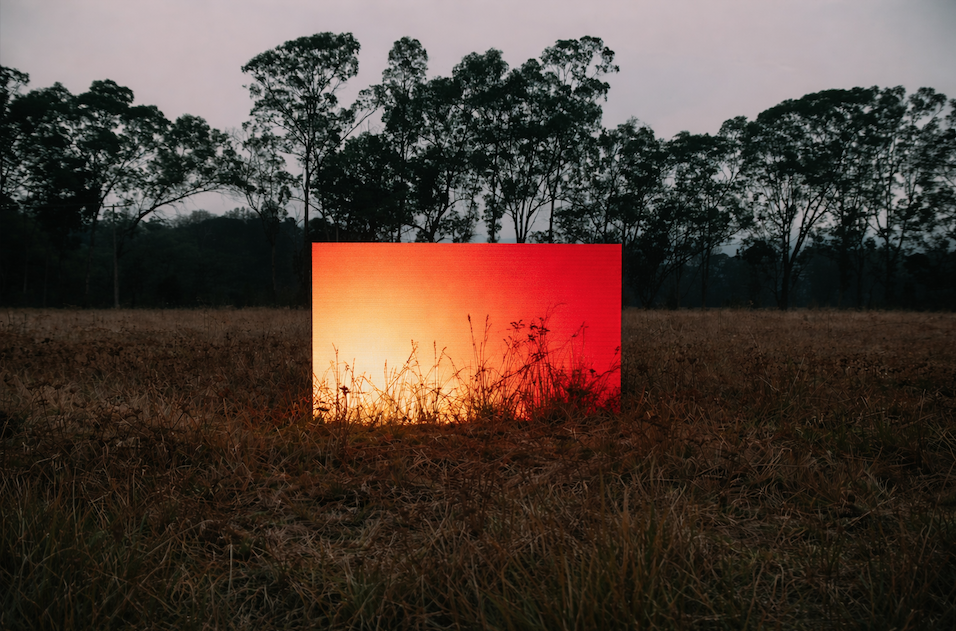
This almost paradoxical coexistence between semantic expansion and contextual precision constitutes one of the most productive tensions of the exhibition. Thus, the tour begins with a work that precisely questions visual perception and the viewer's capacity to create meanings. What is the meaning of a work that becomes almost imperceptible to the naked eye? Through Do (2023) the artist Violeta Mayoral opens the tour.
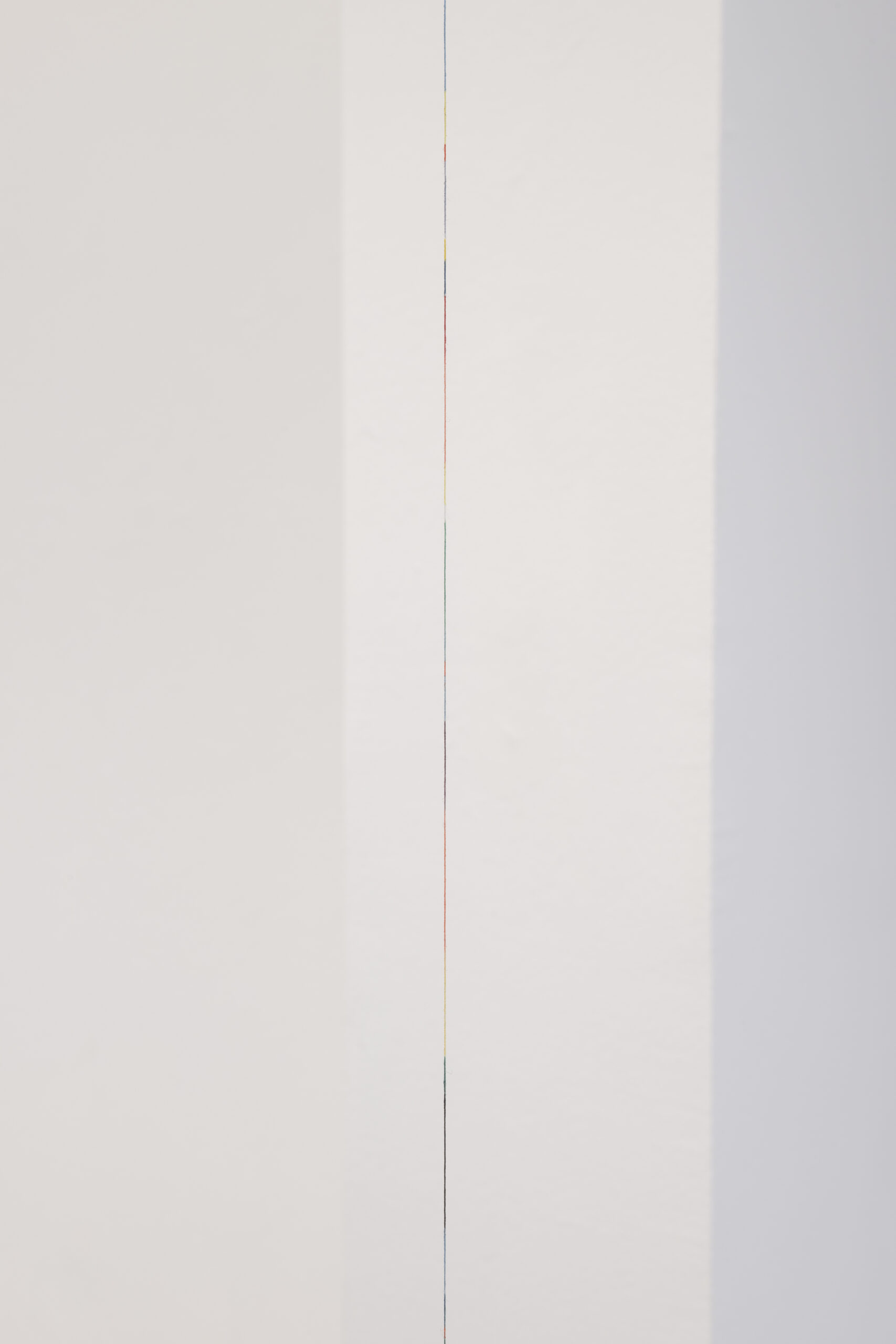
The work consists of a millimeter-sized, hand-painted cotton thread that crosses the entire gallery space, from top to bottom. This piece is accompanied by Sense títol (2018-2019), a photograph in which the chromatic proximity between the sea and the sky makes it impossible to distinguish the horizon. Two works that, with minimal material intervention, interrupt the usual mechanisms of recognition and visual perception.
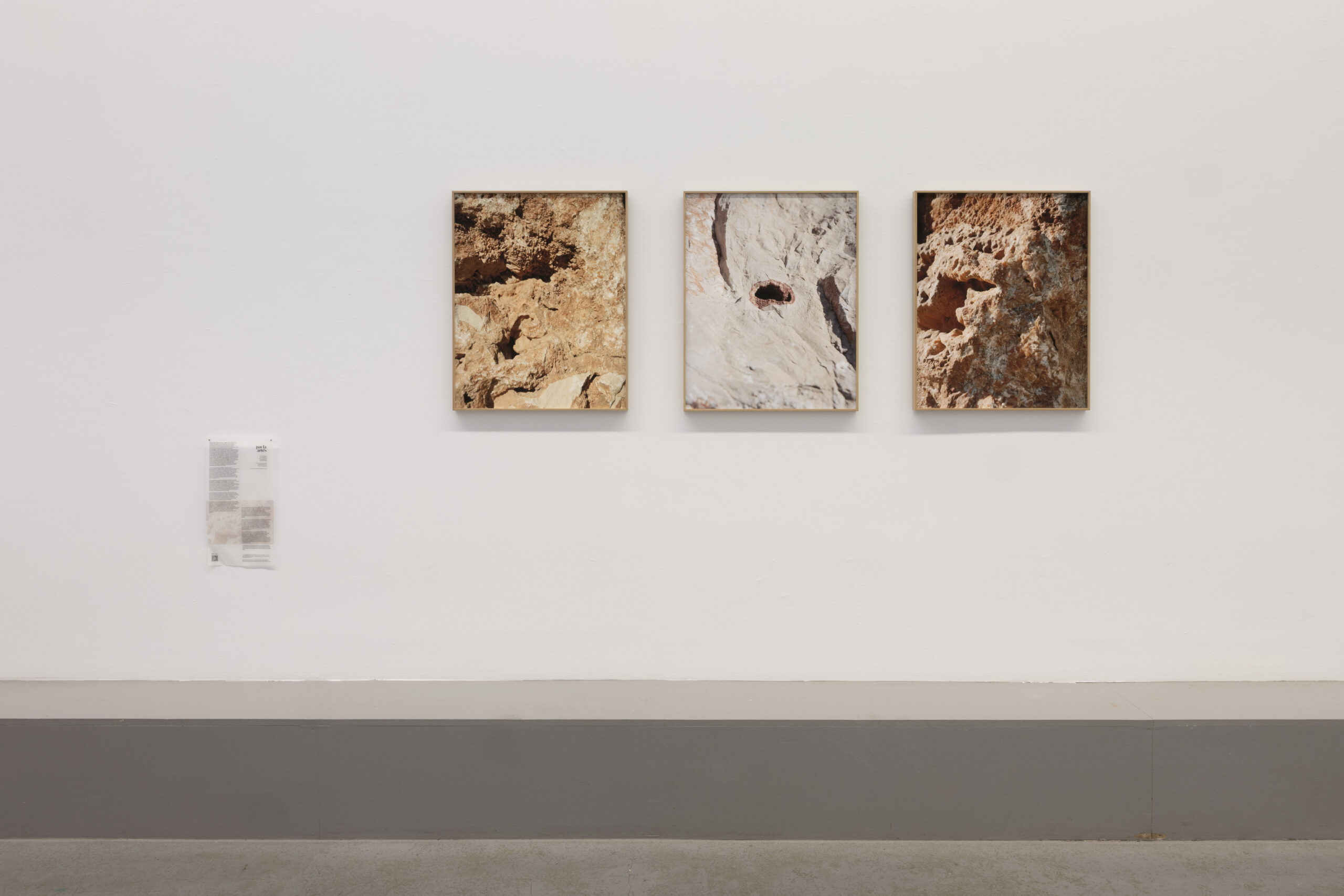
The relationship between perception and knowledge expands with porosities ( Porosity I, II, III ) by Paula Artés (2018-2023), from the photographic series, Energia sumergida . The photographs of limestone rock are part of an investigation into the Castor project, an underwater gas storage facility, where injection operations triggered seismic activity. Artés points out the limits of knowledge that images often provide, highlighting that conflict can go unnoticed if it is not captured or contextualized directly.
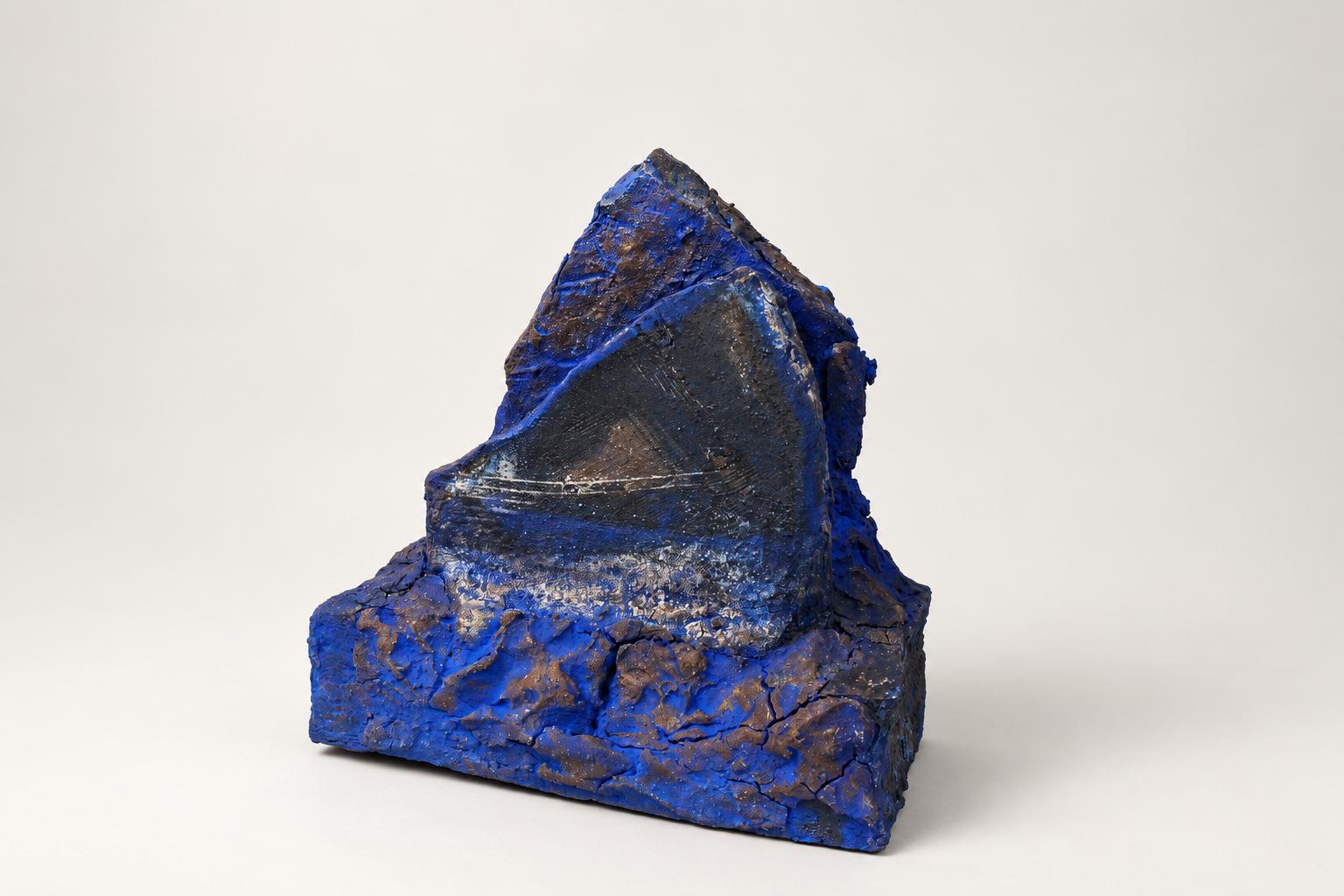
This treatment of material textures finds a formal proximity in Drawing (1990), by Rosa Amorós, where ceramics escape from their functional and decorative uses, to become forms of complex classification. The clay piece spread on the floor, makes it difficult to understand and forces us to reconsider the categories with which sculpture or the exhibited object is usually thought of. Its roughness, on the other hand, refers directly to manual work, to touch and the tangible aspect that was resisted in the previous work.
The ambiguity of forms is found in Jeb (2023), by Lucía C. Pino. In this case, the artist introduces body references through suspended volumes and diverse fabrics, without fixing them in an anatomically recognizable representation. The title pays homage to Joan E. Biren, activist and photographer of queer subcultures, and places these body evocations within a Sapphic genealogy. This material research is also seen in Athenea. Hija de Zeus (2020), a work that stands out above all for being the first piece exhibited from the Fundació Úniques' own collection.
Mythological references reappear in Se le cayeron a Hermes (2022), by Júlia Crehueras. Two winged dancing shoes that move through motor mechanisms, to provoke sensations of strangeness and illusion. The shoes, which act as extensions of the body, seem to have acquired autonomy, an idea that borders on theories that matter reacts to human behavior and, therefore, has its own agency.
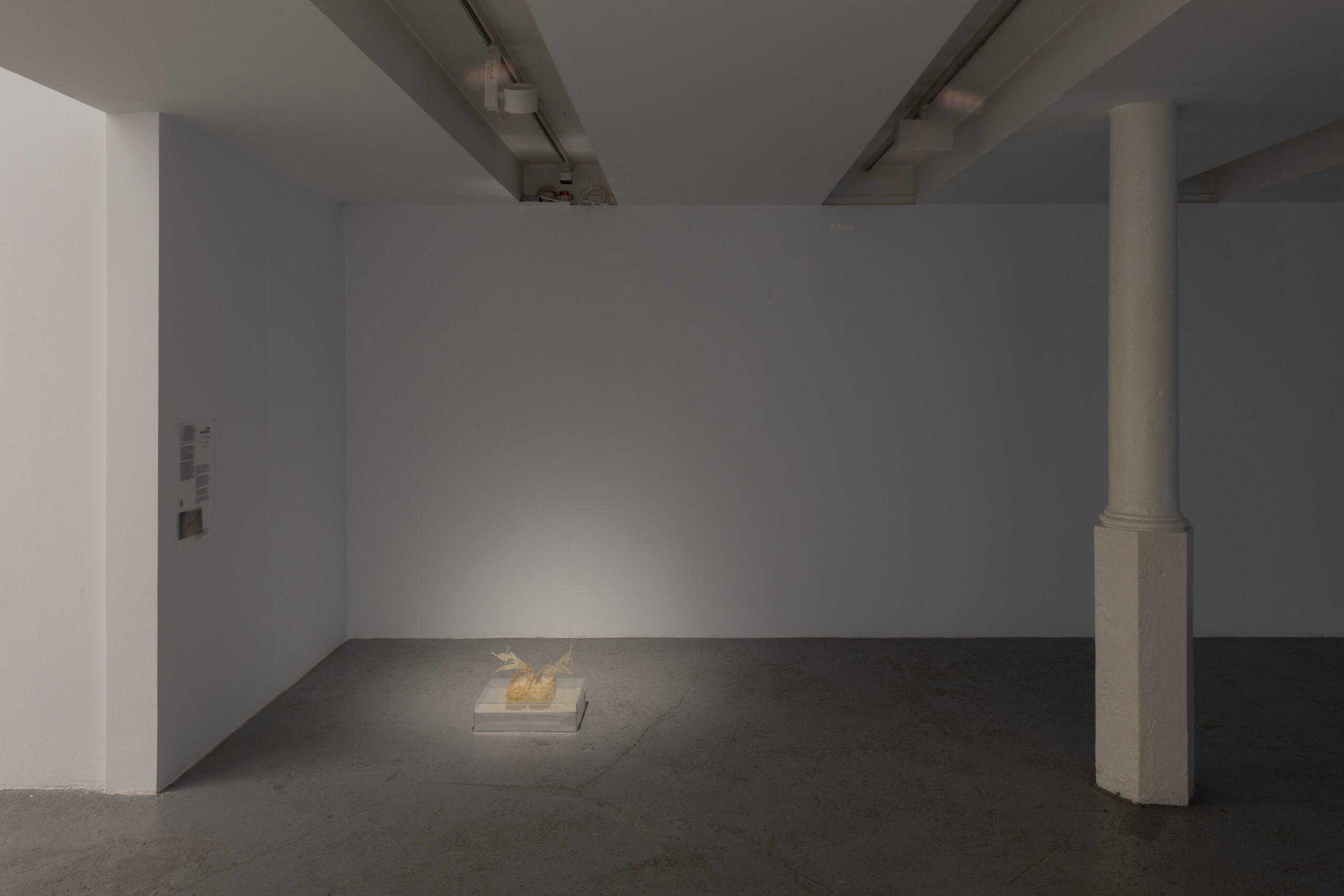
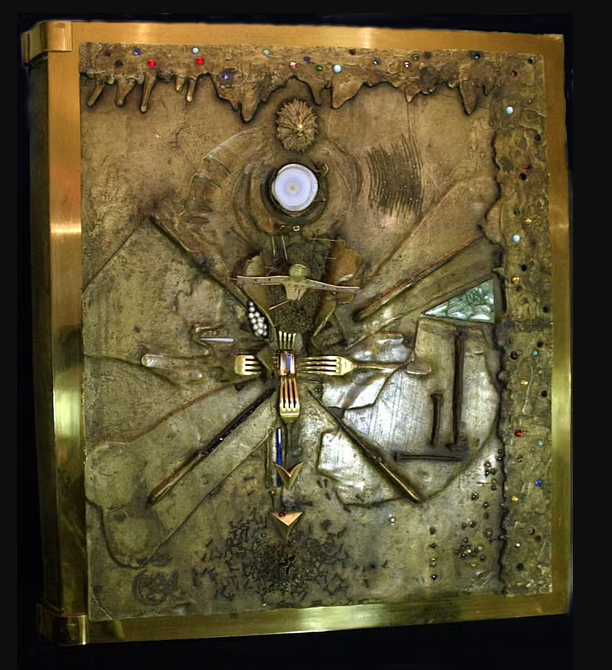
Creuheras' work directly dialogues with Tanto fue el cántaro a la fuente (1993), by Carmen Calvo, and on loan from the Suñol Soler Collection. The piece, dedicated to Josep Suñol and conceived as a tribute to various personal ties, can be read as a reliquary. The glove - as well as the Hermes shoes - preserves the gesture without reproducing the absent body, while the deterioration of the materials confronts the will to preserve memory.
In front of Calvo, veteran Teresa Gancedo appears with Ofrendas (1981). A reticular composition, with repetitions and graphics that coexist with a fragment of an icon of Christ. Some of the shapes that accompany the print cross the divisions and alter the order of the grid, to break with the linear narratives that may arise from it, and to insist on how things change their meaning when they are moved from their origin or offered to someone.
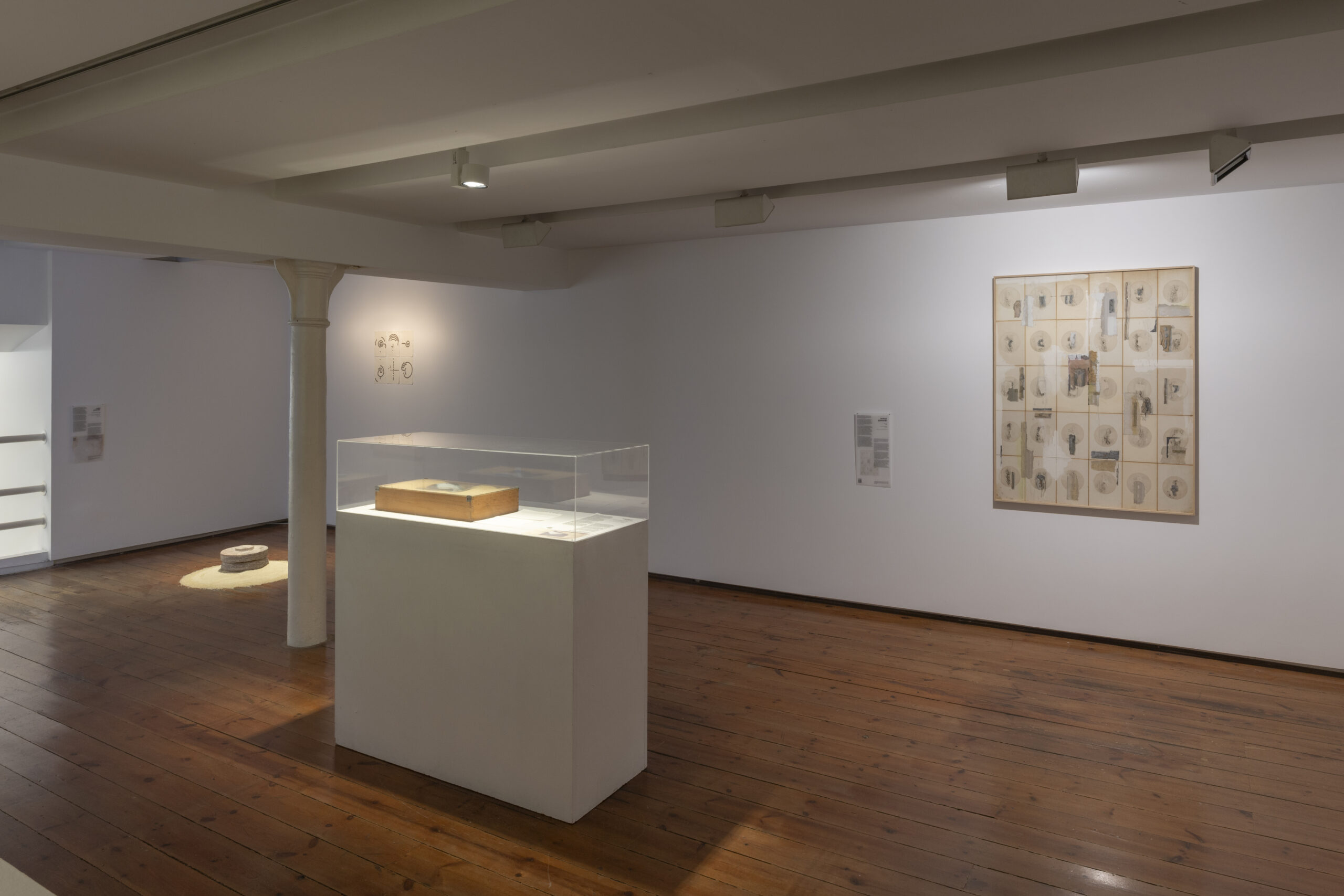
Finally, Agnes Essonti Luque and Sejal Parekh situate the transformation of food in a relationship between work and memory. In Fufu Corn and Njama-Njama (2023–2026), Essonti projects a video of the preparation of a Cameroonian dish onto a pile of corn, where the gestures, ingredients and preparation refer to family knowledge and flavours and Afrodiasporic memories. In System of Magical Defence (2025), Parekh associates the movement of a stone mill with the “Chakravyuha”, a military formation from the Indian epic tradition that the artist recovers from a memory from her childhood.
The exhibition by Fundació Úniques invites, after all, to take nothing for granted and to discover the abundance of meanings that things can contain. The title, things as they are, is acquired by feeling this relationship between material presence and what we can still come to recognize in it. In The Artworld , Arthur Danto pointed out that recognizing something as art requires a theoretical and historical framework that the gaze, alone, does not provide.
These 'poetic truths' that Franzoni proposes take on consistency through the readings and bibliography that accompany the pieces, and at the same time become essential for their development and function within the exhibition. In this way, the exhibition becomes an exercise in contextual precision that allows for the unfolding of correspondences without dissolving the particularities of each case, of each thing, of each work. And it is precisely here where the political dimension of the exhibition can be valued; when attention to the material allows us to perceive beyond the material existence itself, and this is the work, memory, remembrance or the relationships that intervene in the search for its meaning.

You may be
interested
...