Exhibitions
Carol Rama returns to Pistoia six decades later
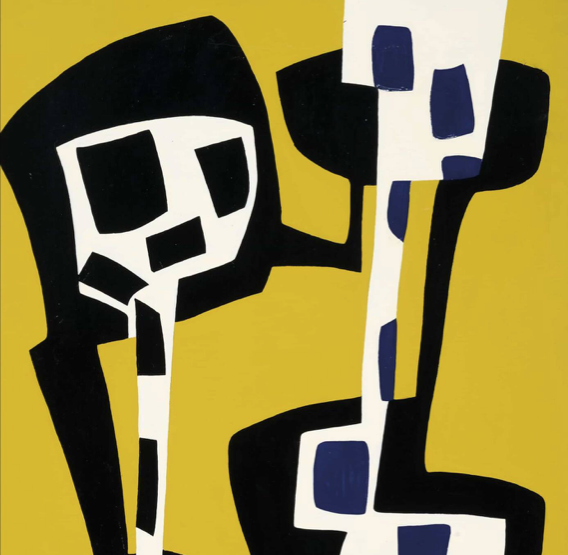
Free-spirited, provocative, and fiercely independent, Carol Rama (Turin, 1918–2015) forged one of the most singular and radical trajectories in 20th-century Italian art. Her work, permeated by the body, desire, illness, and identity, explored territories that would eventually occupy a central place in contemporary art debates. More than a decade after her death, her output retains its undiminished capacity to unsettle, question, and transcend established categories.
From October 3, 2026, to February 14, 2027, the Palazzo de' Rossi in Pistoia will be transformed into a vibrant space with a new edition of In Visita , a project by Fondazione Pistoia Musei. With the support of Fondazione Caript, In Visita temporarily introduces works by key 20th- and 21st-century artists into the permanent Collezioni del Novecento exhibition. This initiative fosters a dialogue between the invited pieces and the artists connected to Pistoia's art scene.
The exhibition also represents a return steeped in memory. The fifth edition of In Visita brings Carol Rama back to Pistoia more than sixty years after the exhibition she headlined in 1965 at the Sala Ghibellina of the Palazzo Comunale, a particularly significant show as it was the first exhibition dedicated to the artist by a public museum.
The new project brings together seven works that trace some of the decisive moments in his research between the 1950s and 1970s. Six come from the Collezioni Gallerie d'Italia – Intesa Sanpaolo, and one belongs to a private collection. Among them is Senza titolo (Bricolage R 4) , also presented in that 1965 exhibition, which now serves as a kind of bridge between two periods separated by more than half a century.
The exhibition, curated by Monica Preti, general director of Fondazione Pistoia Musei, and Annamaria Iacuzzi, curator of the Collezioni del Novecento, begins in the 1950s, when Rama became interested in the possibilities of abstract form and became involved with the Concrete Art Movement (MAC). This marked the beginning of a period of experimentation that would soon lead to a much more personal conception of matter, surface, and gesture.
During the following decade, this research culminated in the Bricolage series , works in which the artist developed an informal and radically material poetics. Rama incorporated everyday elements and unconventional materials, moving away from any notion of formal purity to construct a language in which the intimate, the physical, and the artistic remained closely intertwined.
The exhibition also pays special attention to her experiments with bicycle inner tubes, present in the series Luogo e segni and Smentire il bianco . In these works, the material ceases to be a simple support, acquiring a strong symbolic and corporeal charge. The flexible, organic rubber introduces an almost visceral dimension to the work, connecting with some of the artist's recurring obsessions.
The exhibition culminates with a piece made with thread sewn onto fabric, belonging to the series of "diagrams" from the early seventies. The work demonstrates the constant transformation of a language that never remained subject to a single discipline, style, or formal system.
You may be
interested
...