Exhibitions
Menorca, an island seen through photography
The Menorca Doc Fest turns documentary photography into a tool to explore memory, identity, conflicts and territories, with eleven exhibitions and a program that brings together authors from different generations and backgrounds.
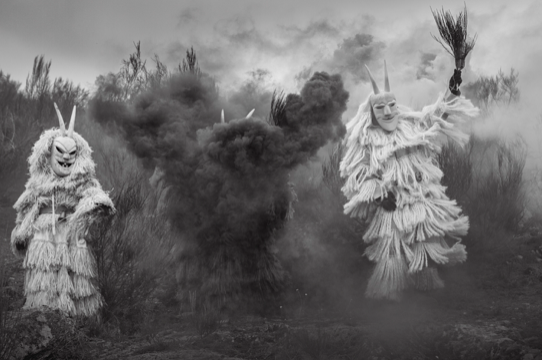
The eighth edition of the festival, which will be held from September 24 to October 18, 2026, presents nearly fifty activities including exhibitions, screenings, conferences, master classes, workshops, presentations and colloquiums. The program extends across Maó, es Mercadal, Ciutadella, es Castell and Sant Lluís and incorporates creators and projects linked to twelve territories, including Spain, Portugal, Italy, Palestine, Dominican Republic, Greenland, Cuba, Puerto Rico, France, Peru, Chile and Kosovo.
But it is in photography that the festival constructs one of its broadest cartographies. The eleven scheduled exhibitions propose very different ways of understanding the photographic document: as a witness to conflicts and inequalities, as a reconstruction of memory, as an exploration of the territory, as a tool of denunciation or as a space to question reality itself.
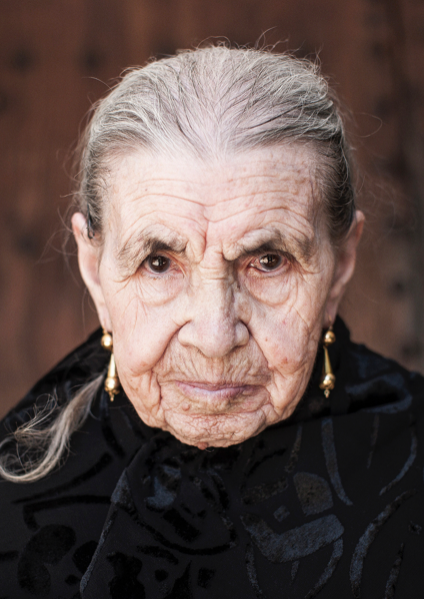
One of the highlights of the edition is Hivern profà , by Carmenchu Alemán, installed in the old SEAT building in Maó. The proposal shares prominence with the 29th Luis Valtueña Humanitarian Photography Award and with a collective exhibition that brings together Marta Villa, Anthony Nietzke, JM Ruíz Luengo, Manolo Sosa, Isa Sanz and Toni Camps Coll.
The Luis Valtueña Award is, in fact, one of the spaces where photography most explicitly assumes its responsibility towards reality. The Doctors of the World call recognizes projects that use images to approach conflicts, vulnerabilities and situations of injustice. The 29th edition of the exhibition includes works by Samuel Nacar, Jehad Alshrafi, Valentina Sinis and Santi Palacios, and highlights the capacity of photojournalism to build memory where often only fleeting news reaches.
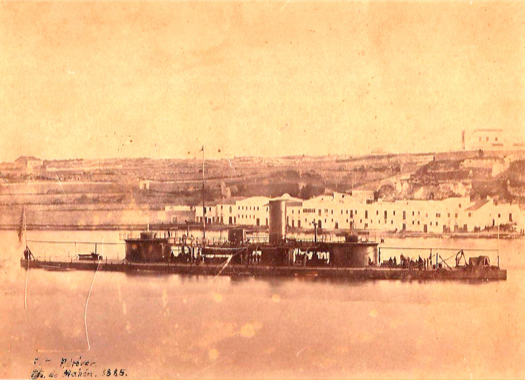
This relationship between photography, document and memory is also projected onto the history of Menorca itself. The festival revives the figure of Francesc —Frank— Adrover i Mercadal, a Menorcan photographer who developed part of his career in the Dominican Republic. Photohistorian Salvador Tió analyses his work in a conference in es Castell, while a selection of his production can be seen on Enmig des Mercadal street.
The recovery of photographic archives is one of the themes that runs through this edition. Photography ceases to be just an image of the present to become a form of visual archaeology. Negatives, family archives, collections and press photographs allow us to reconstruct ways of life that no longer exist and observe how a society is transformed through its faces and spaces.
In this sense, the presence of photographers linked to Menorca takes on a special relevance. The festival claims photography as an essential part of the construction of the island's imaginary, while at the same time putting this tradition in contact with the practices of contemporary photography.
Another prominent name is Federico Clavarino, a visual artist, researcher and teacher who has developed a photographic work linked to research, memory and the forms of construction of images. Author of eight books and with an international exhibition career, Clavarino participates in the festival with a mentorship aimed at emerging and established photographers, as well as with a training activity focused on the creative process.
His workshop, Empezar desde la sombra , starts from an idea as elementary as it is suggestive: the shadow as a double, as a presence that proves that we are in a place but that, at the same time, we can never completely occupy. The proposal raises a reflection on the shadow in relation to photography and combines a theoretical introduction, a practical activity and individual sessions to review the participants' projects.
Photography is also understood as a gateway to documentary cinema. Samuel Nacar, journalist, documentary photographer and filmmaker specializing in migration, social conflicts and depopulation, offers a master class entitled From breaking news to documentary: building a film from the urgency of information . The starting point is the transformation of an immediate news item into a long-term documentary project, a process in which photography can act as the first research tool and as a form of contact with a reality that will later be transferred to cinema.
This boundary between photography and cinema constitutes one of the most interesting issues of the festival. The still image does not appear as an isolated discipline, but as a practice that shares with documentary cinematography the desire to investigate, observe and construct stories about the world.
The program also includes a portfolio viewing and various training activities, along with photobook presentations and a plate camera workshop with Gaizka Taro. In this way, the festival not only shows finished photographs, but also highlights the work processes, tools and decisions behind a documentary project.
Contemporary photography appears, at the same time, linked to social and political issues that transcend the borders of the island. The selected exhibitions and projects address migration, armed conflicts, identity, vulnerable communities, memory, threatened territories and the relationships between humans and their environment. These concerns coincide with the major thematic axes of the edition, which are also transferred to the film programming.
You may be
interested
...