Exhibitions
Where the water is born
Isabel Banal explores in 'Gods' the physical and symbolic dimension of water, between the landscape, memory and the fragility of an essential resource.
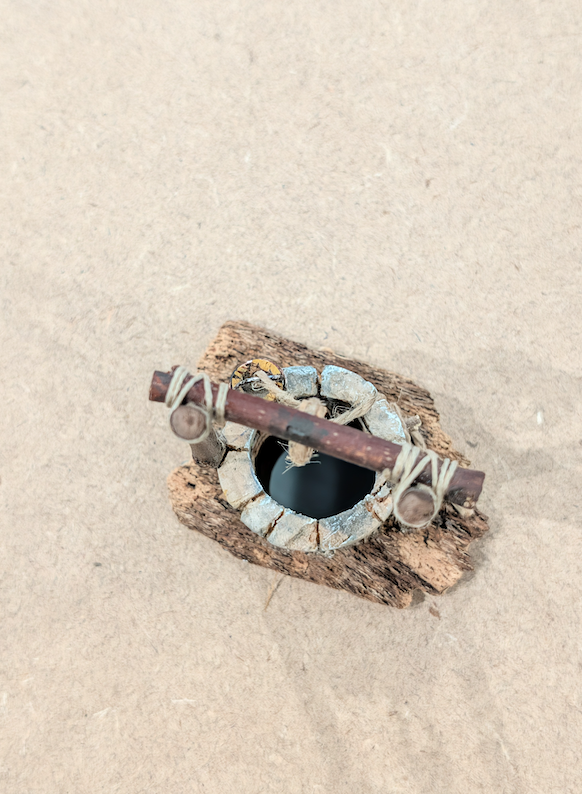
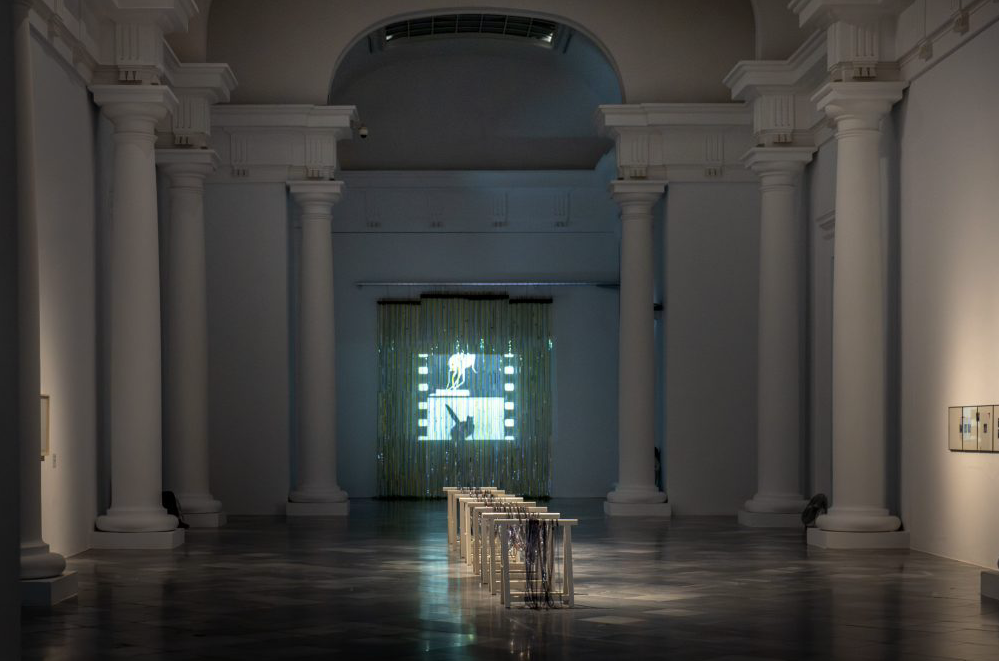
The presence of water tends to go unnoticed until it becomes scarce. In Deus , Isabel Banal Xifré takes this essential element as a starting point to build an exhibition that combines observation of the territory, ecological awareness and a broader reflection on the concepts of origin, memory and knowledge. The exhibition can be visited at the Olot Museum until the beginning of January.
The title already contains an important part of the proposal. A well is the place where water emerges after an underground journey that we cannot see. Banal turns this hidden movement into a metaphor for creation: ideas, memories and forms of knowledge also have an often invisible origin before reaching the surface. The phonetic proximity between well and God in Catalan also introduces a dimension linked to the creative principle, without the artist needing to convert this association into a closed statement. It is precisely in this ambiguity that the proposal acquires much of its strength.
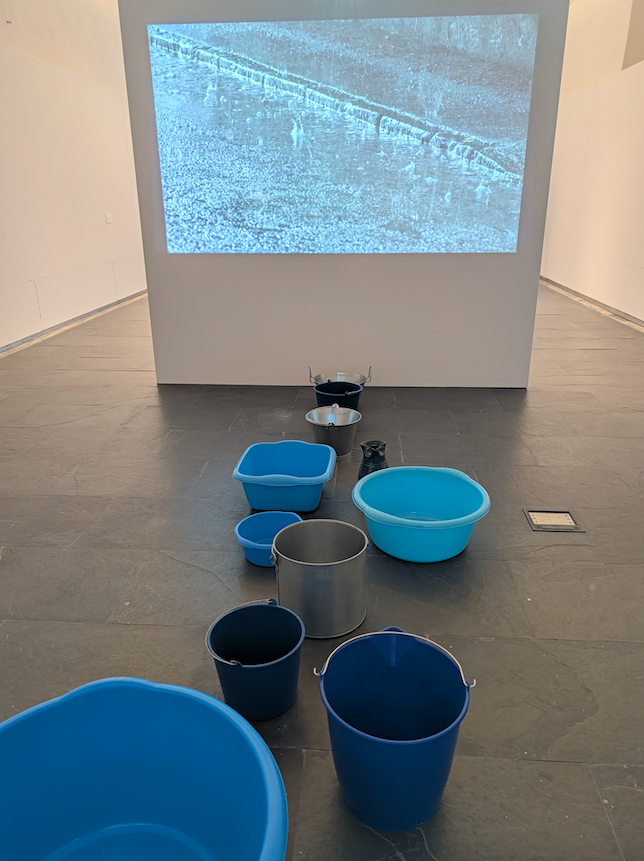
La Garrotxa offers a particularly relevant context for this reflection. Springs, streams, rivers and brooks are part of the geography of the region and also of its cultural construction. Water has also been a recurring presence in the imagination of the Olot School, where the landscape became one of the great territories of representation. Banal recovers this legacy, but not to reiterate a certain idea of nature, but to interrogate it from the present.
The drought of recent years has changed the perception of this landscape. Rivers with less flow, springs that stop flowing and empty troughs make visible a reality that is often hidden behind the idealized idea of the landscape. In this sense, Deus is not only an exhibition about water, but also about its absence and about the way an environmental crisis transforms our perspective. Water ceases to be a simple natural element and acquires a political, economic and social dimension.
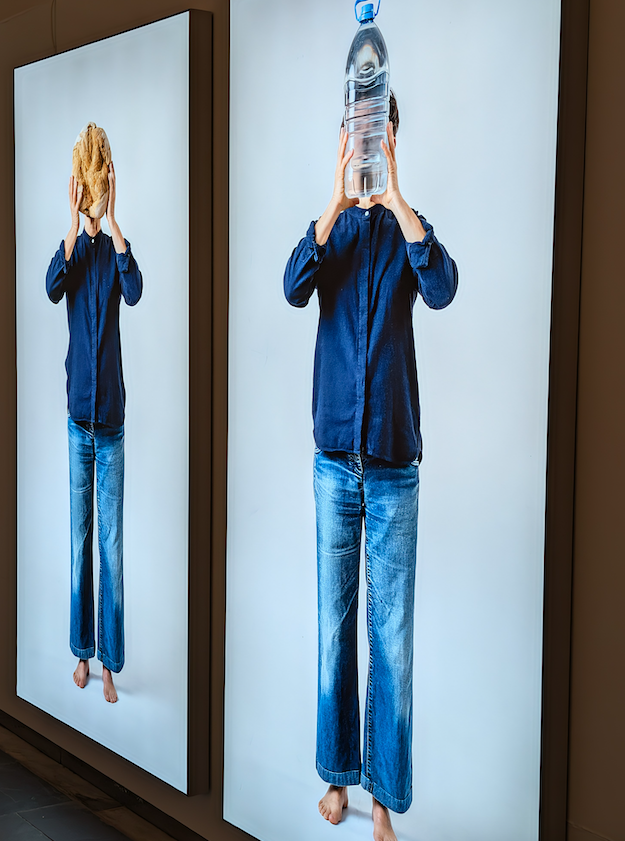
The four works that make up the exhibition address different forms of relationship with this resource. The industrialization and commercialization of water introduce the tension between an essential good and its transformation into a commodity. Rain poses the paradox of a resource that arrives for free but that we do not always know how to retain or take advantage of. The wells direct our gaze towards an underground water that exists outside our visual field, while painting opens up another way of representation: how can water be represented without reducing it to an image?
This last question is especially significant in an artist who usually works from simple actions, everyday objects, processes and fragments of the territory. Instead of seeking a spectacular representation of nature, Banal tends to shift attention towards minimal gestures and towards those elements that allow us to detect the relationships between the individual and their environment. Water thus becomes a conceptual rather than simply visual matter.
The text by Maria Josep Balsach that accompanies the exhibition delves into this underground dimension of the moor, understood as the result of a long journey before reaching the surface. This idea allows the exhibition to be read also as a reflection on processes: what we see is only the final result of a much more extensive and complex reality. The moor, in this sense, is not just a physical place, but an image of thought.
In Banal's work, nature and culture hardly appear separate. The landscape is not an innocent or immutable space, but a territory shaped by human practices, by economic uses, by memory and also by forms of artistic representation. Deus places water exactly at this point of friction: between the natural and the constructed, between resource and symbol, between presence and absence.
The artist's career confirms this desire to work from a relationship with the place and with the materials of everyday life. Exhibitions such as Arran de terra , at ACVic, Abismes , at Chiquita Room, Parar taula , at the Canònica de Vilabertran-Bòlit, or Natura morta amb passos , at the Fundació Joan Miró, show a practice in which the observation of the world is progressively transformed into a critical tool.
You may be
interested
...