Exhibitions
Raising a dust, another story of the muixeranga
Miquel García investigates at the Arranz-Bravo Foundation the silenced origins of human towers and connects them with a decolonial and collective artistic practice.
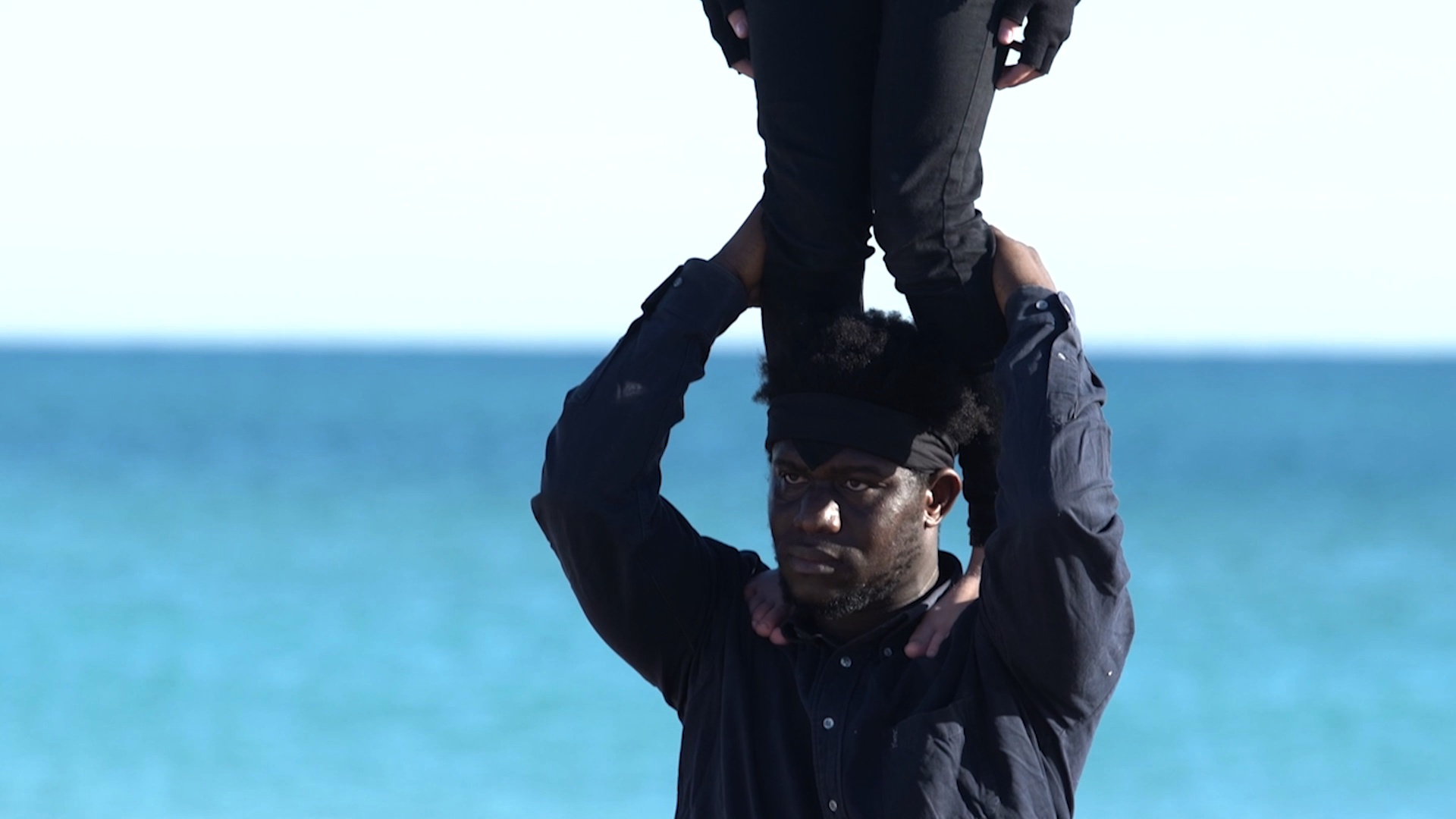
The Arranz-Bravo Foundation in L'Hospitalet de Llobregat presents a new exhibition by Miquel García, Alçar a pols , a project that starts from a seemingly simple but difficult question to answer: where does the muixeranga really come from? The remote origin of this Valencian tradition remains shrouded in mystery and, faced with a story that has often been told from a single perspective, the artist proposes a research that opens up other possible genealogies and recovers voices that have been left out of the official story.
It is generally accepted that muixeranga comes from the tradition of acrobats in the Maghreb. This hypothesis is based on the similarity between some of the muixeranga figures and the constructions of North African acrobats, on the Andalusian cultural heritage and on the presence of a Moorish population in Valencian lands until the expulsion in 1609. However, this explanation does not completely solve the enigma of its origins and leaves other possibilities open.
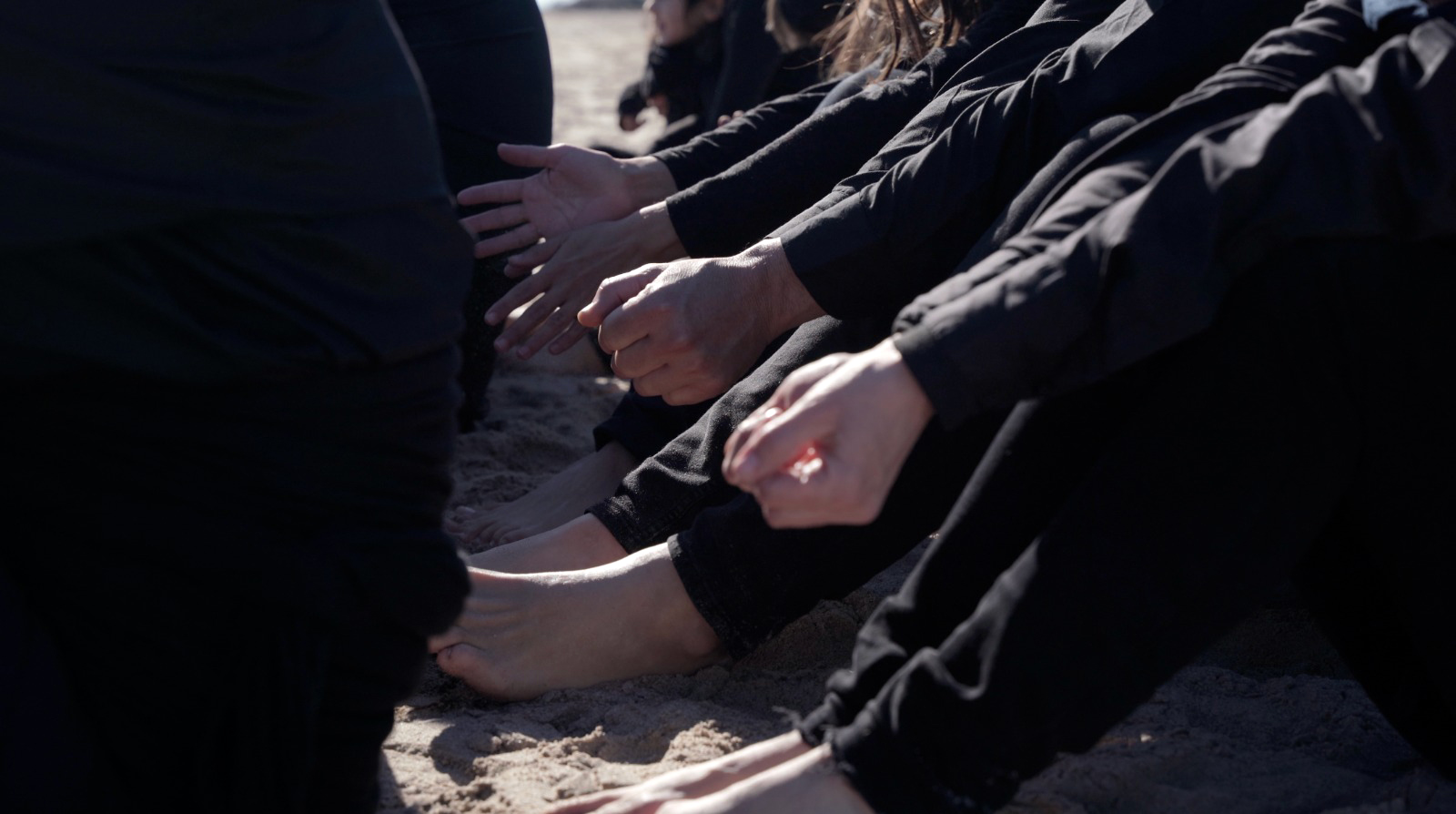
"Raise your voice, by Miquel Garcia"
It is precisely in this space of uncertainty that García places his project. Taking as a starting point the contributions of Muixeranguer Pau Pertegaz, Alçar a pols incorporates the hypothesis that the origin of human constructions in the Valencian Country could also be related to the black African and slave population of the former Crown of Aragon. A possibility that shifts the focus of known history and forces us to look towards a social group that, despite its presence, has been largely erased from official historiography.
Miquel García's research does not aim to establish a definitive truth where the sources still raise questions. What he does is to open a crack in the established narrative and ask himself which stories have been left out of the collective memory. The black population of modern and contemporary times constitutes, in this sense, a paradoxical presence: silenced in much of the historical discourse and, at the same time, visible in numerous festive representations through blackface , especially in processions, processions and cavalcades.
This contradiction is one of the points of tension in the project. What has been represented and used within popular culture has not necessarily been recognized as a subject of the same history. García starts from this paradox to develop a decolonial research that not only questions accepted genealogies, but also the mechanisms through which memory is constructed, preserved and transmitted.
Alçar a pols thus unfolds in two complementary directions. On the one hand, the exhibition is the result of a research process that reviews the possible links between muixeranga and the black African and slave communities historically present in the Crown of Aragon. On the other, this research abandons the strictly documentary scope to become a physical and shared experience.
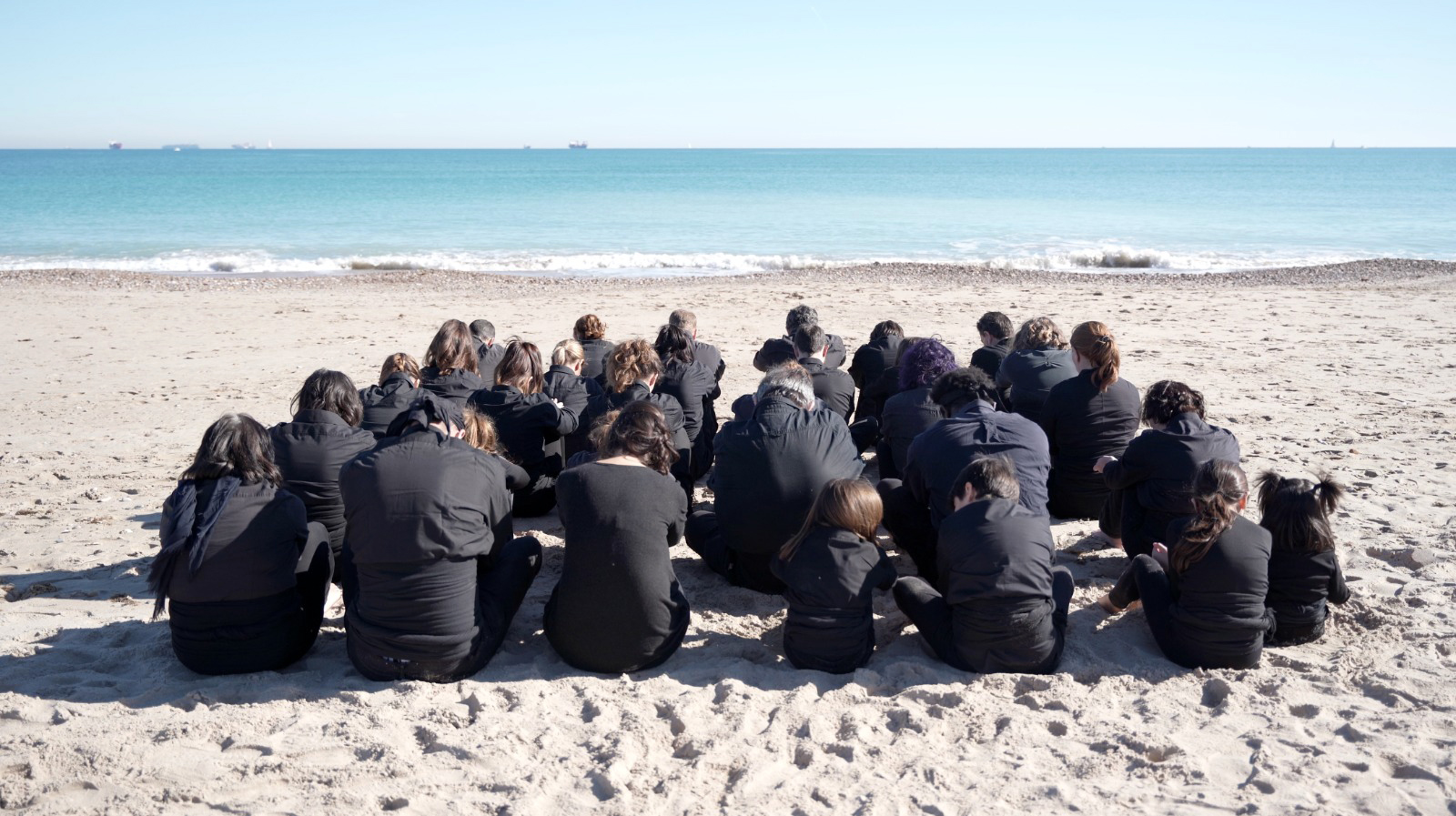
"Raise your voice, by Miquel Garcia"
To do this, García has worked collectively with the Jove Muixeranga of Valencia, with the aim of translating the results of the research into new human figures. The body, trust, balance and the need for the other become part of an artistic practice that is not limited to representing a story, but tries to build other forms of transmission.
The new figures are also born from the contemporary experiences of migrants. In this way, the muixeranga ceases to be seen solely as an inherited tradition and becomes a living space, susceptible to being reinterpreted from the present. The collective body is transformed into a tool to relate different memories, displacements, identities and forms of belonging.
There is, in this operation, a particularly significant idea: a human tower can only exist based on trust between its members. No one can stand alone. This mutual dependence acquires a symbolic dimension when the project is approached from a decolonial perspective. Recovering a possible silenced genealogy also implies reconstructing the bonds between individuals and communities that history has kept separate or placed in unequal positions.



You may be
interested
...