Exhibitions
The walls that still remember
Atròfica 2.0 inaugurates the season of the Sergi Sánchez Gallery with a new reading of the walls of San Salvador and the memories that survive under the layers of paint.
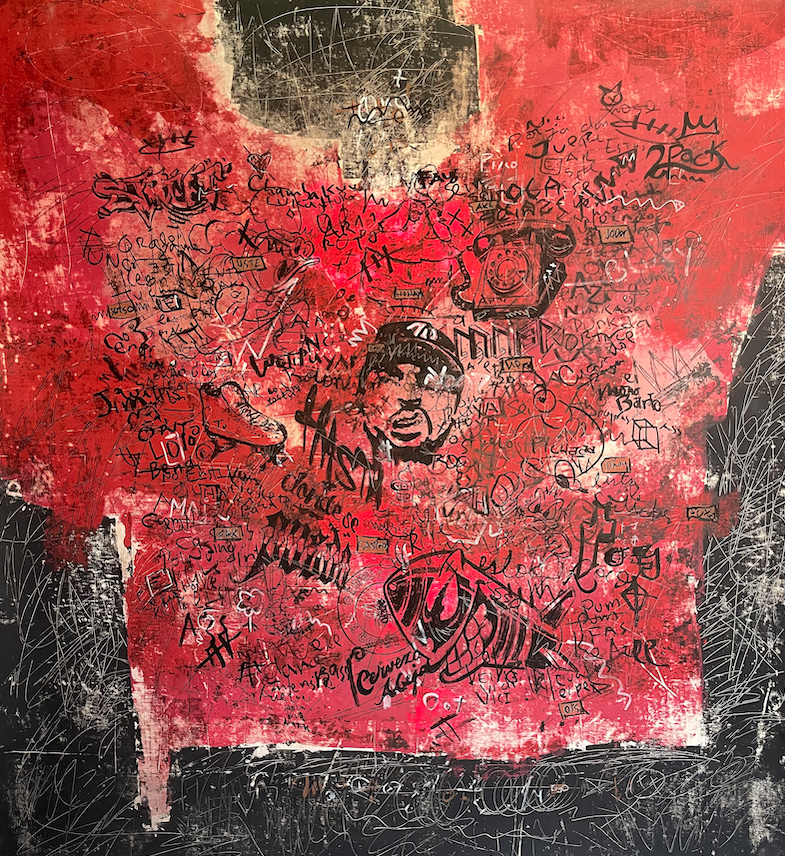
The Galeria Sergi Sánchez in Barcelona opens the new exhibition season on September 10 with Atròfica 2.0 , by Salvadoran Óscar López, known artistically as GoGal. The exhibition, which can be visited until October 30, constitutes the artist's first exhibition in Spain and resumes, while reformulating, the project that he had previously presented at the Museo de Arte de El Salvador (MARTE) , in San Salvador.
Atrófica 2.0 starts from a look at the walls of the historic center of San Salvador understood as a 'living archive'. GoGal discovers an urban writing made of layers of paint, graffiti, signs, stains, stickers and marks that time and urban interventions have accumulated. They are vestiges that speak of a city in transformation and of what remains outside the official conservation mechanisms.
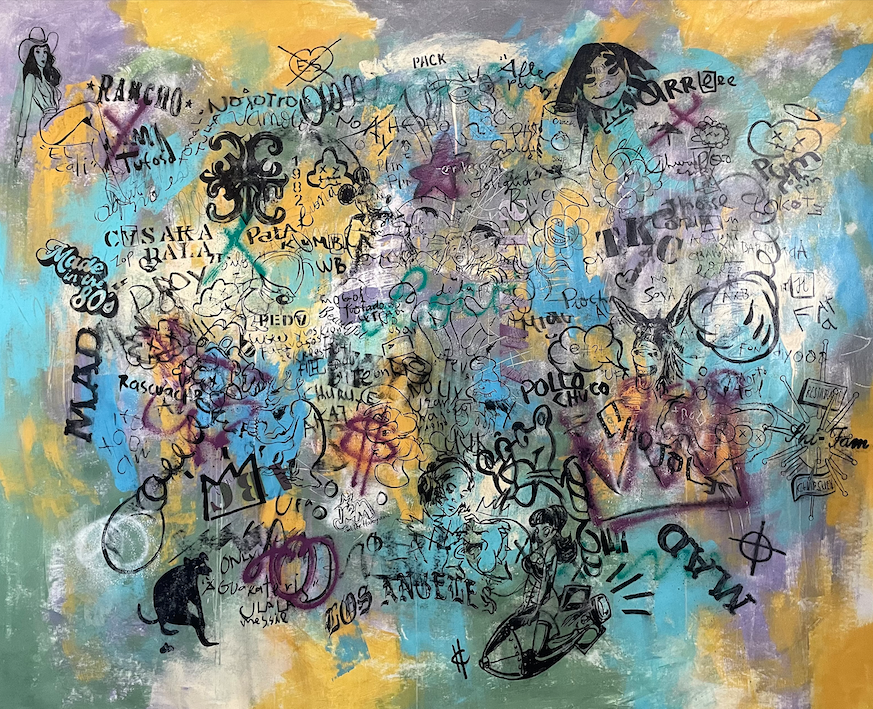
The proposal does not aim to offer an exotic or distant vision of San Salvador. On the contrary, the walls become an uncomfortable mirror that allows us to think about any city undergoing urban renewal processes in which progress can end up being associated with erasure. Under each new layer of paint, each cleaned surface or each disappeared building, fragments of a collective memory persist that does not disappear completely, but rather accumulates.
López is part of a generation that he himself defines as the 'children of war', marked by having learned to interpret the world simultaneously from the conflict and from the caricature. This double gaze runs through a work in which popular culture, violence, memory and the symbols of consumer society coexist without hierarchies.
The project that is now coming to Barcelona maintains the same conceptual core of the proposal presented at MARTE, but adopts a new form. In San Salvador, Atròfica occupied a large immersive space with real rubble collected from the historic center, waste from construction sites and doors recovered from the artist's mother's house before it was demolished. In Barcelona, GoGal has decided not to reproduce that installation and adapt the project to a more contained scale.
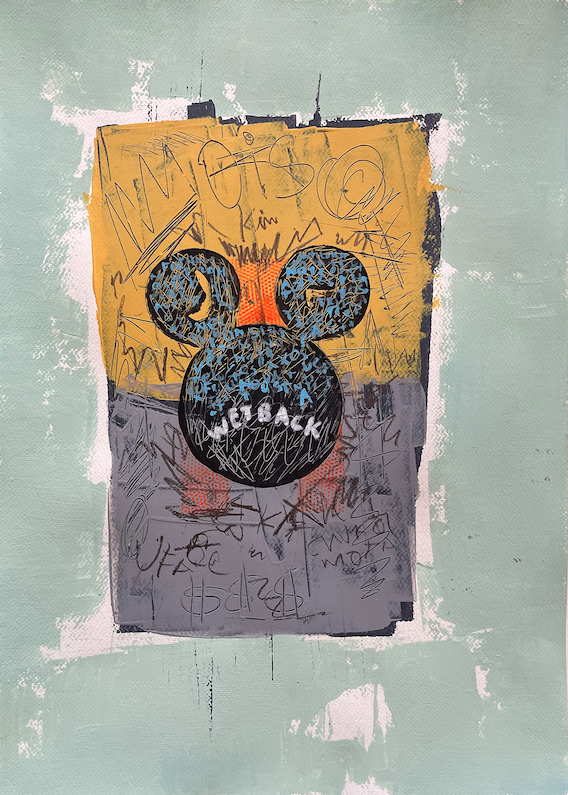
"The concept is the same, but the sense of space changes: the natural residue found on site is not here and the works are not the same," explains the artist. The result is twelve pieces on canvas and ten on paper, all unpublished and conceived specifically for this new presentation.
Technique is also an essential part of the discourse. GoGal works from a process of accumulation, intervention and wear that directly refers to the treatment received by the walls of his city. The surface is covered with different layers, which are then polished, eroded and intervened again. The Central American climate and heat are part of the same working process, in a practice that the artist understands more as a physical struggle with matter than as a simple aesthetic search.
"I apply to my work the same treatment that the walls of my city receive. Layer upon layer I generate new visual discourses around letters and symbols," the artist points out. The scratches, stains, whitewashing, tags and stickers thus form a kind of ephemeral public writing, subject to wear and tear, disappearance and changing interpretations.
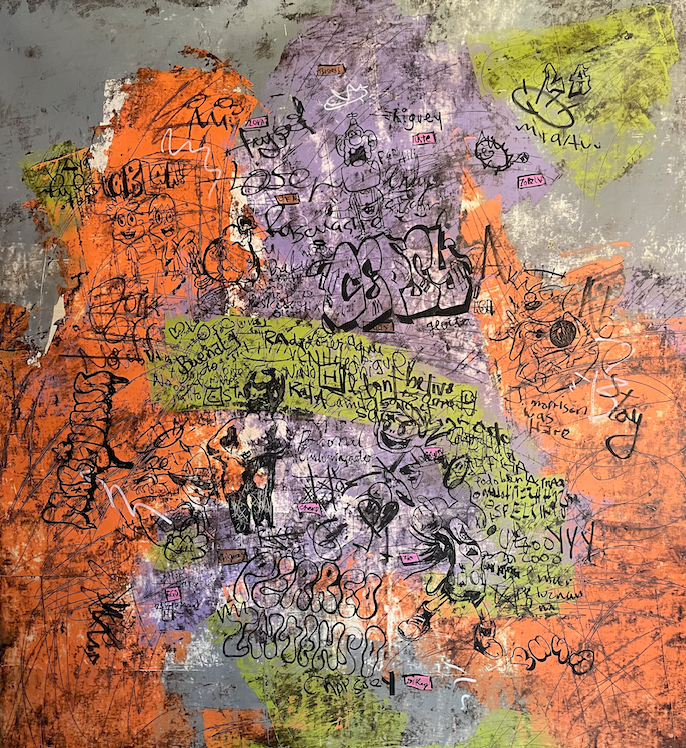
This urban archaeology coexists with a pop imaginary that the artist defines as 'sewer syncretism'. Figures such as Mickey Mouse, Barbie, Mario Bros, Donald Duck or Hello Kitty appear displaced from their original context and subjected to new interventions. The symbols of mass culture cease to function as innocent icons and become part of a visual landscape in which memory, conflict and social tensions also coexist.
Roberta Bosco points out that Atròfica 2.0 turns the walls of the historic center of San Salvador into a living reflection of urban memory. The layers of paint, graffiti, signs, stains and footprints tell the story of a city transformed by renovation processes that have displaced part of its population and erased fragments of its popular identity.
In this sense, López claims these vestiges as a form of marginal heritage and questions which memories disappear when progress imposes order, cleanliness and uniformity. His painting invites us to understand the city as a stratified space where history, conflict, popular culture and resistance coexist under the same surface.

You may be
interested
...