Exhibitions
Gonzalo Guzmán and the secret that lives within matter
INTUS explores the interior space of form through sculpture, the cave and the void, in an exhibition that recovers primitive architectures as spaces of perception and memory.
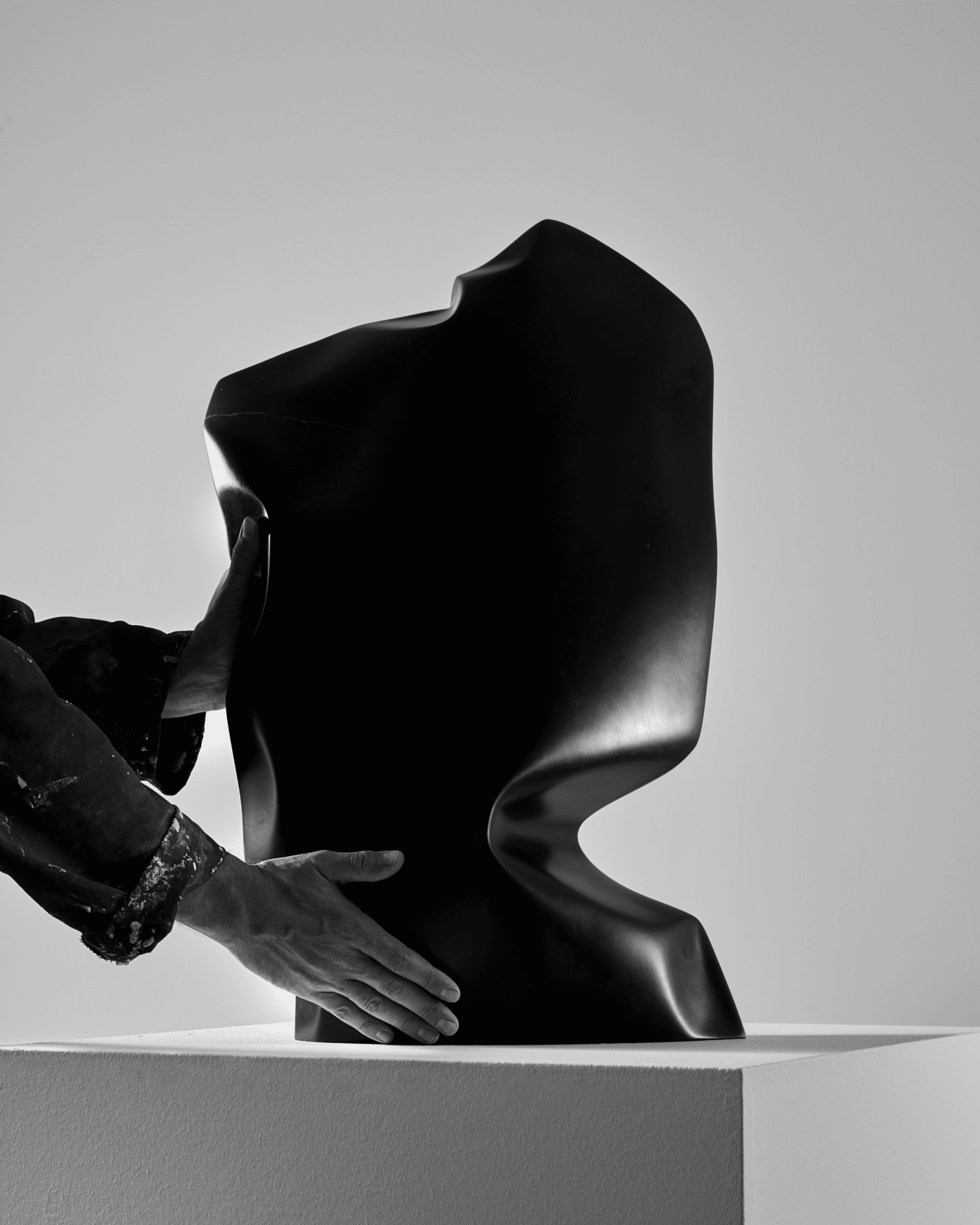
SENDA presents INTUS , a solo exhibition by Gonzalo Guzmán that can be visited from September 15 to November 7, 2026. The exhibition continues the sculptural research that the artist has developed for years around primitive architectures—menhirs, stelae and dolmens—and now shifts attention to another type of space: that which is contained under a surface and which, usually, remains out of sight.
The title of the exhibition comes from the Latin intus , "inside", "inside" or "inward". This idea articulates the entire project and proposes an inversion of the gaze: it is no longer just a question of observing the external form of a sculpture, but of interrogating what this surface delimits and hides. The interior ceases to be a secondary space and occupies the center of Guzmán's research.
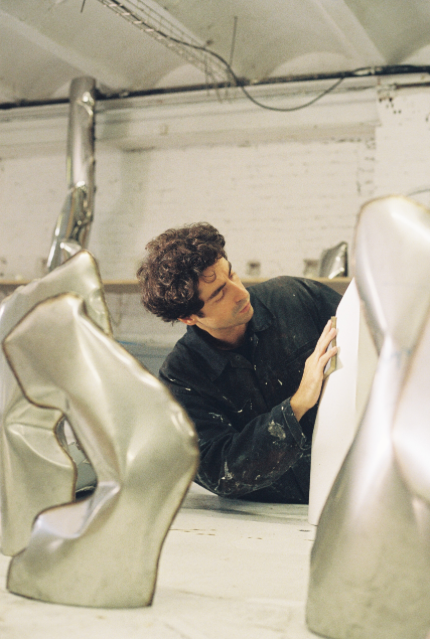
The artist's working process starts with two sheets of steel welded together that are subjected to water pressure. The force exerted on the metal causes the surfaces to expand until generating a volume that has not been previously modeled. Guzmán determines the initial conditions of the process, but lets physical forces intervene in the final configuration of the piece. The form thus appears as the result of a tension between control and unpredictability.
The metal surface retains the marks of this process and acts as a record of what has happened inside. The sculptures are not only finished forms, but also witnesses to a physical transformation in which matter retains the traces of the forces that have affected it. What is seen on the outside constantly refers to what has happened inside.
This same operation is found in the works of the INTUS series, made in plaster and marble. The pieces start from the cavities generated in the metal skins through the hydroforming process. Once shaped, these cavities are filled and later opened to extract the contained volume. The result does not reproduce the external appearance of the surface, but the negative space that it had delimited.
The void, in this way, acquires a physical presence. What previously existed only as a cavity takes on a body and sculptural consistency, but maintains traces of contact with the surrounding surface. Guzmán thus alters the conventional relationship between void and matter and foregrounds a form that, until then, could only exist latently.
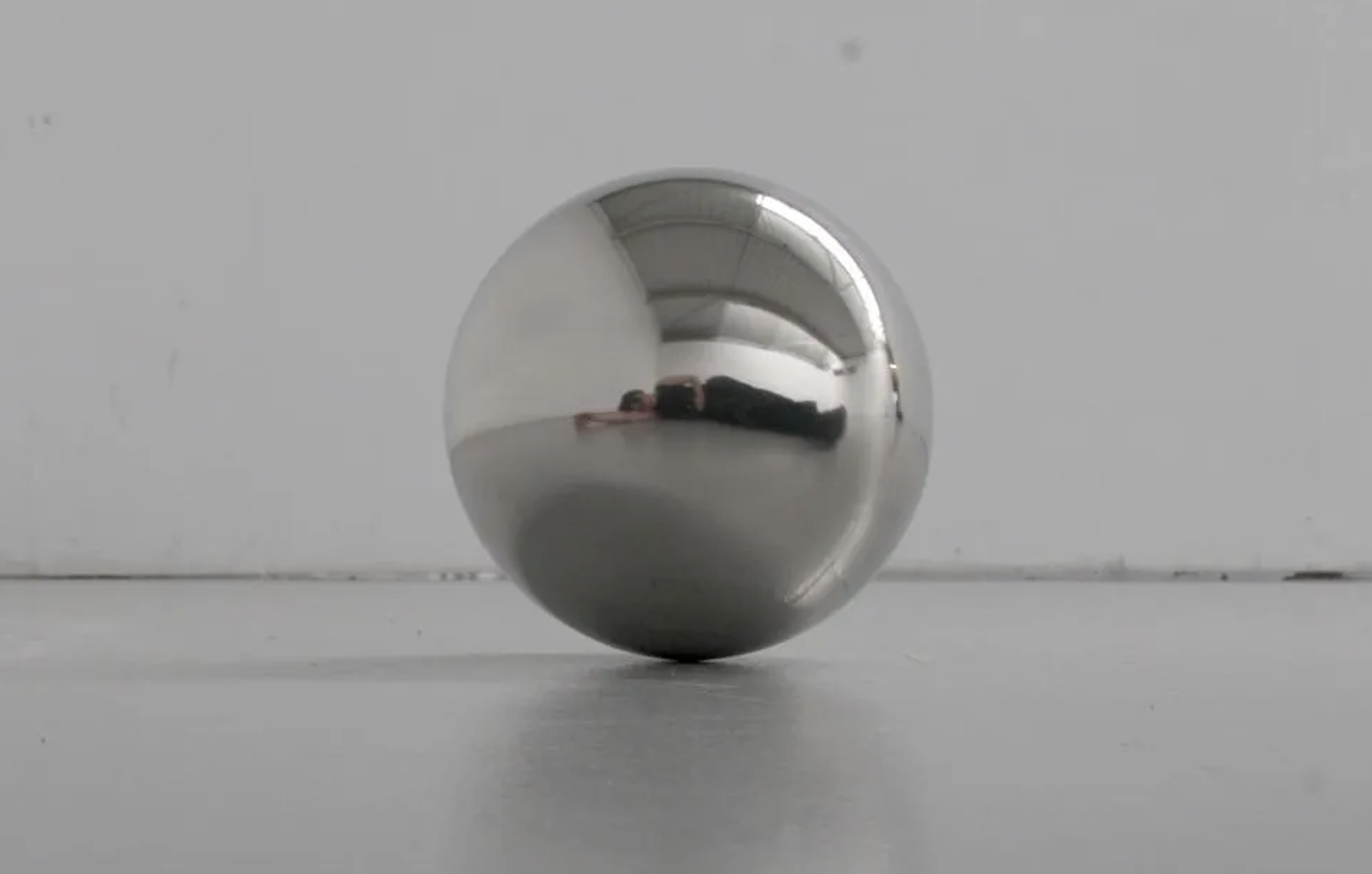
The centerpiece of the exhibition delves into this question. It is a cave constructed with a thin membrane of polished stainless steel, large enough for the public to enter. The cave appears here as one of the first human architectures, but also as an original space for the representation and construction of images of the world.
In prehistoric caves, the shapes of the rock, the reliefs and the shadows of the walls participated in the appearance of animals and figures. The image was born from the relationship between the surface and the imagination, between matter and perception. Those spaces were linked to a way of relating to a reality marked by nature, time, death and survival.
Guzmán recovers this dimension from a material paradox. His cave is not excavated in the rock, but built with a thin skin of stainless steel. "The mountain has disappeared. The cave is reduced to its limit," says the artist. Where we would expect to find mass, weight and thickness, only a reflective surface remains that delimits an interior and an exterior.
The reflections of the steel incorporate the architecture, the light and the bodies of the visitors. The images fragment and deform between the folds of the surface, so that whoever enters the cave ceases to be in front of the work and becomes part of it. The perception is modified with each movement and the space becomes an ever-changing image.
The visitor, the light and the architecture participate in the same scene in continuous transformation. The disappearance of the mountain reveals another way of understanding space, based not on the mass that surrounds it, but on the limit that allows it to be recognized.

You may be
interested
...