Exhibitions
A gypsy story that also tells Catalonia
The Museum of the History of Catalonia recovers six centuries of the presence of the Roma people in the country and claims a culture marked by displacement, exchanges, resistance and an identity of its own.
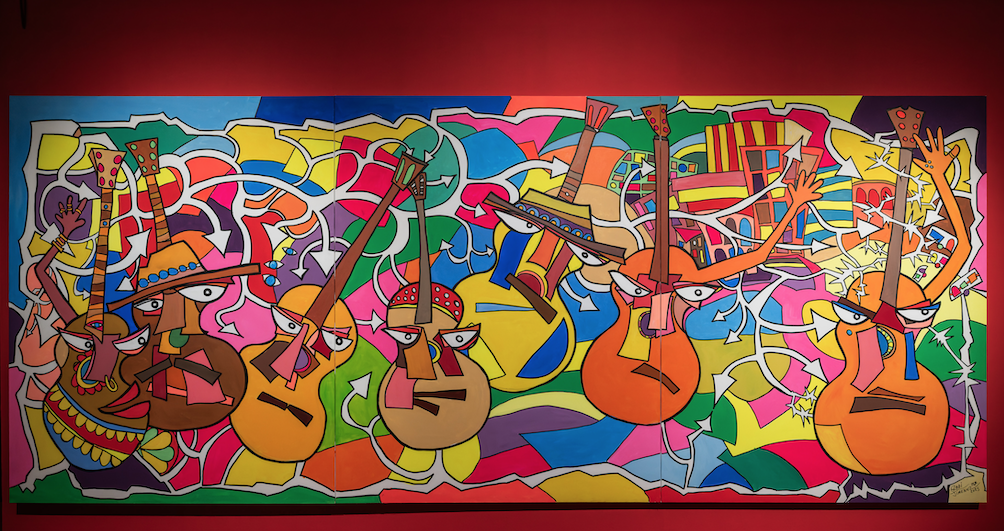
The Roma people have been part of the history of Catalonia for more than six centuries. Despite this long presence, their trajectory, their culture and their contribution to Catalan society remain, for the most part, little known. The exhibition The Roma People of Catalonia: History and Culture , which the Museum of the History of Catalonia presents until 13 September 2026, aims to contribute to correcting this gap and does so from an open, diverse perspective that is far removed from stereotypes.
The exhibition offers a journey through the history of the Roma people from their origins in India to their arrival in Europe and, later, in our lands. A long journey through the centuries that allows us to understand a culture built on mobility, contacts and exchanges, but also marked by persecution, discrimination and exclusion.
A large map that extends from India to the northernmost tip of Europe introduces the visitor to the dimension of a diaspora that began more than a thousand years ago. It is the starting point for understanding the origin and evolution of a people that, over time, has maintained essential elements of its identity while incorporating influences from the territories where it settled.
A long journey from India
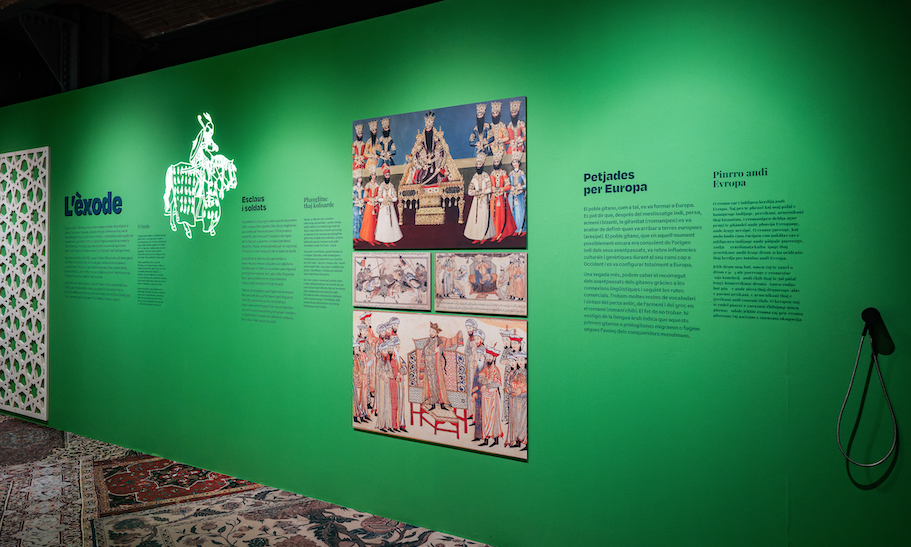
One of the main current hypotheses about the origin of this exodus relates it to the Muslim advance towards northern India. In 1018, after the invasion of the city of Kannauj, its population was captured and sold into slavery, according to the account of the Arab chronicler Al-'Utbi. Those displacements would be part of a long migratory process that, centuries later, would lead populations from the Indian subcontinent to different European territories.
The Romani language, of Sanskrit origin, would become one of the main keys to reconstructing this past. It was precisely linguistic study, in the mid-18th century, that allowed the relationship between Romani and the languages of India to be established and new evidence provided on the origins of the Roma people.
But this journey is not just a history of geographical movements. Over the centuries, Roma communities have been involved in an intense process of cultural and social exchange with the peoples and territories where they have lived. They have incorporated new elements into their heritage and, at the same time, have left their own mark on the host societies.
This capacity for adaptation and exchange makes the Roma people one of the first globalizing cultures. A culture that has managed to preserve its idiosyncrasy while incorporating diverse influences, building a plural, dynamic and constantly transforming identity.
Between exchange and persecution
The history of the Roma people in Europe, however, is also a history of conflict and inequality. Their presence in different territories was accompanied for centuries by stigmatization, marginalization and persecution. Expulsions, prohibitions and different forms of institutional and social violence marked the trajectory of many Roma communities.
Catalonia is no stranger to this history. The exhibition recovers six centuries of the presence of the Roma people in the country and brings to the table both the episodes of discrimination and their cultural, social and human contributions.
Explaining this trajectory also involves reviewing the way the historical narrative has been constructed. The director of the Museum of the History of Catalonia, Jordi Principal, defends the need for a social museum, "of the whole world and for everyone", and recalls that historical narratives are often heirs to "interested biases" and "uncomfortable silences".
In this sense, recovering the history of the Roma people is also an exercise in historical memory. It is about incorporating into the collective story experiences that have remained in the background for too long and understanding that the history of Catalonia has also been built with the contributions and experiences of its Roma communities.
An exhibition that gives voice to the Roma people
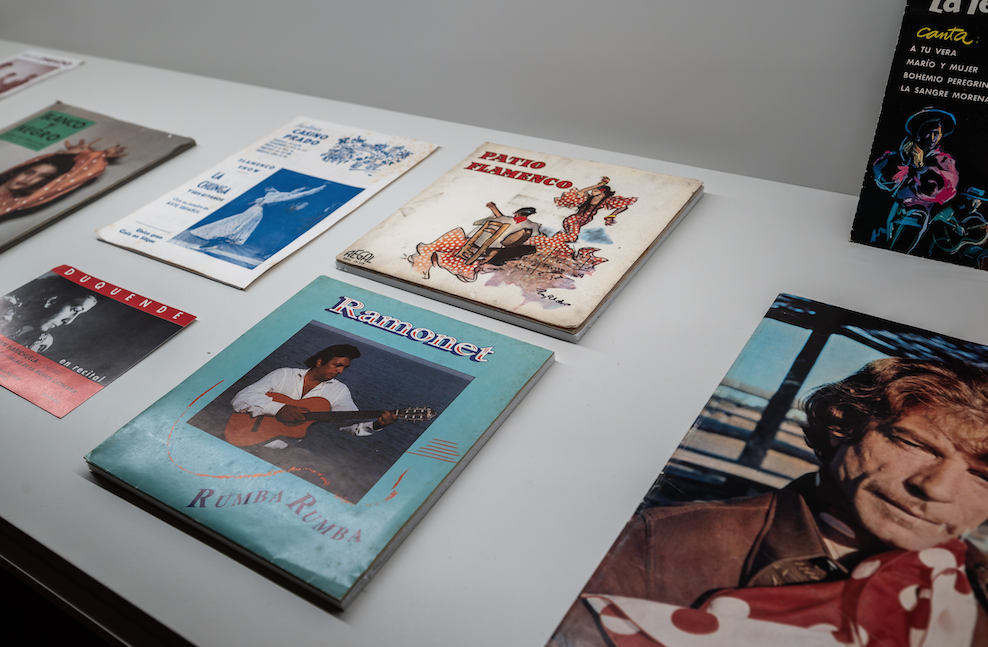
One of the most outstanding features of the exhibition is the desire to give a direct voice to the members of the various Roma communities in Catalonia. The personal testimonies complement the historical journey and allow us to get closer to a diverse, complex reality that is far from any single definition.
The exhibition avoids stereotypes, victimhood or the glorification of the protagonists. The aim is to show the facts, characters and anecdotes that are part of this story and offer a plural approach to a culture that cannot be reduced to clichés.
Curated by art historian and Roma activist Mercedes Porras, the exhibition also vindicates the cultural and social legacy built over the centuries. Language, traditions, artistic expressions, customs and ways of life are part of a heritage that has contributed to enriching the cultural diversity of Catalonia.
Make a shared story visible
The Gypsy People of Catalonia: History and Culture is the result of collaboration between the Museum of History of Catalonia and the Gypsy community, with the participation of different departments of the Generalitat.
For the Minister of Culture, Sònia Hernández, this cooperation represents the commitment to recognize and value "the history, culture and identity of the Roma people as an indivisible part of our collective history."
The exhibition goes beyond, therefore, recovering a little-told history. It proposes a review of the perspective with which collective memory has been constructed and claims the need to incorporate all the voices that have contributed to shaping Catalan society.
You may be
interested
...