Exhibitions
John Giorno, between words and forms
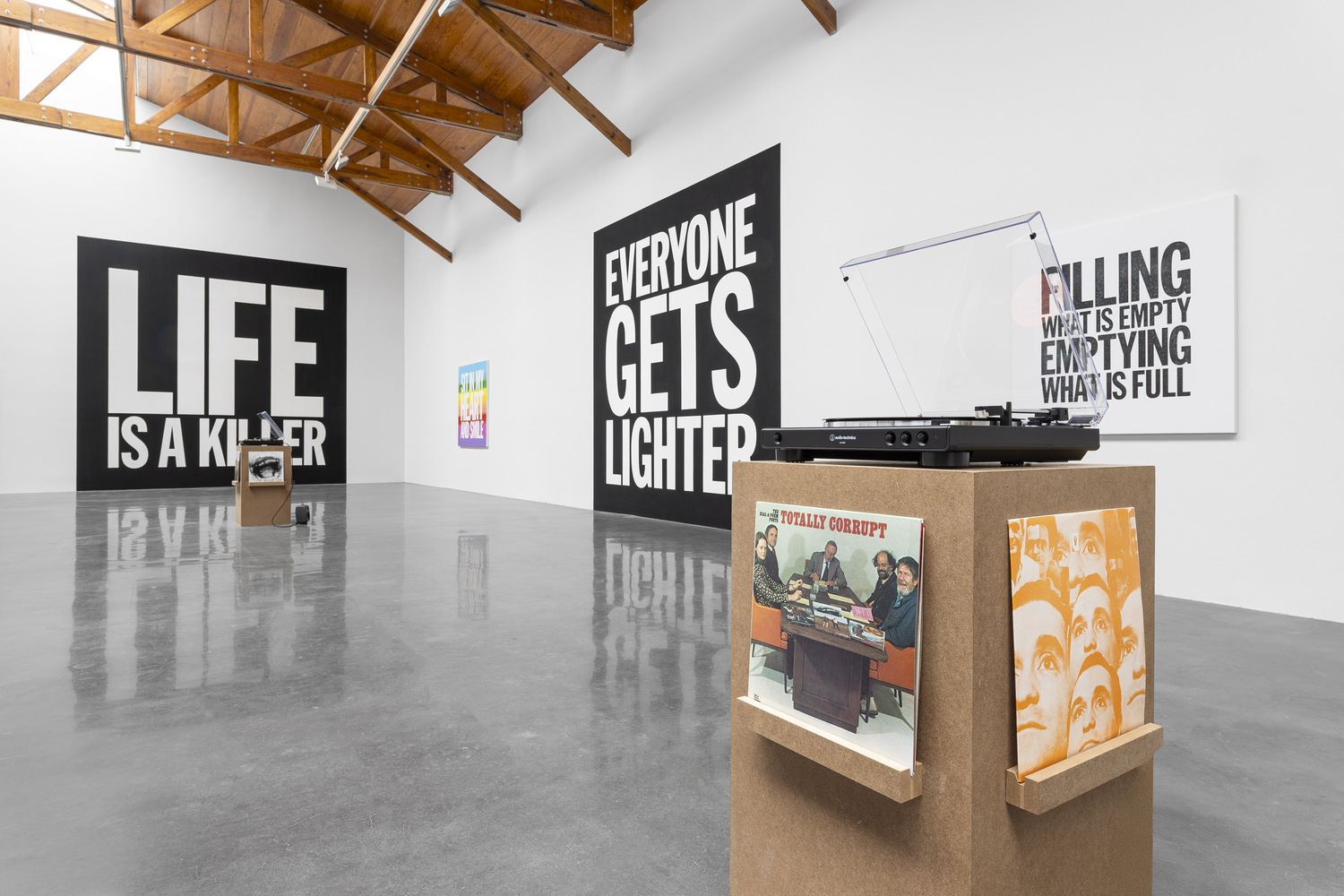
The kurimanzutto gallery in Mexico City presents John Giorno: LIFE IS A KILLER , the first major solo exhibition in the city dedicated to the legendary American artist, poet, and activist John Giorno (1936–2019). The show brings together works on canvas and paper, murals, audio recordings, videos, and live performances to explore a creative practice in which language becomes visual, sonic, and performative material.
The exhibition will be open until October 24, 2026, after its opening on August 29, and it recovers one of the essential ideas of Giorno's career: a poem does not end on the page, but acquires new lives and meanings each time it is transformed into another medium.
The phrase LIFE IS A KILLER , which gives the exhibition its title, reappears throughout the show in paintings, recordings, performances, and publications. More than a simple expression, it functions as a demonstration of how Giorno understood language: as a material open to repetition, transformation, and reinterpretation.
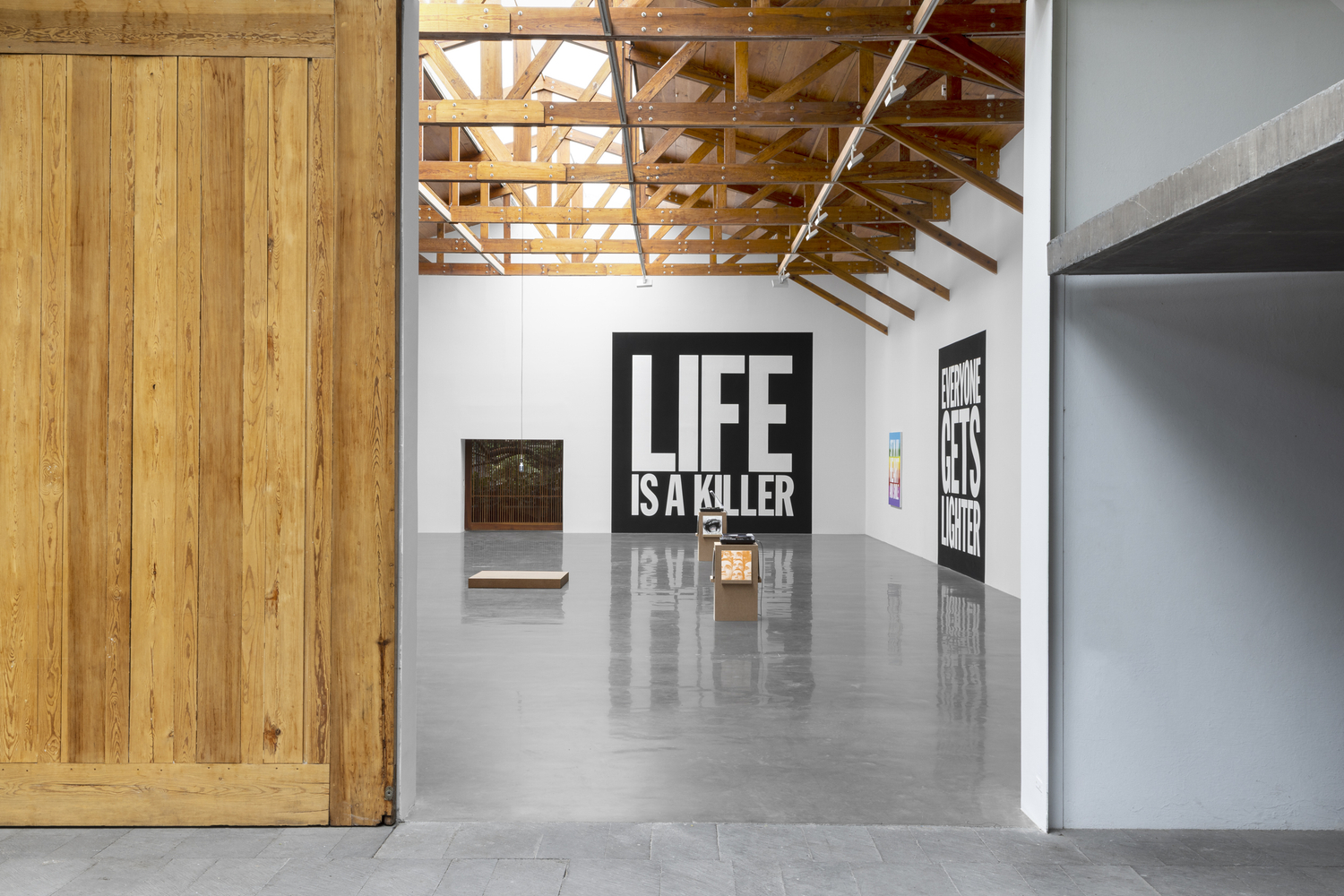
This concept reaches its peak in his Poem Paintings , a series the artist began in the late 1980s. In these works, words transcend their purely literary nature to become highly intense visual compositions. Contrasts between black and white and the colors of the rainbow transform phrases into images, while the mural paintings allow language to transcend the confines of the canvas and extend throughout the gallery's architecture.
Phrases like LIFE IS A KILLER , SPACE FORGETS YOU , and EVERYONE GETS LIGHTER take on new meanings through changes in scale, color, and context. The poem thus ceases to be merely something to be read and becomes something to be contemplated, physically occupying a space.
Giorno's interest in expanding the boundaries of poetry was closely linked to the artistic and literary scene of New York in the second half of the 20th century. His career maintained connections with key figures such as Allen Ginsberg, William S. Burroughs, and Andy Warhol, in a context where the boundaries between poetry, visual art, popular culture, and performance were beginning to blur.
His lifelong commitment to Tibetan Buddhism also had a decisive influence, reinforcing his perception of language as something capable of reinventing itself through repetition, scale, color, and context. In his work, a word never remains completely fixed: it changes when the perspective from which it is viewed changes.
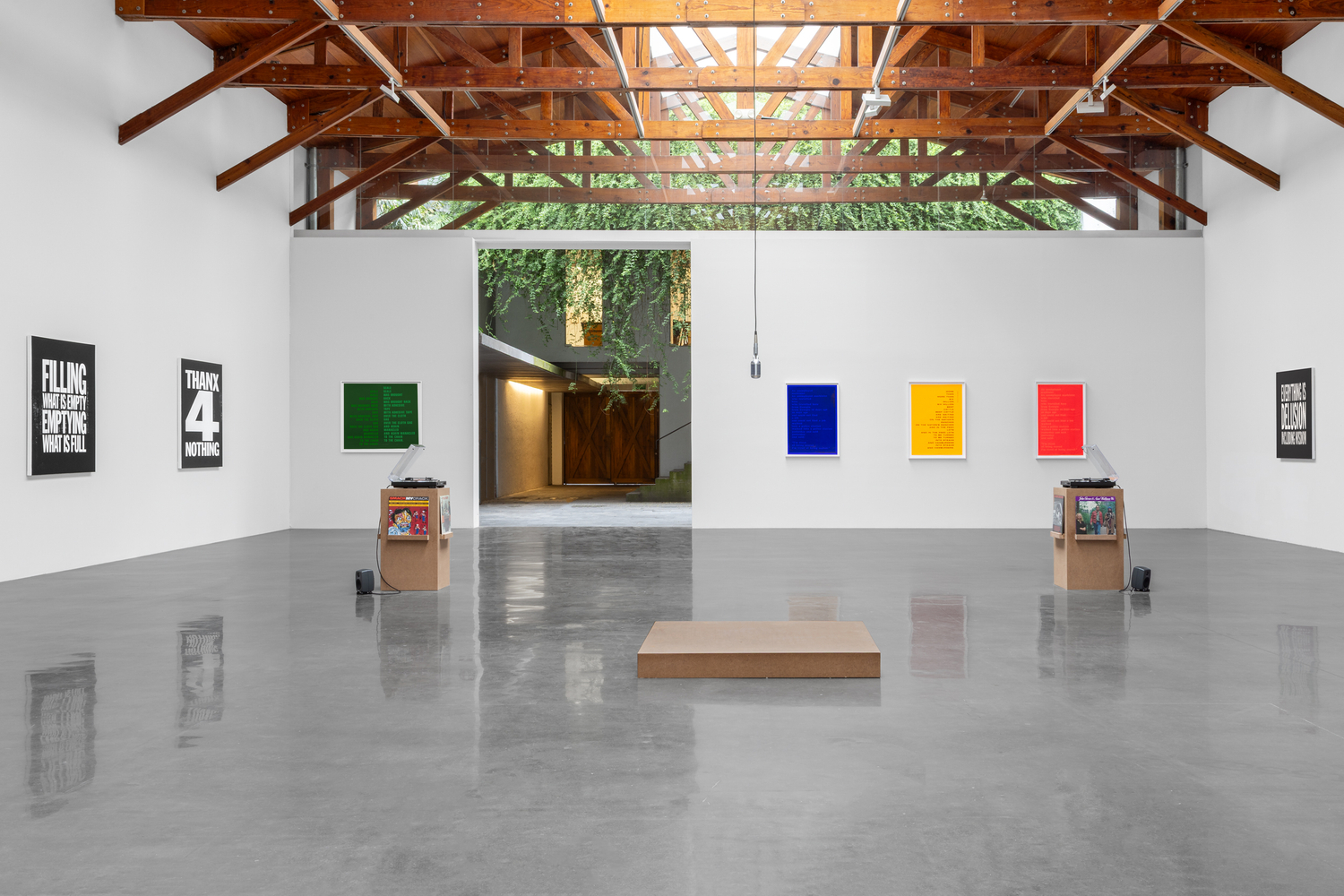
The exhibition also includes a selection of screen prints created between the late 1960s and early 1970s, constructed from newspaper headlines, magazine articles, and advertisements, along with texts by the artist himself. Giorno thus transforms the languages of the press and mass communication into poetic material, appropriating images and words intended for everyday consumption and giving them a new dimension.
Two of these works revive the double-column format that Giorno frequently used. This arrangement invites the reader to read the poems aloud and foregrounds essential elements of his practice, such as voice, rhythm, repetition, and the different layers a single text can acquire.

You may be
interested
...