Exhibitions
The spiritual power of medieval objects
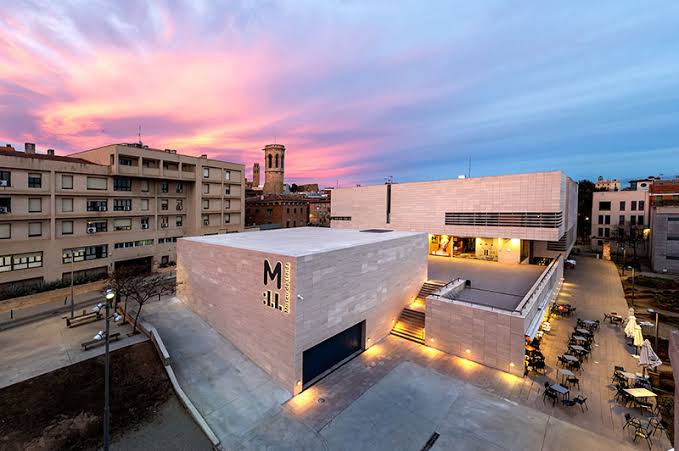
The Diocesan and Regional Museum of Solsona presents an exhibition that explores the relationship between objects, religion and transcendence in medieval Catalonia through 28 pieces and six thematic areas.
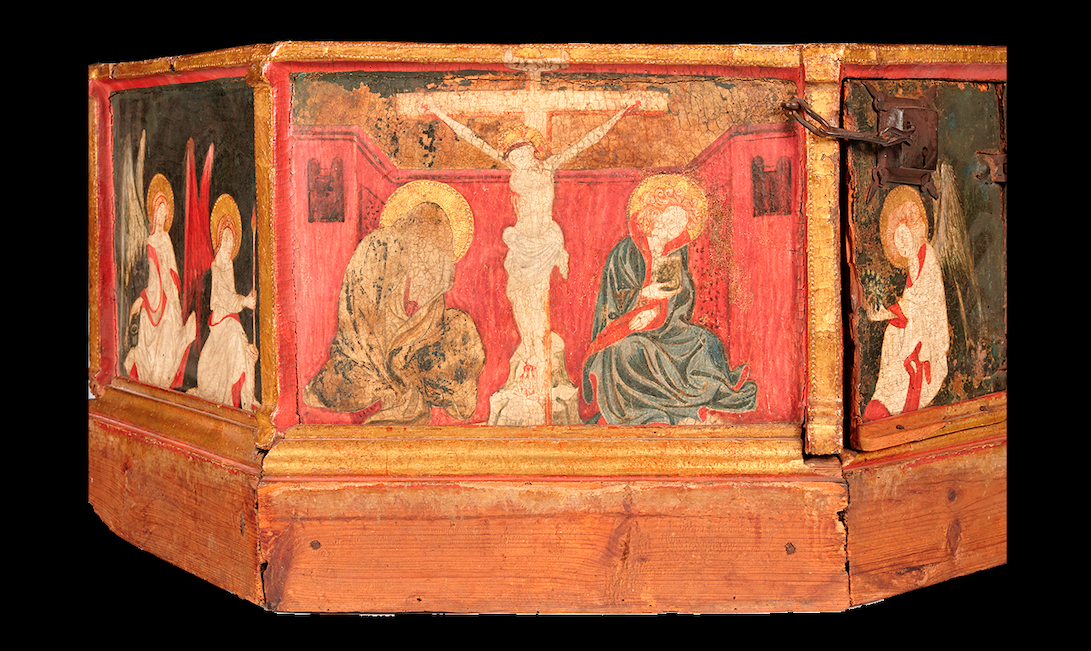
Medieval Catalonia built much of its religious experience through objects that went far beyond their material function. Images, relics, liturgical pieces, devotional objects or materials from distant lands acted as bridges between the earthly world and a spiritual reality that was often considered invisible.
This relationship is the starting point of Instruments of the Soul. Matter and Spirit in Medieval Catalonia , an exhibition project shared by the Episcopal Museum of Vic, the Museum of Lleida, the Museum of Art of Girona and the Diocesan and Regional Museum of Solsona. Curated by art historians Marc Sureda and Albert Velasco, the proposal takes a different form in each of the four venues, with a selection of its own works and four complementary stories.
In Solsona, the exhibition brings together 28 objects that allow us to get closer to the different ways in which medieval society linked materiality with transcendence. Most of the pieces come from the collections of the Museum itself, although the selection also incorporates works from other institutions.
Among these additions is a 16th-century bestiary preserved in the Diocesan Archive of Solsona and a relics archive from Santa Maria de la Torreta, in Montmajor, dating back to around 1043. The exhibition also allows us to see for the first time in the Solsona museum the Virgin of the Remedy, from the chapel of Sant Esteve in the castle of Cambrils, in Odèn. This is an exceptional Romanesque carving that entered the museum in 2024 in the deposit of Fermí Plana Espuga.
The selection is completed with some of the most outstanding pieces from the permanent collection, such as a mid-15th century Arnolfini lamp, probably from the Rhine or Meuse basin; a Cretan icon of the Virgin and Child, dated around 1500, and a glass lipsanotheca made in the eastern Mediterranean before the year 1000.
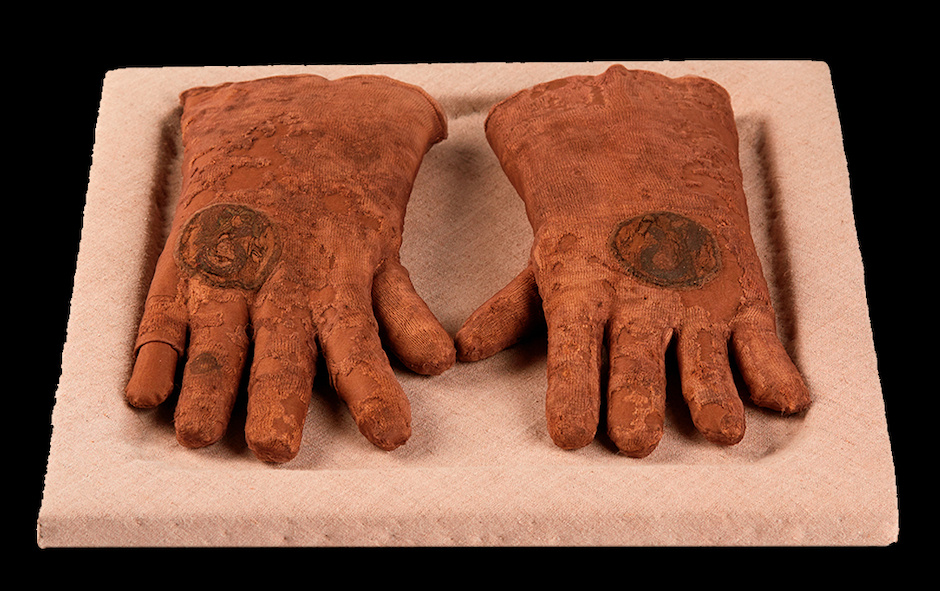
One of the values of the proposal is, precisely, to also recover pieces that usually have less visibility because they are kept in the Museum's reserves. This is the case of the gloves of Ponç de Vilaró, from the end of the 13th century; the reliquary arm of Saint Blaise, from the second half of the 14th century, or the Christ Baron de Dolors with the Arma Christi , from the second quarter of the 15th century.
Six ways to approach the sacred
The exhibition is divided into six areas that propose different ways of understanding the relationship between matter and spirituality. The proposal focuses not only on the artistic value of the objects, but also on their capacity to generate experiences, transmit meanings and connect the faithful with the divine dimension.
The first area, With the Five Senses , focuses on sensory experience. Medieval liturgy simultaneously involved sight, hearing, smell, touch, and taste, making the senses a gateway to religious experience.
The language of matter delves into the meaning of materials. Their value depended not only on luxury or rarity, but also on the physical properties that made them capable of evoking certain ideas and transmitting spiritual meanings.
The third space, In Body and Soul , addresses the importance of the body within Christian theology. The idea of the incarnation of Christ allows us to understand the prominence of relics and other objects linked to corporeality, as well as the physical presence of images in cult practices.
In Windows of Heaven , the exhibition reflects on the will of medieval art to make the invisible visible. Paintings, sculptures and other objects were not conceived simply as representations of saints or sacred figures, but as instruments of mediation with a supernatural reality.
The most intimate dimension appears in Living with the Sacred , an area dedicated to devotion in private space. During the late Middle Ages, domestic and portable objects linked to religion multiplied, from small images to souvenirs of pilgrimages. Faith, thus, left the strictly liturgical space to also be incorporated into everyday life.
The tour concludes with Transcultural Instruments , which emphasizes the circulation of objects and materials from distant territories. When they arrived in Catalonia, these pieces could acquire new religious or spiritual uses and become witnesses to the exchange between different cultures and traditions.
You may be
interested
...