
Exhibitions
Goya facing the ghosts of his time
The Álava Museum of Fine Arts presents Fantasy and Reason: Goya's Prints in the Álava Museum of Fine Arts Collection , an exhibition that brings together the four major series of engravings by Francisco de Goya (1746-1828): Caprichos , Disasters of War , Tauromaquia , and Disparates . This exceptional collection has been part of the museum's holdings since 2022.
The prints came to the Álava institution through a payment in kind for tax debts made by the Celaya Letamendi Foundation to the Álava Provincial Council. The collection offers a glimpse into one of Goya's most incisive facets and demonstrates how, through engraving, the artist transformed the image into a tool for critique, reflection, and questioning of his time.
The four series explore diverse themes such as violence, war, abuses of power, superstitions, injustices, and certain human behaviors. These images do not offer definitive answers, but rather compel the viewer to pause and construct their own interpretation.
Among the collected pieces, the different editions of the series also stand out. Caprichos , Desastres de la guerra and Disparates correspond to first editions, while Tauromaquia is represented by a second edition.
A scathing critique of society
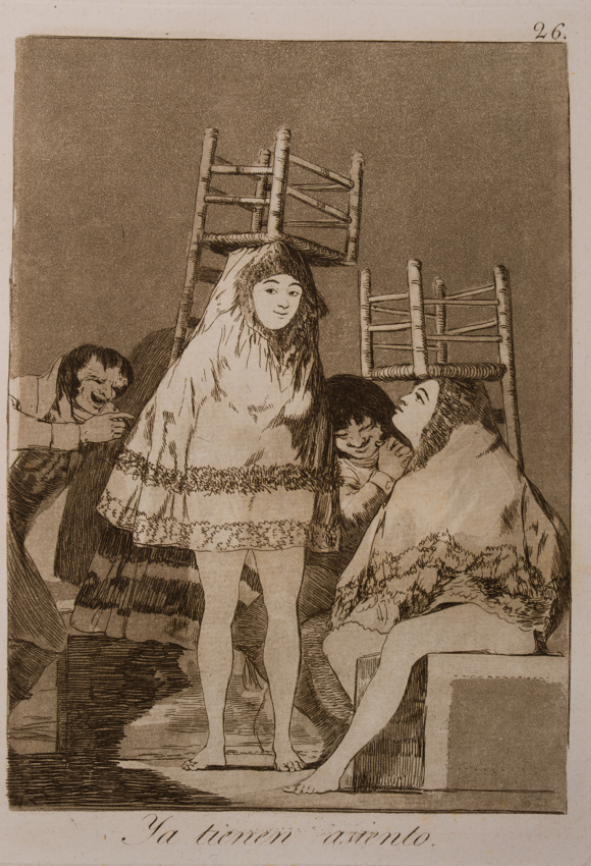
Created between 1797 and 1799, the 80 etchings of Caprichos constitute one of Goya's most audacious undertakings. The artist uses satire and imagination to dissect human behavior and highlight the contradictions present in different spheres of society.
The series was conceived as a whole, almost like a book in which the images could be read in relation to one another. The first edition, published by Goya himself in 1799, had a short lifespan. Fear of possible reprisals from the Inquisition, given the critical and reformist nature of the work, led the artist to withdraw the series from sale.
War turned into horror
The 80 etchings in The Disasters of War were created between 1810 and 1815, against the backdrop of the Spanish War of Independence. In contrast to any heroic portrayal of the conflict, Goya depicts its most brutal consequences: violence, death, suffering, and atrocities.
The scenes possess enormous dramatic intensity and place the victims at the center of the narrative. The artist does not merely document a specific historical episode, but rather constructs a universal reflection on the brutality of war.
The series remained unpublished during Goya's lifetime, probably due to the political context following the return of Ferdinand VII. It was not published until 1863, when the Royal Academy of Fine Arts of San Fernando first published the prints.
Goya's view of bullfighting
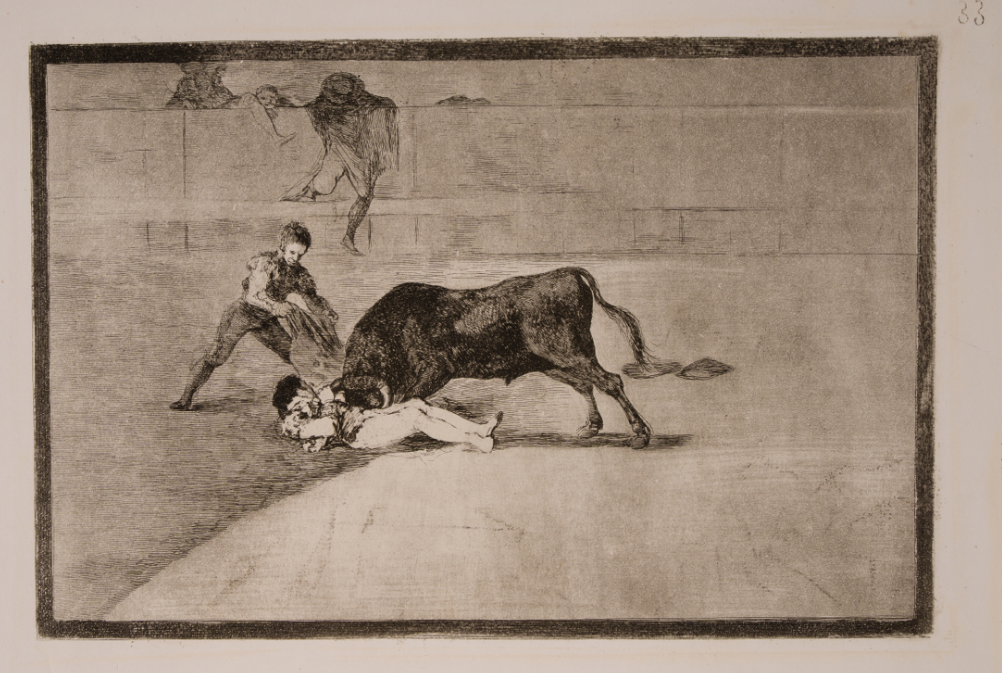
In 1816, Goya tackled a subject of enormous popularity in Spain at the time with Tauromaquia . The series consists of 33 prints dedicated to the world of bullfighting, a theme seemingly far removed from the political content of other works by the artist.
However, Goya brings his own unique perspective to these works, marked by contrasts of light and shadow and an approach that departs from a conventional celebration of the festival. The first edition did not achieve the expected commercial success and was considered a sales failure.
The Mystery of the Nonsense
The last of the four great series, Disparates — initially known as Proverbios — was developed between 1815 and 1824, although it was left unfinished when Goya left Spain and settled in Bordeaux.
The series comprises 18 prints characterized by ambiguity, dreamlike scenes, and the difficulty in establishing a single meaning. Unlike other series, the images lack captions and are not numbered to facilitate their order or interpretation.
Goya left the plates unpublished, and the first edition did not appear until 1864, again through the Royal Academy of Fine Arts of San Fernando. The title of the series itself has been subject to interpretation: Proverbs was the name used in that first edition, while later the term Disparates (Follies ) prevailed.
Through these four series, Fantasy and Reason reveals a Goya particularly attuned to the darker aspects of the human condition. His prints continue to resonate with the present because, beyond the historical circumstances that gave rise to them, they speak of fear, violence, injustice, power, and human fragility. A perspective that, more than two centuries later, continues to compel the viewer to look and, above all, to think.


You may be
interested
...