Exhibitions
Agde, the resistance of an exiled Catalonia
The MUME is hosting the exhibition 'Agde, the camp of the Catalans (1939-1942)' until August 31, an exhibition by the Democratic Memorial that recovers the memory of the Republican exiles and the unique cultural life of one of the French concentration camps.
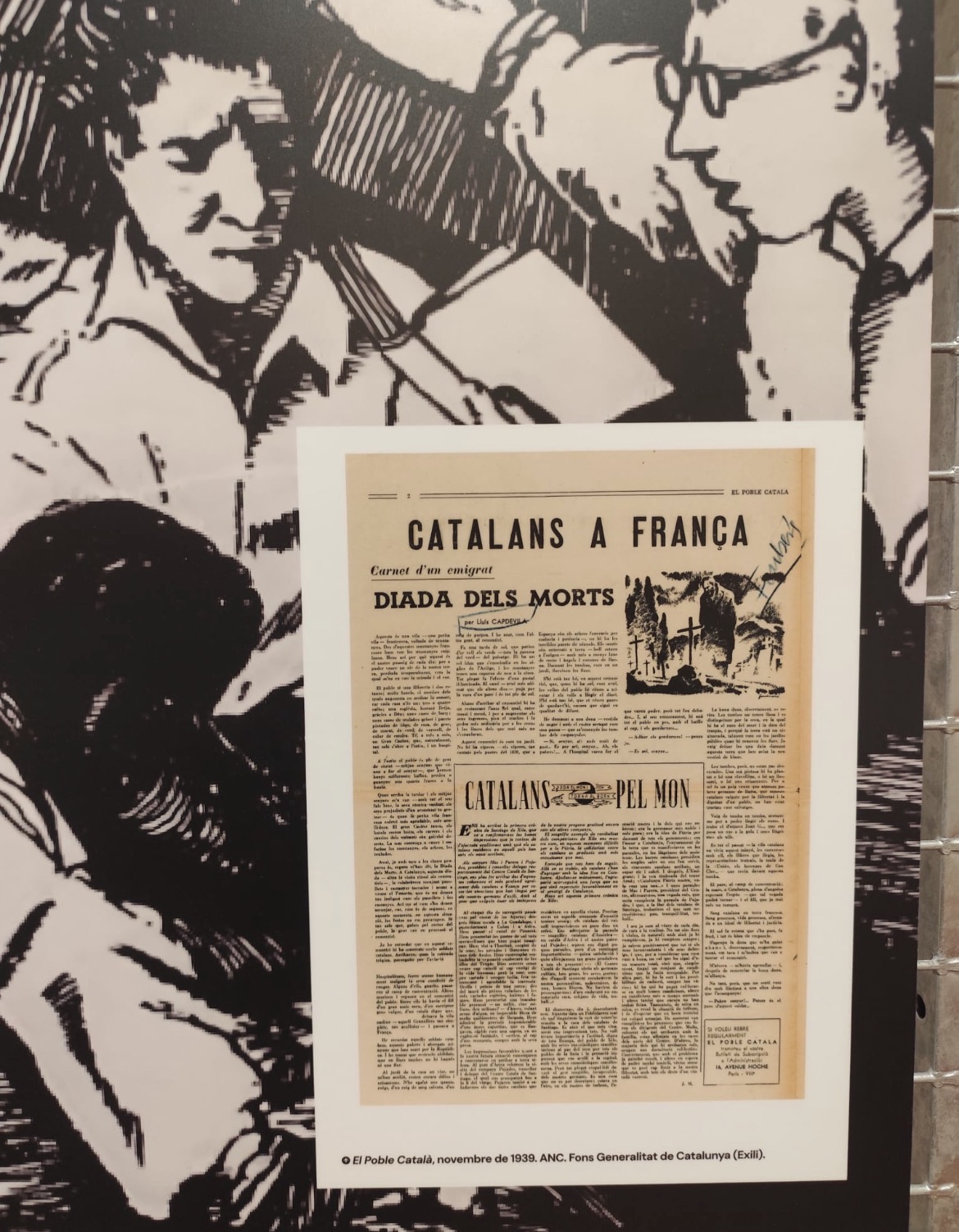
The Exile Memorial Museum (MUME) is hosting the exhibition Agde, the Camp of the Catalans (1939-1942) until August 31, a traveling exhibition promoted by the Democratic Memorial that recovers the history of one of the lesser-known episodes of the Catalan republican exile after the Civil War.
The proposal follows the trajectory of the Agde concentration camp, in the south of France, where numerous Catalan refugees were interned. Over time, the space acquired a marked identity of its own and became a kind of small Catalonia outside of Catalonia, a place of seclusion but also of cultural resistance, solidarity and collective reconstruction.
The exhibition, which has visited different towns and cities —including Barcelona, Agde, Paris, Cubelles and El Vendrell— is curated by Laia Arañó, doctor in Contemporary History from the Autonomous University of Barcelona and author of the doctoral thesis dedicated to the Agde camp and the book The Agde Camp in the French Concentration Camp System (1939-1940) , published in 2024.
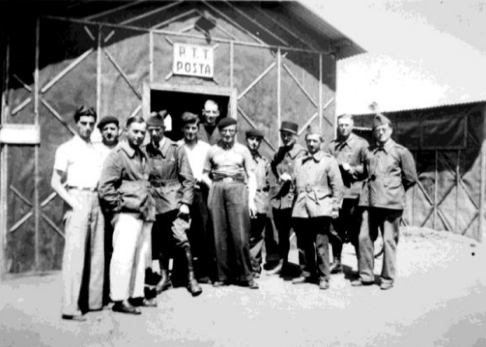
Postal service of the Camp d'Agde. (1939). J.Vilamosa Collection, Agde.
A camp to welcome thousands of refugees
On February 28, 1939, General Ménard, responsible for French internment centers, informed the prefect of Erau of the decision to build a new concentration camp in the municipality of Agde. The aim was to transfer up to 25,000 Republican refugees who were interned in the improvised camps on the beaches of Roussillon and thus relieve the economic and logistical pressure on the Pyrénées-Orientales department.
But Agde ended up developing its own characteristics that differentiated it from other camps in the French concentration system. The process of "Catalanization" of the space strengthened the bonds between the inmates and generated a strong sense of belonging. In conditions marked by precariousness, control and isolation, collective identity became a tool for survival.
Life in the camp was not limited, however, to the daily routine of internment. Despite the monotony and harsh conditions, Agde became a focus of social, cultural, sporting and musical activity. Catalan culture played a central role and allowed the maintenance of forms of sociability and expression that connected the refugees with the country they had left behind.
In this sense, the Agde camp also contributed to Catalan cultural reconstruction in exile, converting a space designed for confinement into a place to preserve memory, language and community bonds.
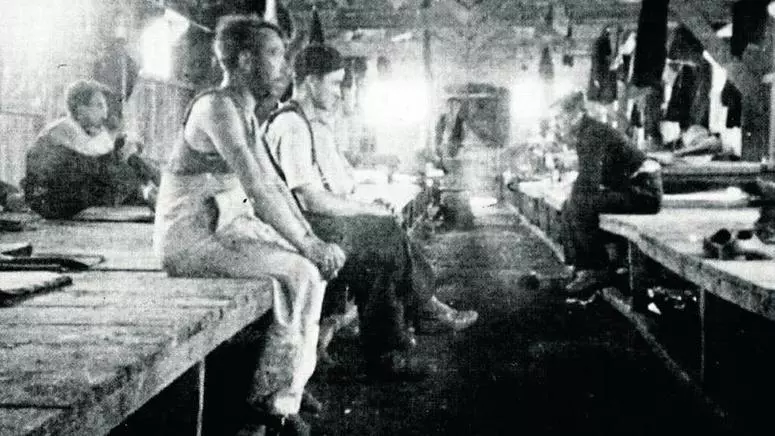
'Agde, the field of the Catalans', Source: Josep Vilamosa.
Memory through documents
The exhibition is divided into several thematic areas that allow us to get closer to the living conditions of the inmates, the relations between the refugees and the French authorities and the complex European geopolitical context of the years before and after the Second World War.
Unpublished photographs, archival documents and testimonies contribute to reconstructing the history of the camp and, at the same time, putting faces to the people who lived there.
The exhibition design itself reinforces this experience. The different panels and display cases are organized around a metal structure similar to a fence that delimits the space and evokes the atmosphere of confinement and surveillance typical of concentration camps.
Agde, the Camp of the Catalans (1939-1942) is part of the European project Exilis 1936-1946 and has a clear cross-border vocation. The exhibition is bilingual, in Catalan and French, and also offers texts in Spanish and English.
At the MUME, the history of Agde is presented as an exercise in memory about the republican exile, but also as the testimony of a community that, in the midst of adversity, found in culture and collective identity a way to resist.

You may be
interested
...