Exhibitions
Mallorca before and after the tourist postcard
The Casa Planas Archive revisits at the Toni Catany International Photography Center the evolution of leisure architecture and the images that turned the Balearic Islands into a tourist destination.
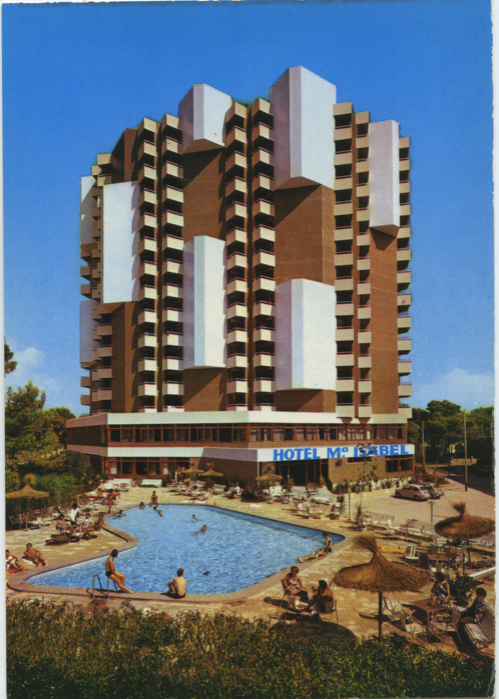
Photography can explain much more than what appears in front of the camera. It can also reveal how a territory is transformed, what image is constructed of it and how this representation ends up forming part of its collective imagination. Postcard architecture. Casa Planas Archive, at the Toni Catany International Photography Centre from July 9 to September 27, 2026, starts precisely from this double condition of photography as a document and as an object of study.
The proposal recovers a selection of materials preserved in the Casa Planas Archive, a set that allows us to trace the transformation of Mallorca through images linked to tourism. The advertising materials created and collected by the photographer Josep Planas i Montanyà (1924-2016) constitute the starting point of a journey through the evolution of leisure architecture, from the first tourist models to the expansion of mass tourism.
The exhibition thus links photography, architecture and territorial transformation. The first establishments that appeared at the beginning of the 20th century had an eclectic and often domestic architecture. Over the decades, this model gave way to an architecture specifically designed to accommodate the massive influx of visitors. The tourism development of the 1960s and 1970s led to the expansion of large hotel complexes and so-called factory hotels, which became one of the most evident expressions of the new economic model.
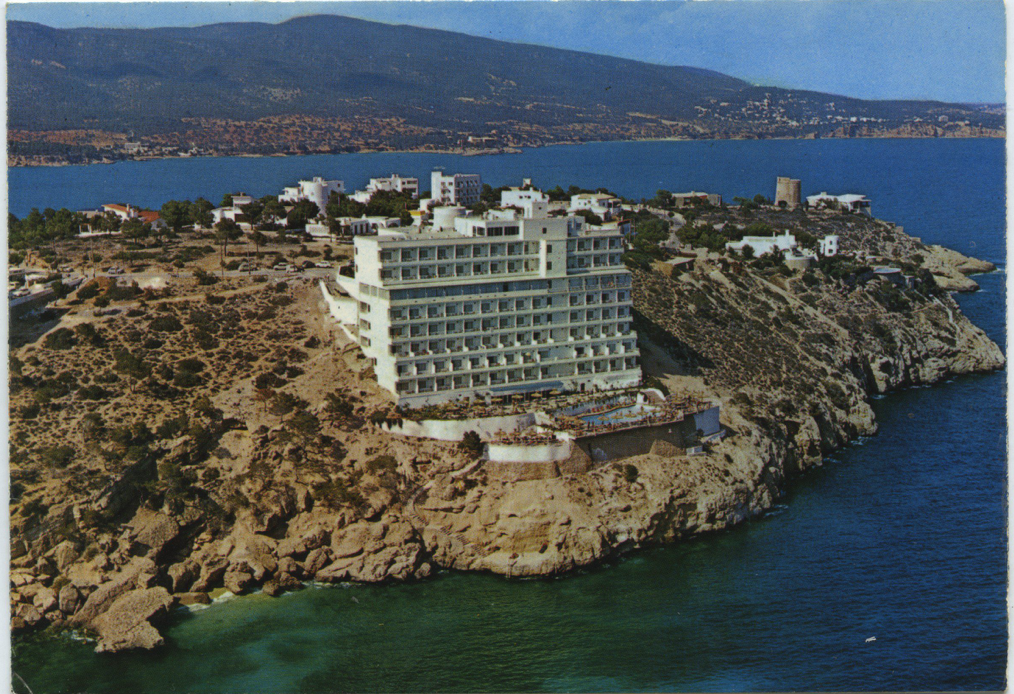
Hotel Florida, Magaluf Beach, 1969, Postcard 2914, © Casa Planas Archive.
In this process, photography played a fundamental role. The images not only recorded the new buildings, landscapes and leisure spaces, but also contributed to creating a certain idea of Mallorca. The tourist postcard became a promotional tool and, at the same time, a witness to a profound social, economic and architectural transformation.
The exhibition is part of the IV Conference on Photography and Architecture, coordinated by Maribel Rosselló and held on 23 and 24 July 2026 at the Toni Catany Foundation / International Centre of Photography. The conference focuses on two decisive moments in understanding the construction of the tourism story of the Balearic Islands and, specifically, of Mallorca: the thirties and the sixties and seventies of the 20th century.
The two periods are approached from different perspectives. To understand Mallorca in the thirties, the focus is on two female travelers, Lady Shepard and Charlotte Perriand, who arrive on the island from very different experimental positions and share the search for a paradise that had not yet been transformed by the explosion of mass tourism. Their approaches allow us to recover an external vision of a territory that was beginning to form part of the imagination of travelers.
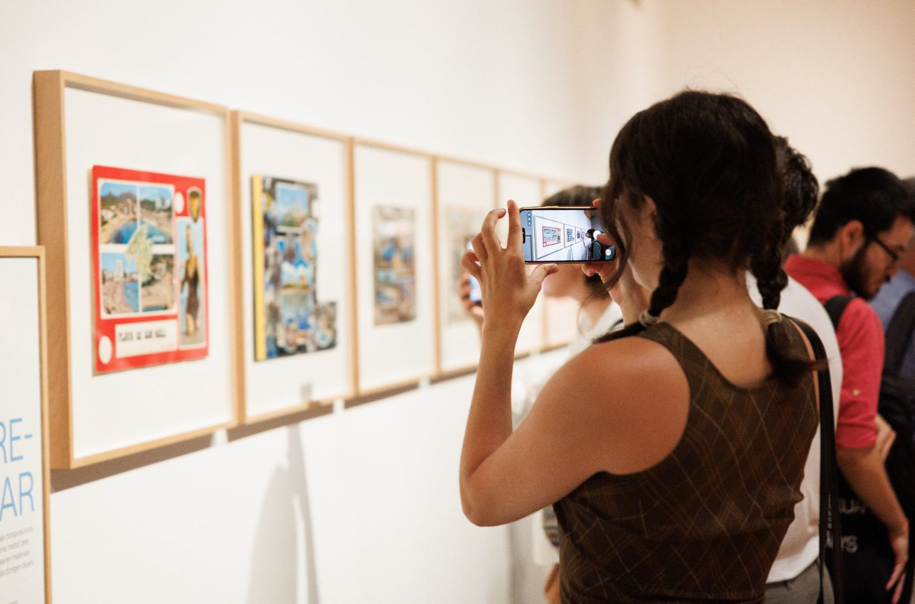
The sixties and seventies, on the other hand, represent the moment of the definitive explosion of tourism. Mallorca and the other islands saw this activity gradually consolidate itself as one of the main economic drivers of the territory. Hotels, urbanizations and new leisure spaces modified the landscape and gave shape to a new tourist reality that was also projected through photography and advertising materials.
It is in this second period that the Casa Planas Archive takes on special relevance, because its materials allow us to approach the stories constructed from the tourist sites themselves. The photographs and communication pieces show how the new spaces were presented to the visitor and what elements were selected to build an attractive image of the islands.
Postcard architecture. Casa Planas Archive, curated by María Sebastián, thus proposes a reading of tourist photography that goes beyond its promotional function. The images become a tool for understanding the history of Mallorca, the transformation of its landscape and the construction of an imaginary that still conditions the way the territory is perceived today.

You may be
interested
...