Exhibitions
'Tired Palm Trees' the tropical landscape as a memory of exploitation and resistance
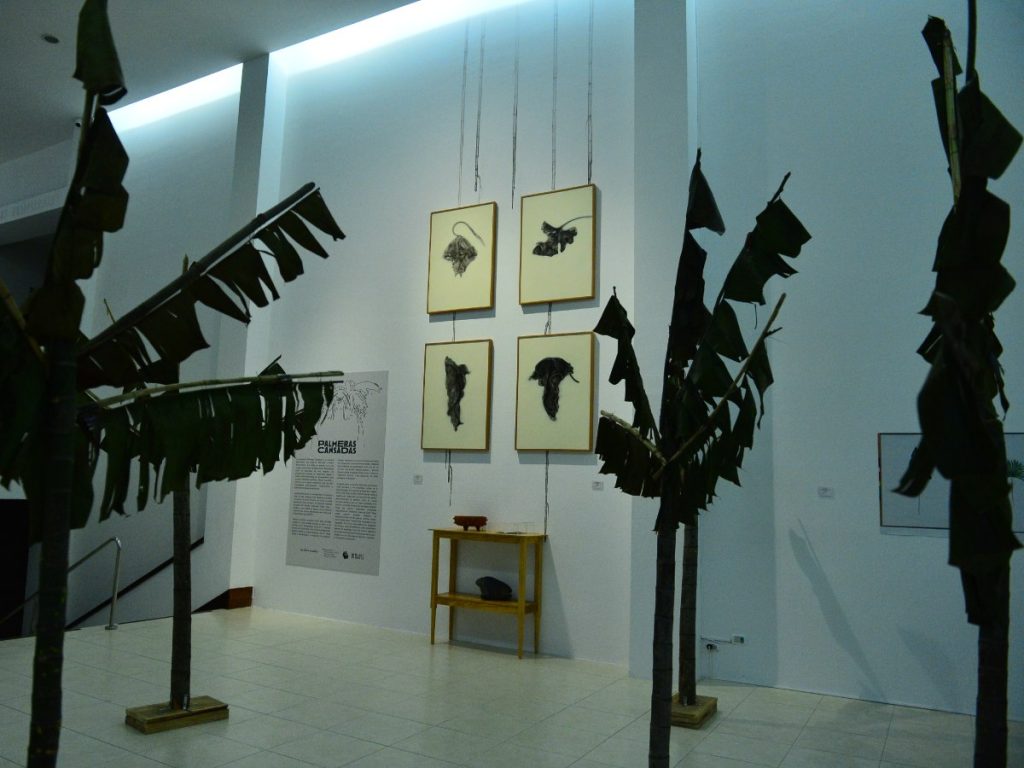
The palm tree, for decades an emblem of tourist paradises, relaxation, and exoticism, now appears under a new gaze: weary, displaced, and laden with memory. Tired Palm Trees , the art project presented by the Museum of Art of El Salvador (MARTE) until March 2027, proposes a critical approach to the tropical landscape, understanding the palm tree as a witness, metaphor, and living archive of the social, historical, and environmental tensions of the contemporary world.
The exhibition, conceived as a transnational and itinerant project, originated in Austria and subsequently traveled to international spaces such as Le Cube in 2022 and Art Sonje Center in 2024. Its arrival in the Salvadoran context acquires a unique dimension by bringing together international artists and local creators around a common reflection: the way in which tropical nature has historically been used as an idealized image, tourist commodity, or representational tool that conceals power conflicts, colonial processes, and ecological crises.
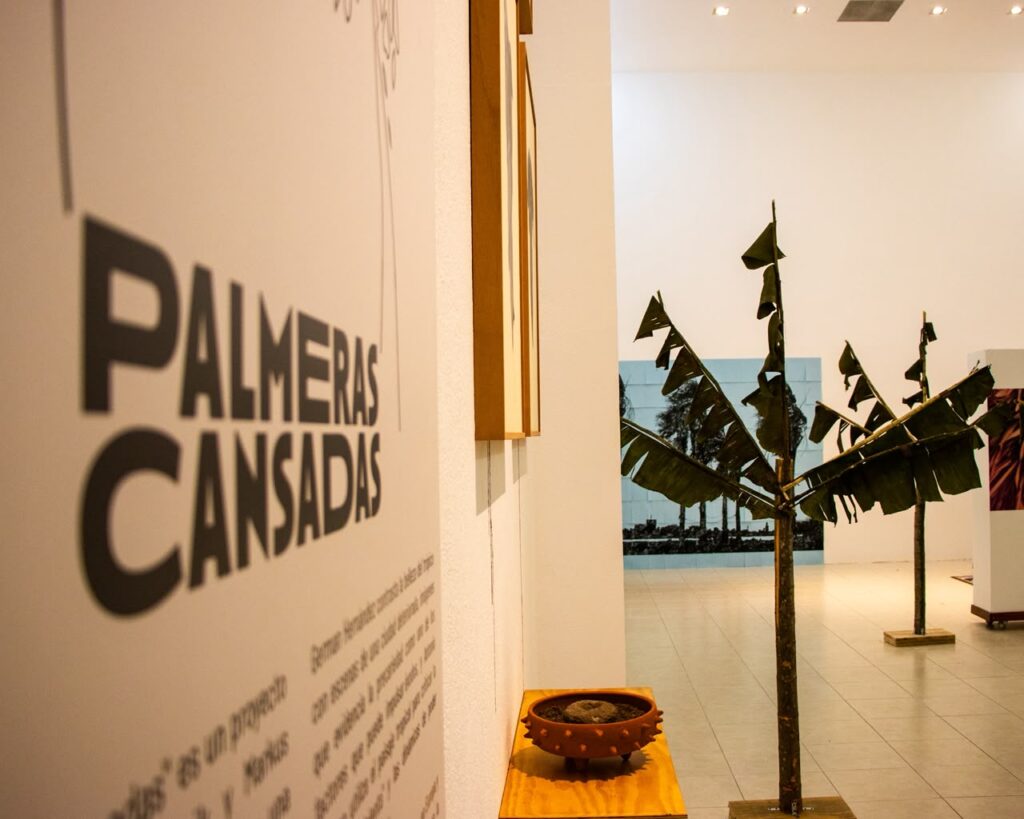
From this perspective, palm trees cease to be mere elements of the landscape and become bodies shaped by history. They are exhausted from sustaining exoticized ideals constructed from the outside, from the consequences of climate change, and from the processes of exploitation, displacement, and territorial transformation that have marked numerous tropical spaces. The exhibition thus establishes a dialogue between plant fragility and human fragility, connecting nature's exhaustion with issues such as structural violence, forced migration, displacement, and the historical memory of El Salvador.
The exhibition brings together works that address the territory as a space where wounds and forms of resistance coexist. In this context, Carlos Cañas, with his work Sumpul (1984), offers a historical perspective in which the Salvadoran landscape appears as an archive of pain and memory, recalling the marks left by political violence. The installation Tropical Sculptures: The Possibility of Impossibility , by Víctor Cruz and Hugo Portillo, uses precarious materials such as wood and banana leaves to question the image of the tropics as a mere decorative backdrop for external consumption, transforming fragile elements into vehicles for reflection on identity and territory.
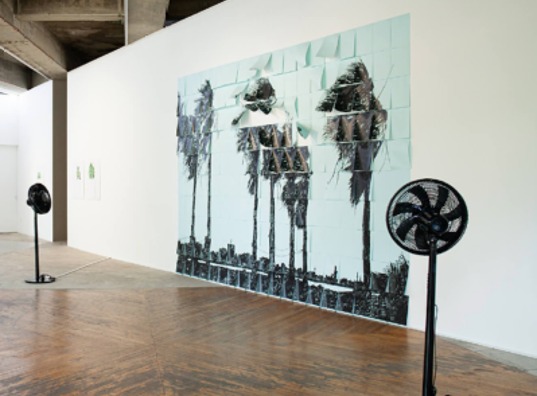
The relationship between nature and displacement is present in Mauricio Esquivel's drawings, created with charcoal from dried leaves collected in New York. His pieces transform vegetation into a migrant subject, an image of absence and exile that speaks of the loss of origins and the difficulty of return. Meanwhile, in "Île de Gorée," Katrin Ströbel incorporates fans that generate a constant artificial wind across her drawings, evoking colonial memory and the history of the transatlantic slave trade through a palm tree that becomes a silent witness to the wounds of the past.
The environmental crisis plays a central role in the work of Marie Ouazzani and Nicolas Carrier, whose video installation, Blessure Corail, explores the scars left by climate change and the vulnerability of tropical ecosystems to human activity. In a more empathetic vein, Edith Payer offers an intimate approach to the plant world, granting it a sensitive dimension that invites reflection on nature's capacity to be affected by environmental transformations.
The exhibition also addresses the human body as another territory subject to tension. Mateja Bučar's video performance, *I would've been a palm tree *, shows a dancer reproducing with her body the movement of a palm tree in the wind, establishing a parallel between plant resilience, physical vulnerability, and social fragility. In his pieces, Ronald Morán transforms materials associated with control and surveillance, such as barbed wire, into complex plant structures that question the boundary between protection and confinement, between security and exclusion.
The contemporary Salvadoran landscape is explored in the photographic work of German Hernández, who juxtaposes the beauty traditionally associated with the tropics with scenes of urban decay and everyday hardship. His images dismantle the tourist postcard to reveal a territory inhabited by real conflicts. In his paintings, Antonio Romero constructs somber scenarios traversed by intense splashes of color that function as signals of tension and denunciation of the power dynamics and violence that affect the landscape.
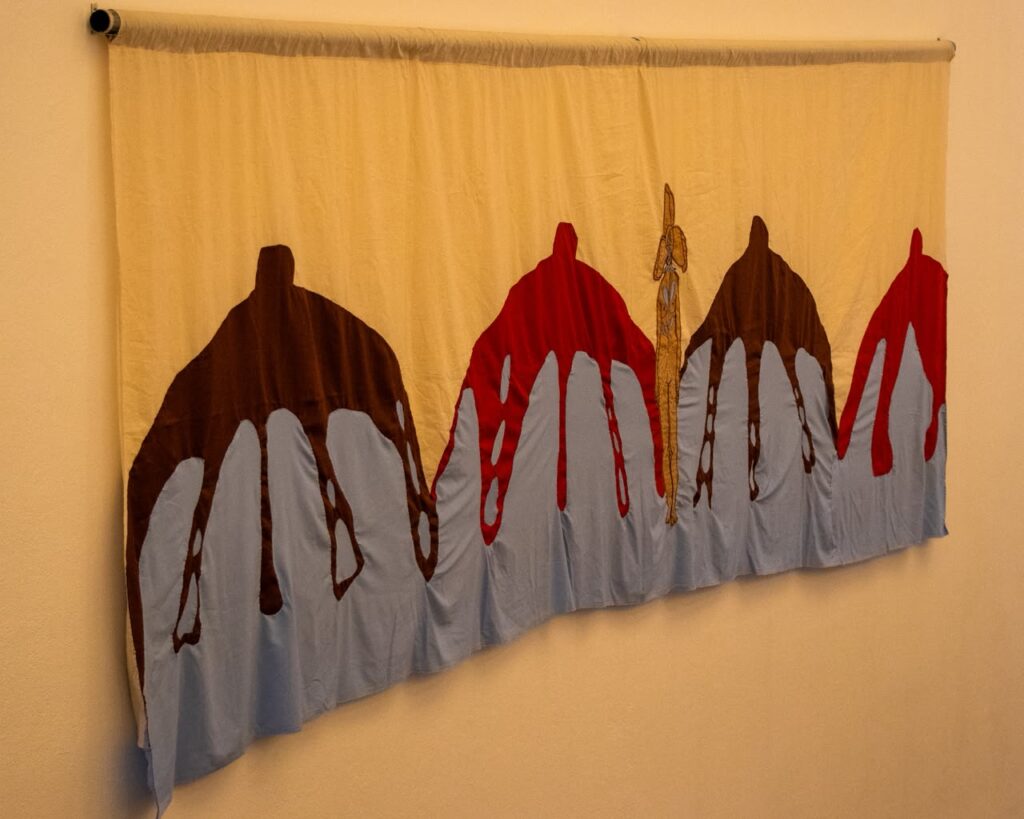
From a perspective linked to the body and identity, Gabriela Novoa connects plant forms with sensuality and the female body, reclaiming the idea of the body-territory as a space of autonomy and resistance. Finally, Regula Dettwiler focuses on the commercial appropriation of nature through the study of artificial and industrial plants, questioning the replacement of living ecosystems with aesthetic simulacra and highlighting the mechanisms of contemporary greenwashing.
You may be
interested
...