Exhibitions
MAGBA Origins: Looking back to move forward
A peaceful oasis away from the crowds of Barcelona, Palo Alto is one of the most pleasant places to escape the summer heat. This year, there's one more reason to visit: the local generative art community is presenting the third edition of MAGBa. The exhibition is open until August 31.
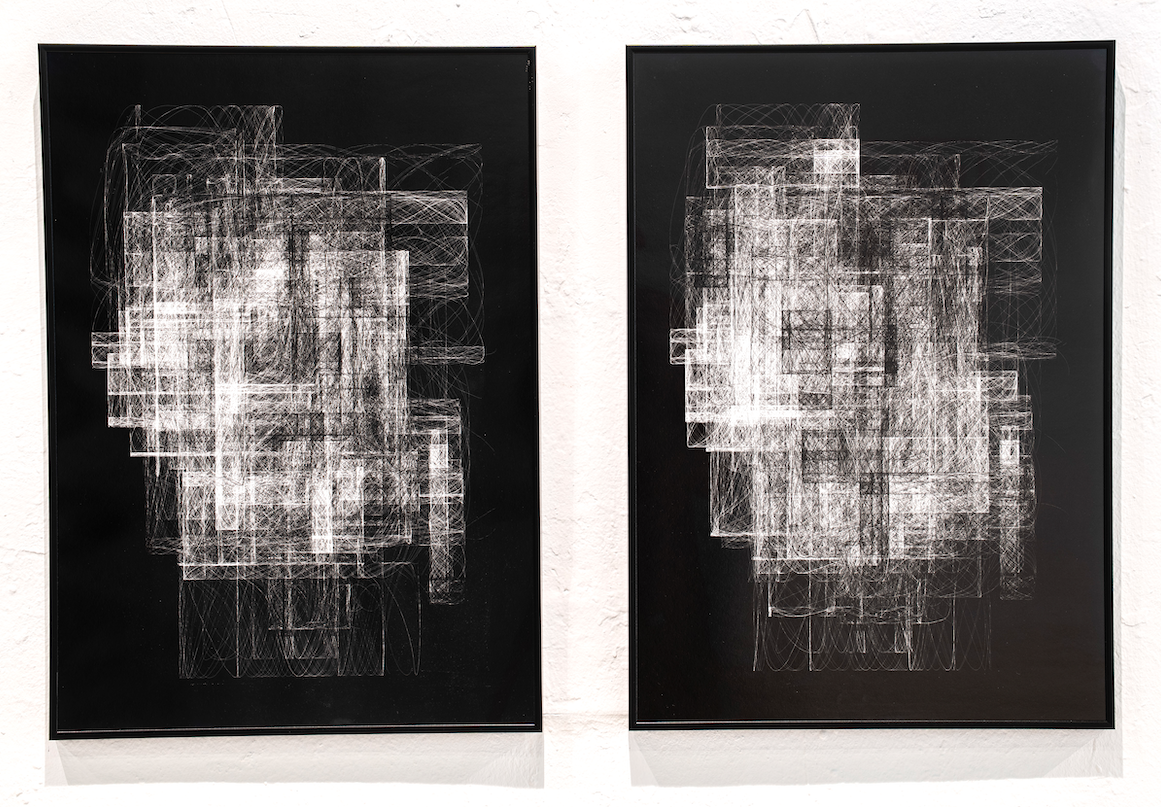
Now in its third edition, MAGBa, Barcelona Generative Art Exhibition, was born in 2024 as a grassroots initiative driven by Barcelona’s generative art scene. The first edition aimed to clarify the difference between generative art and images created with artificial intelligence, two practices that began to be confused as text-to-image models became popular. The following year, the exhibition addressed the persistent idea of the immateriality of code, inviting artists to transfer computational processes to physical media. The results ranged from prints and plotter drawings to tube televisions, microorganisms, comics and even the human body.
This year's edition, Origins, establishes a dialogue between the pioneers of algorithmic art and contemporary creators. The proposal is based on the fiftieth anniversary of Computer Graphics and Art, the influential magazine published between 1976 and 1978 that documented some of the first artistic experiments with computers. Its black and white pages, full of plotter drawings, algorithmic geometries and handwritten annotations, unwittingly recorded the birth of a new artistic language.
In Palo Alto, a total of nineteen artists, all of whom are linked in one way or another to the creative community of Barcelona, respond to works published in those issues. Each one has chosen a historical piece and created an original reinterpretation of it using contemporary programming languages and computational tools. Each work is exhibited alongside its historical reference, allowing the visitor to draw a direct line between the first generation of artists who worked with computers and today's creators.
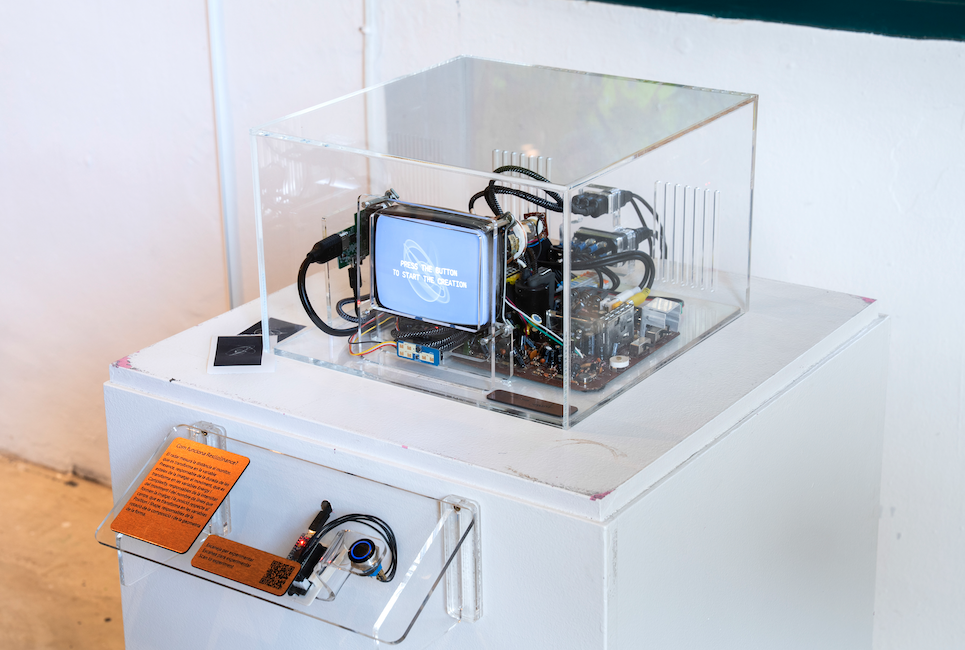
The decision to limit the entire exhibition to black and white is an aesthetic homage. It recaptures the visual language of early computer-generated graphics while eliminating the technological spectacle that often surrounds today's digital art. Rather than mesmerizing the audience with novelty, Orígens focuses on artistic intent. The restrained palette and familiar geometric vocabulary offer a welcome respite from the constant pursuit of the next technological sensation.
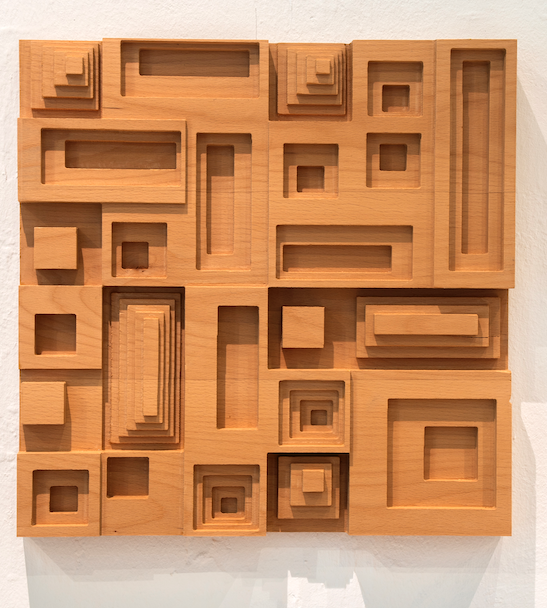
The exhibition also demonstrates how far the field of generative art has expanded. While many artists revisit the geometric vocabulary of modernism—the grids, modular structures, and serial systems explored by figures like Zdeněk Sýkora and Vera Molnár—others engage in dialogue with Op Art, Ben F. Laposky's pioneering Oscillations, Sol LeWitt's instruction-based Wall Drawings, or even the growth patterns of nature.
One of the most notable pieces is Anna Carreras's // // = =, inspired by Edward Zajec's The Cube. It is a surprisingly difficult work to photograph. At first glance, the black-on-black surface reveals little. It is only when the viewer moves through the space that the matte and glossy surface react differently to the light, causing geometric shapes to appear and disappear.
Carreras transforms Zajec's structures into an interactive drawing system while deliberately preserving programming errors that distort perspective and generate impossible geometries. The project investigates kinetic abstraction and quasi-architectural forms that acquire volume thanks to perspective and, in this case, also to light. The piece almost behaves like a switched-off screen: instead of emitting light, it depends entirely on ambient light and the visitor's movement, becoming a subtle inversion of the digital device itself.
Perception is also at the heart of Eloi Maduell's proposal. Responding to a 1976 Computer Graphics and Art editorial by Grace C. Hertlein, which concluded with the question "Can we define art?", Maduell constructs an optical illusion formed exclusively by diagonal black and white structures. "The algorithm behind the creation is a binarizer (black/white) based on a geometric structure formed exclusively by diagonal lines," he explains. The result is an image that changes according to the distance and the perceptual system of each observer. This visual instability becomes a graphic metaphor for the impossibility of defining art.
Miguel Jiménez Benajes (Medusa), on the other hand, shifts the conversation from abstraction to the everyday. His series 20 Mornings is made up of self-portraits generated from videos recorded every morning just after waking up. An algorithm redraws each selected frame using a single continuous line before a plotter executes it and paints it with a pen. In dialogue with the pioneering experiments of Lillian Schwartz, the work asks how the portrait changes when its construction comes to depend on computational procedures.
The political dimension comes with Nico Arbogast’s reinterpretation of Kenneth Knowlton’s famous portrait composed of the text of the Universal Declaration of Human Rights. Fifty years later, Arbogast replaces this text with the terms and conditions of an artificial intelligence provider, while the face becomes Maria, the robot from Fritz Lang’s Metropolis. A small mirror embedded in the lower corner reflects the visitor behind bars formed by the original text of the Declaration. The work transforms Knowlton’s technological optimism into a critical reflection on surveillance, platform capitalism and the legal infrastructures that shape contemporary AI.
In another direction, Jordi Sala Serra (Poperbu) recovers the SNE COMP ART system developed by Hans Korneder and Reiner Schneeberger in FORTRAN. Its reinterpretation exists simultaneously as a flipbook —a paper GIF that comes to life when you turn the pages— and as a digital version in real time. The two forms dialogue with each other, condensing fifty years of technological evolution into two complementary experiences of movement.
With Hans Ulrich Obrist's Protocol Art, currently on display in Venice, and Art Basel's Zero10 section revisiting the history of the beginnings of computer art, Origins arrives at a time when the foundations of computational art are once again taking center stage. Rather than celebrating technological progress per se, MAGBA reminds us that many of the questions posed by artificial intelligence today—about authorship, automation, systems, and the relationship between human intent and algorithmic processes—were already being explored half a century ago. Far from being eclipsed by AI, generative art is presented here as a mature artistic language, with a history, a genealogy, and a future of its own.

You may be
interested
...