interviews
Jesús Navarro: "The new Morera building allows us to deploy all the potential of a 21st century museum"
The director of the Museum of Modern and Contemporary Art of Lleida reflects with Ricard Planas on the new headquarters, the future of museums and the role of culture in social transformation.
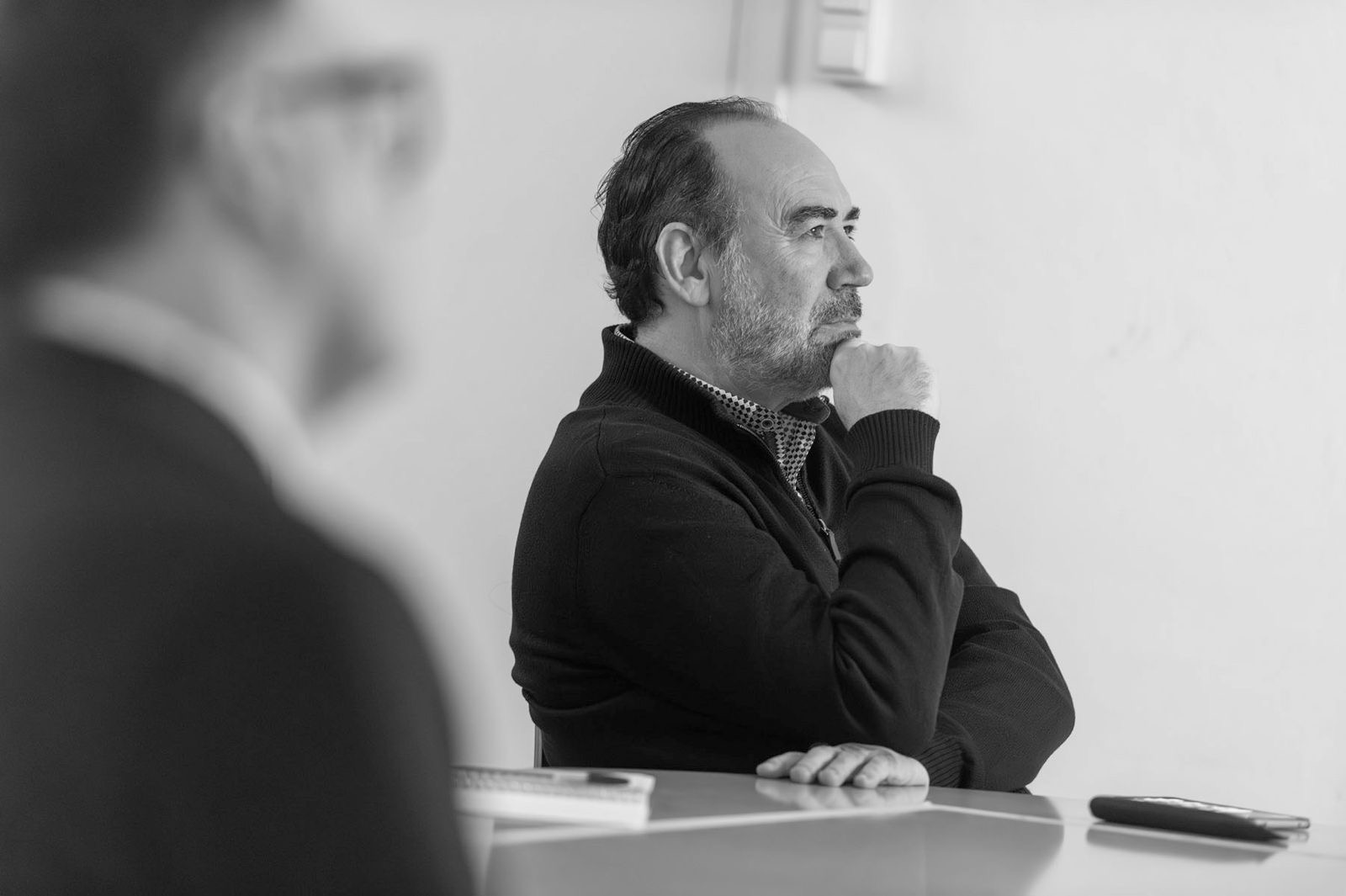
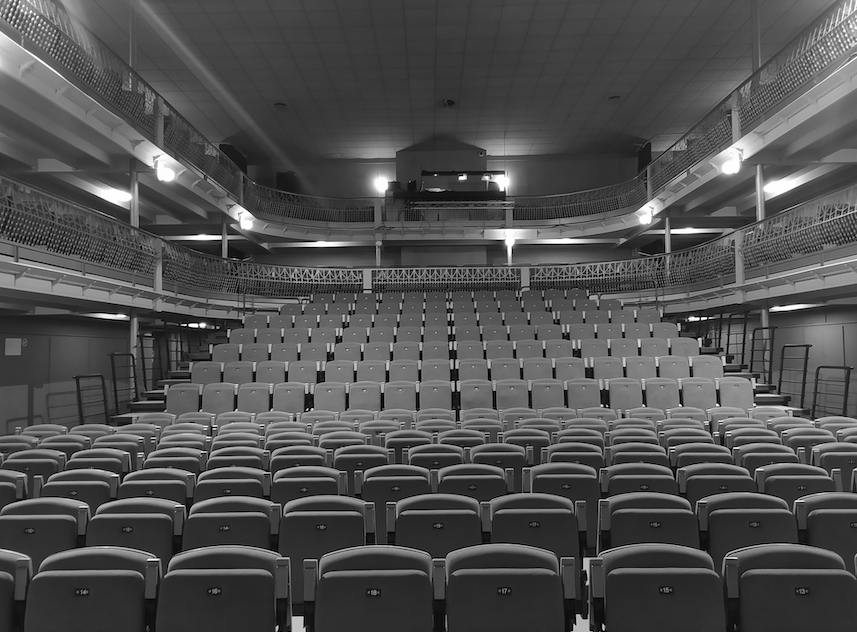
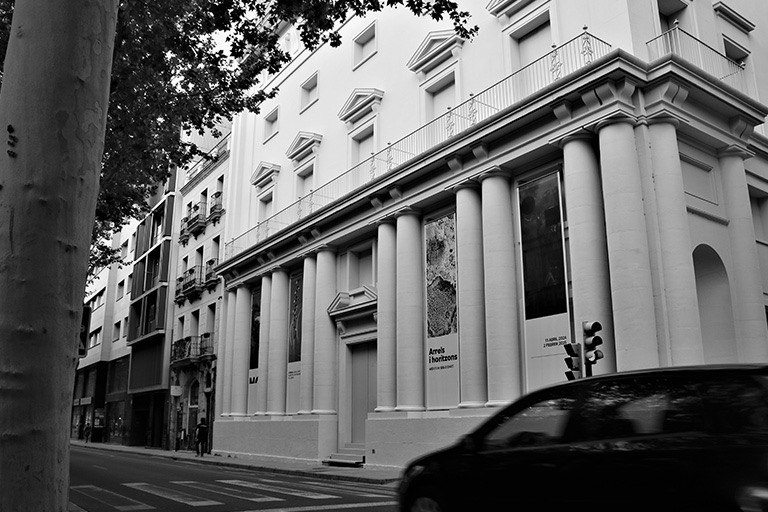
After years of itinerant work and working in temporary spaces, the Morera Museum of Lleida opened a new stage with the inauguration of its new headquarters, a building designed to respond to the challenges of contemporary museums. The new facility has meant much more than a change of location: it has allowed the institution to be provided with an adequate infrastructure to expand its activity, strengthen its visibility and consolidate its role within the Catalan cultural system.
In this interview with bonart, Jesús Navarro, director of the Morera Museum, reviews the process of transformation of the institution, the value of the new building, the artistic ecosystem of Lleida and the main challenges facing museums in the 21st century: from new models of management and participation to the need to update cultural policies, heritage reserves or the role of patronage.
A new building for a 21st century museum
Ricard Planas: For many years the Morera Museum has worked without its own building, maintaining a very efficient activity, but often without the visibility that it deserved. What has the inauguration of the new building and this new dynamic meant for the museum?
Jesús Navarro: Having a definitive headquarters, adapted to the new conditions of what a 21st century museum should be, offers us fundamental anchor points to be able to deploy all the potential of a first-rate museum.
It is true that the Morera has been, throughout its history, a museum characterized by its itinerancy and by having occupied different buildings in the city, always with a provisional character. This situation has generated a certain precariousness in various areas, especially in terms of economic and human resources, but it has also caused a certain lack of visibility of the work that has been done over all these years.
And yet, the work has been constant.
Yes, we have worked continuously for a long time, with a stable line of work, although we have obviously changed scale. We are practically the same team and have maintained constant activity, although now we are starting a new stage with very different possibilities.
Having a new building, with all the symbolism of contemporary architecture applied to museums, gives the Morera a new dimension within the context of the city. The location in the historic center makes the museum's existence much more visible and allows for the development of activities that were previously difficult to imagine.
In the first year you reached nearly 40,000 visitors. Has this impact been maintained once the novelty effect has passed?
In the first year, it is clear that there was also a discovery effect of the building. Without doing any particularly extraordinary programming, we generated around 40,000 visitors.
The most important thing is that in this second year, when the novelty effect has already been reduced, we have maintained similar visitor and user rates thanks fundamentally to the activity generated by the museum.
This has been possible above all through the temporary exhibition program, but also through other proposals linked to the museum, such as the Patio programming, with the installation of unique pieces from the collection, or Digital Art, with projections and initiatives related to artists from the museum.
In addition, we have strengthened educational services, mediation programs and participatory activities, and we have also welcomed proposals from other entities and associations that have seen the Morera as a reference cultural facility.
Today we can talk about a museum where things happen every day. A space that welcomes a loyal audience, but which is also reaching people who have not had contact with a museum before and who, through this diversity of activities, are discovering the world of art and culture.
Lleida, an artistic ecosystem with its own identity
El Morera is part of a cultural ecosystem where we also find institutions such as the Sorigué Foundation or the La Panera Art Center. Has Lleida managed to position itself on the Catalan and Spanish artistic map?
I think that Morera completes the square of the circle. Lleida has a very powerful artistic and museum system, with cultural institutions linked to art that form a network that is difficult to find in other cities in Spain.
We are talking about the Lleida Museum, which preserves and disseminates collections that span from antiquity to practically the 19th century; the La Panera Contemporary Art Centre, which works on contemporary art from a cross-disciplinary perspective; the Sorigué Foundation, with national and international visibility thanks to its collections and exhibition spaces; and also CaixaForum and the Provincial Council exhibition halls linked to contemporary art.
In this panorama, the Morera brings its specificity as a museum of modern and contemporary art. I believe that it is the facility that unites these two extremes, from the first avant-gardes to contemporary languages, and that gives Lleida its own personality within the Catalan museum map.
The city must be aware of the potential it has in this area. I believe that, in the coming years, this network of institutions can become one of the great cultural singularities of the country.
New museum models and contemporary debates
In recent years there has been an intense debate about the new museology, especially following the reports and conferences promoted within the framework of the debate led by Manuel Borja-Villel. How did you experience that process and what remains of it today?
I think there were some methodological problems in the way in which the hiring of a consultancy of this nature was approached, and probably also in the way in which the process was approached. Then there was the need to impose a certain narrative that, at times, seemed decontextualized. Perhaps the problem was not so much Borja-Villel's theory about what he himself defined as "badly situated", but rather that the assignment was not well situated enough.
We initially thought that this process would help us rethink the 21st century museum model, but at some points it seemed that rather than coming to help each other, we were the ones who had to contribute experience and knowledge to the debate.
That said, I believe that many of the approaches that appeared in that context are debates that museums in our country had already been incorporating for many years.
We talk about readings with a gender perspective, inclusive models, attention to social and cultural diversity, the need to understand the museum as an institution that goes beyond being a simple container for works of art, or the incorporation of decolonial perspectives in the interpretation of collections.
These are sensitivities that museums must incorporate. The difficulty is to do so in a balanced way, without one single view ending up dominating all the others. A museum must be able to integrate different perspectives and generate a complex story.
This is precisely what allows museums to evolve. They must be porous institutions, capable of adapting to social and cultural changes, but they must also do so with time, judgment and balance.
In short, the museum not only proposes discourses, but also captures the transformations of society. I don't know exactly what will remain of those debates, but the very fact of having raised them is already important. It has also served to confirm that many of the practices that some museums were already developing were going in the right direction and that they need to be consolidated, while we continue to be attentive to the new sensibilities that will appear in the future.
The Museum Plan and the need for a new law
The Catalan Museum Plan is a roadmap that is the result of a great consensus, but it does not have a law that gives it political force. Is this a limitation?
I believe that the Museum Plan defines very well the strategic framework for museums until 2030. It is a consensus document drawn up by the sector itself and remains fully valid because it is presented in a sufficiently open and solid way.
However, the Museums Law, which was approved in 1993, needs updating to adapt to current conditions. It is necessary to incorporate a more active vision of heritage, especially of the real estate heritage linked to museums, but it is also necessary to be much more demanding with the resources necessary for a museum to be able to properly carry out its function.
We cannot continue to open under-endowed museums and maintain facilities in a state of permanent agony. In many European countries this is already outdated: a museum cannot be opened if it does not have a minimum of human and material resources.
Currently, the minimums established by regulations in relation to personnel are insufficient for a museum that wants to assume this contemporary mission: to be a social space, linked to communities, with the capacity to generate knowledge and play a relevant cultural role.
Therefore, we need a reform of the Museums Law that allows it to be adapted to current needs and to continue developing the Museums Plan. A plan that will probably also have to be reviewed and evaluated in the coming years.
Furthermore, we are facing a moment of significant transformation. The Morera case has not simply been a move, but the creation of a museum with a new concept. And we have other processes ahead of us such as the transformation of the Museu Nacional d'Art de Catalunya or the expansions of the MACBA.
In a period of between five and ten years, the Catalan museum landscape will change significantly. We must be prepared to face this transformation with a well-structured map, well-defined institutional relationships and the necessary resources to sustain this new development.
MNAC, MACBA and the articulation of the Catalan museum system
What role should the National Art Museum of Catalonia (MNAC) and the MACBA play within this cultural ecosystem?
The relationship between the MNAC and the MACBA is complex. The National Museum of Art of Catalonia is the flagship museum of the country's network of museums and, by statute, is entrusted with the mission of generating the canon of Catalan art.
However, it is difficult to construct this canon if it is limited to a specific chronology, especially when this temporal boundary is constantly shifting. I would say that the MNAC should have the freedom to construct a global vision of Catalan art, without strict chronological limitations.
From here, MACBA should clearly redefine its mission. What exactly does it want to be? What collection should it build? What relationship should it maintain with a private foundation? What role should it have with respect to Barcelona and, at the same time, with respect to the country as a whole?
Currently, the MACBA has a unique situation: it is the main contemporary art museum in Catalonia, but at the same time it also articulates the network of contemporary art centers in the region. This dual function generates a certain complexity.
I believe that a slow reflection and a master plan are needed that defines the frameworks of action of each of these institutions and that allows the Catalan museum model to be consolidated.
During Ferran Mascarell's time at the Department of Culture, attempts were made to define this institutional map, but it seems that tensions continue to exist. How should this issue be addressed?
I think it has to be a collective reflection. If we let MACBA be what each director wants it to be at any given moment, we will have a problem, because directorships have a limited duration, usually four years, or eight at most.
This can generate very profound changes in the way an institution is understood and governed. Obviously, each management must bring its own perspective and capacity for renewal, but always within a clearly defined mission and strategic plan.
MACBA should be very clear about what it is and what role it should play within the country's cultural system.
The Morera's mission: collection, knowledge and social transformation
And in this context, what is the specific mission of the Morera Museum?
Our mission is to develop the traditional functions of a museum: to conserve and build a collection representative of the main trends in modern and contemporary art from the lands of Lleida, but always connecting it with the rest of the elements that make up the country's artistic heritage.
At the same time, we want to give voice to other ways of understanding art, especially from a territorial perspective, and generate knowledge around contemporary art.
But today's museum cannot limit itself to conserving and exhibiting collections. It must maintain a close relationship with the public, work through participation, co-creation and mediation, and understand itself as an element of cultural and social transformation.
We have taken a leap towards contemporaneity. We continue to be a modern art museum, but we have incorporated many of the problems and debates of today's society into our story.
We do this while also respecting the role of other institutions, especially La Panera, which works with emerging and mid-career artists. The relationship between us is one of complementarity and constant feedback.
With this new centrality of Morera, it might seem that La Panera is in the background within the Lleida ecosystem.
I don't see it that way. La Panera has its own personality that has been very well established over the years. Our role as a museum of modern and contemporary art is to work together with it so that the scope of public intervention linked to contemporary art unfolds harmoniously and covers all the necessary spaces.
I've said before that La Panera is like our R&D department in contemporary art. It's a space that experiments, that explores new languages and that helps us understand where artistic practices are evolving.
At a time like the present, with a void in the management of La Panera, this function takes on even more importance.
Artistic directors and the governance of cultural institutions
Indeed, the debate about artistic directions is one of the major issues in the current cultural system. What model should museums follow?
I believe this is a fundamental debate: what artistic directions we want, how they are convened and what role the administrations should have in relation to these projects.
There are manuals of good practices that are not always followed, and this generates a complex debate because all models have advantages and disadvantages.
Changes of leadership every four years can make it difficult to consolidate projects and cause too rapid transformations in institutions that need time to develop. But, at the same time, very long leadership positions can also generate a certain amount of entanglement if the institution becomes excessively tied to a single person.
And this is said by someone who has been running the museum for more than thirty years.
We have tried to avoid this risk. Personally, I believe we have succeeded because we have been able to undertake a profound renovation of the museum in all areas: not only in the infrastructure, but also in the program and in the way the institution is understood.
We have been able to adapt to new times and begin a new stage while maintaining the essence of the project but incorporating new perspectives.
Heritage reserves, resources and the future of cultural financing
Finally, there are two recurring debates in the world of museums: that of heritage reserves and that of economic resources. First, what role should national or centralized reserves play?
The debate on heritage reserves has been on the table for some time. We have always defended the need to have centralized reserves because it is clear that museums, as their collections grow, end up collapsing in terms of space and storage.
This problem cannot be solved individually by each museum, because resources are limited and because centralized reserves offer significant advantages both in terms of economy of resources and conservation conditions.
Initially, there was talk of centralized reserves for territorial demarcations, but currently the possibility of a single reserve for the entire country is being considered.
The Generalitat has been studying the needs in this area for years, but I believe that the situation is starting to become urgent because many museums are reaching the limit of their capacity. This is especially evident in the case of archaeology, which occupies a very important part of the spaces of territorial museums.
A well-managed centralized reserve could provide an answer to many of these problems. However, in the artistic field and with regard to other types of objects, it will be necessary to study whether a single model is the most appropriate or whether it will be necessary to maintain certain levels of decentralization.
In any case, it is an issue that requires a relatively immediate response. In recent years, different European models have been analyzed that work very well and now we need to see how a solution adapted to the reality of our country can be deployed.
Patronage as a complement, not a replacement for public funding
The other big debate is about the patronage law and the incorporation of the private sector in the financing of culture. Can it be a truly transformative tool for museums?
Patronage should be a necessary complementary tool given the lack of economic and human resources that many museums have.
Many of the country's museums depend on the public administration and operate with very low resource standards. In our case, for example, we have been a team of six technicians for years and, despite having made the leap to a new museum with many more possibilities, we are still the same six people.
This greatly limits our ability to work unless we take on a very high level of dedication. It is an endemic problem in the sector: the passion and commitment of professionals to their work means that we often end up taking on more responsibilities than would be sustainable.
At the time, the Generalitat developed a program to calculate the workforce that museums needed based on their activity, and practically no facility in the country met these standards, especially museums dependent on local administrations.
In this sense, a well-designed patronage law could provide complementary income that would help strengthen teams and better develop cultural projects.
However, I am not one of those who think that a patronage law can solve the major problems of the sector on its own. It all depends on how it is articulated and what use is made of it. It can bring important benefits, but it can also end up having a limited impact if it is not linked to a clear cultural strategy.
If it serves to improve the financing of museums and strengthen the human teams necessary to carry out their functions, it will be a very positive tool. But we cannot forget that the sustenance of culture depends above all on public policies.
If there is a clear commitment to culture and heritage, patronage can add to, complement and help build a stronger cultural system. But it cannot replace the responsibility of administrations in the protection and development of the sector.
"The future of museums lies in open institutions, with resources and connected to society"
After more than thirty years at the helm of the Morera Museum, does this new stage also represent a new way of understanding the institution?
Yes, without a doubt. The new building has been an opportunity to rethink the museum in all its areas. It is not just about new infrastructure, but a change in conception.
A contemporary museum must be able to conserve, research and disseminate its collections, but it must also relate to citizens, generate debate and actively participate in the cultural construction of its environment.
El Morera continues to have a mission linked to heritage and modern and contemporary art, but this mission today also involves listening, dialogue and working with communities.
The challenge is to ensure that museums are open institutions, capable of adapting to social and cultural changes, but maintaining the rigor and responsibility that corresponds to them.
The new headquarters gives us the tools to face this future. We now have the opportunity to consolidate a project that already existed, but with conditions that allow it to be fully deployed.
You may be
interested
...