News
The Barcelona Provincial Council promotes the renovation of 407 cultural facilities with an investment of 15 million euros
The program for the improvement and reform of local cultural spaces will allow the execution of 972 actions to modernize cultural centers, theaters, libraries, museums and other municipal facilities.
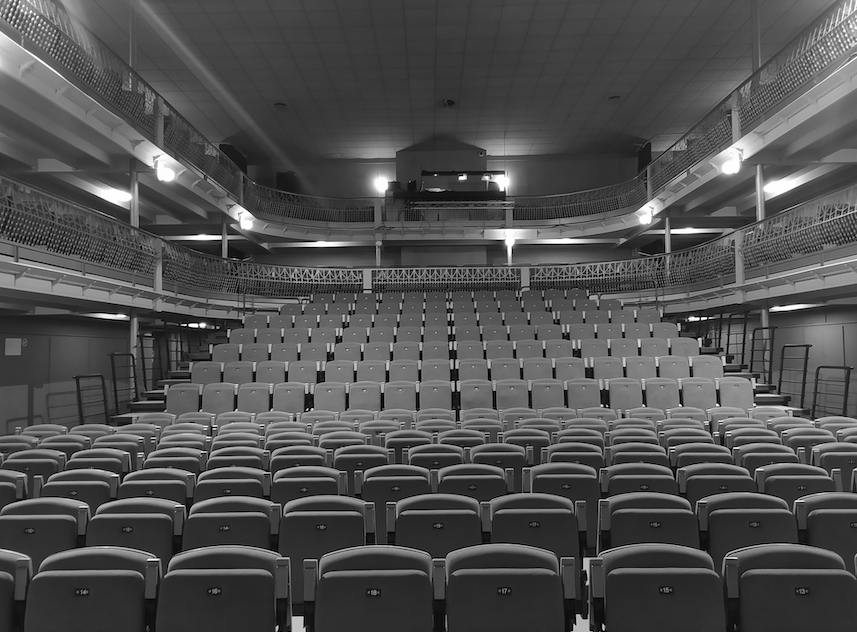
The Barcelona Provincial Council will allocate 15 million euros to update and modernize the municipal cultural facilities in the demarcation through the Sectoral Program for the Improvement and Reform of Local Cultural Facilities 2026. The initiative aims to adapt, rehabilitate and transform existing cultural spaces so that they are more accessible, sustainable, safe and adapted to the current needs of citizens.
The call has collected the demands of 235 town halls and 3 decentralized municipal entities, a participation that represents 76% of the municipalities of the demarcation and more than 90% of the population, without taking into account Barcelona city. In total, the local entities have presented 972 improvement actions in 407 cultural facilities, including cultural centers, theaters, auditoriums, libraries, museums, archives and other spaces owned by the municipality.
The program responds to the need to maintain and update a network of facilities that play a fundamental role as spaces for local culture, social cohesion and community participation. The investment will allow intervention in existing buildings to improve their functionality, comfort, energy efficiency and accessibility conditions.
The Deputy for Culture of the Barcelona Provincial Council, Pau Gonzàlez Val , has pointed out that this line of aid is part of the CULTURA 311+ mandate plan, with which the institution supports municipalities so that they can guarantee access to culture and promote inclusive cultural policies. According to Gonzàlez Val, the modernization of facilities is essential to have spaces that are "accessible, safe, sustainable and adapted to the needs of diverse territories".
A response to the needs of municipalities
The selected actions are based on a diagnosis of the state of municipal cultural facilities prepared by the Provincial Council between 2024 and 2025. This study allowed the identification of the main shortcomings and the establishment of four priority areas of intervention: improving spaces and comfort, energy efficiency and maintenance, accessibility and safety.
Among the most requested actions, the remodeling and adaptation of spaces stands out, with 213 proposals, focused on the renovation of facilities, equipment and furniture. Also of note are the installation or renovation of air conditioning, ventilation and heating systems, with 126 actions planned; improvements in accessibility, with 107 proposals, and interventions to solve structural or watertight problems in buildings, with 98 actions.
The distribution of demands shows that municipalities prioritize the conservation and adaptation of existing facilities in the face of new functional, environmental and safety challenges. In this sense, actions linked to the functional improvement of spaces represent 40.1% of the total proposals presented. Those related to energy efficiency and maintenance represent 29.1%, while safety interventions reach 20.3% and accessibility interventions reach 10.5%.
In terms of the type of facilities benefiting, multipurpose cultural centers concentrate the largest number of performances, with 36.9% of the total. They are followed by theaters and auditoriums, with 31.4%, and municipal public libraries, with 16.6%. Together, these three areas accumulate nearly 85% of the planned interventions, confirming their role as the main cultural spaces of proximity and citizen encounter.


You may be
interested
...