Exhibitions
ARBAR turns the Vall de Santa Creu into a laboratory of contemporary creation
The 2026 program features cinema, performance, poetry and artistic actions that explore the relationship between art, territory and new forms of coexistence.
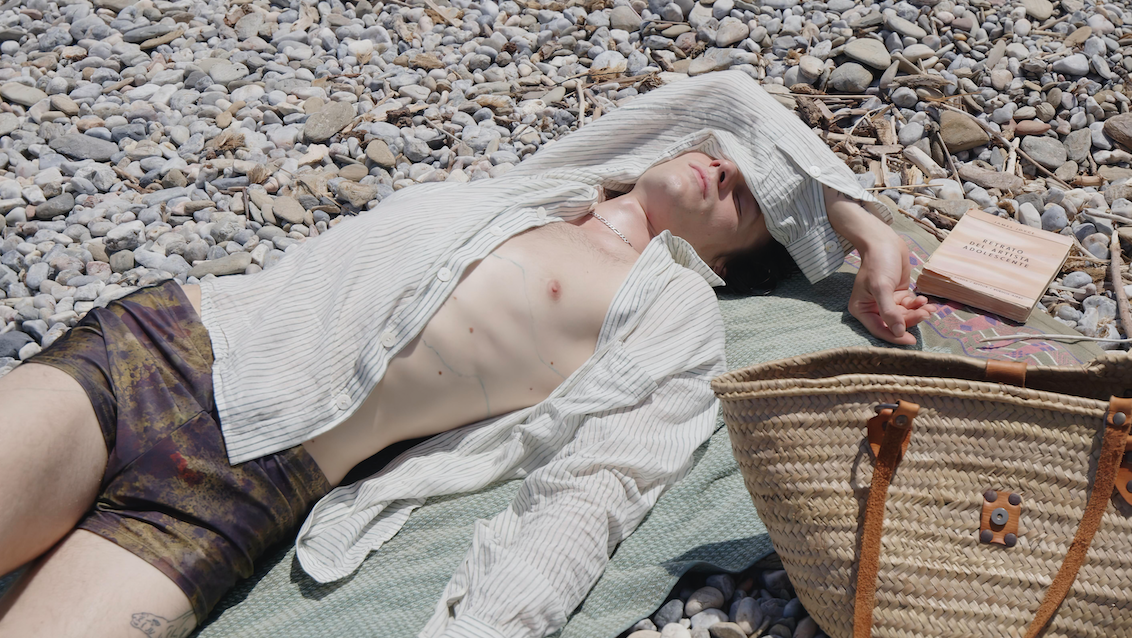
ARBAR, the center for artistic production, research and dissemination located in the Vall de Santa Creu, presents a program for 2026 that reaffirms its commitment to an artistic practice rooted in the territory and its ways of life. Far from conceiving the activities as a simple succession of events, the new program is built as an ecosystem of projects that dialogue with the landscape, memory and community, turning contemporary creation into a tool to rethink the relationships between people and their environment.
The season is structured around three major lines of work —A+A Vestigis d'Estiu, B+C Poesia Baix Continu and AA+AA D'una nit. Acciones de proximité asymmetric—, each with its own language, but united by the same will: to understand art as a situated experience, capable of transforming imaginaries and generating new readings of the territory.
Summer as an emotional landscape
The first of the axes, A+A Vestigis d'Estiu, takes the summer season as a space of shared memory, fiction and transformation. Curated by ARBAR itself, the cycle brings together the projects of Carles Congost and Jordi Mitjà, which explore the imaginaries linked to summer vacation from visual, performative, gastronomic and musical perspectives.
The inauguration will take place on July 18 with a day that will combine cinema, performance, gastronomy and music, turning the center into a space for collective experience.
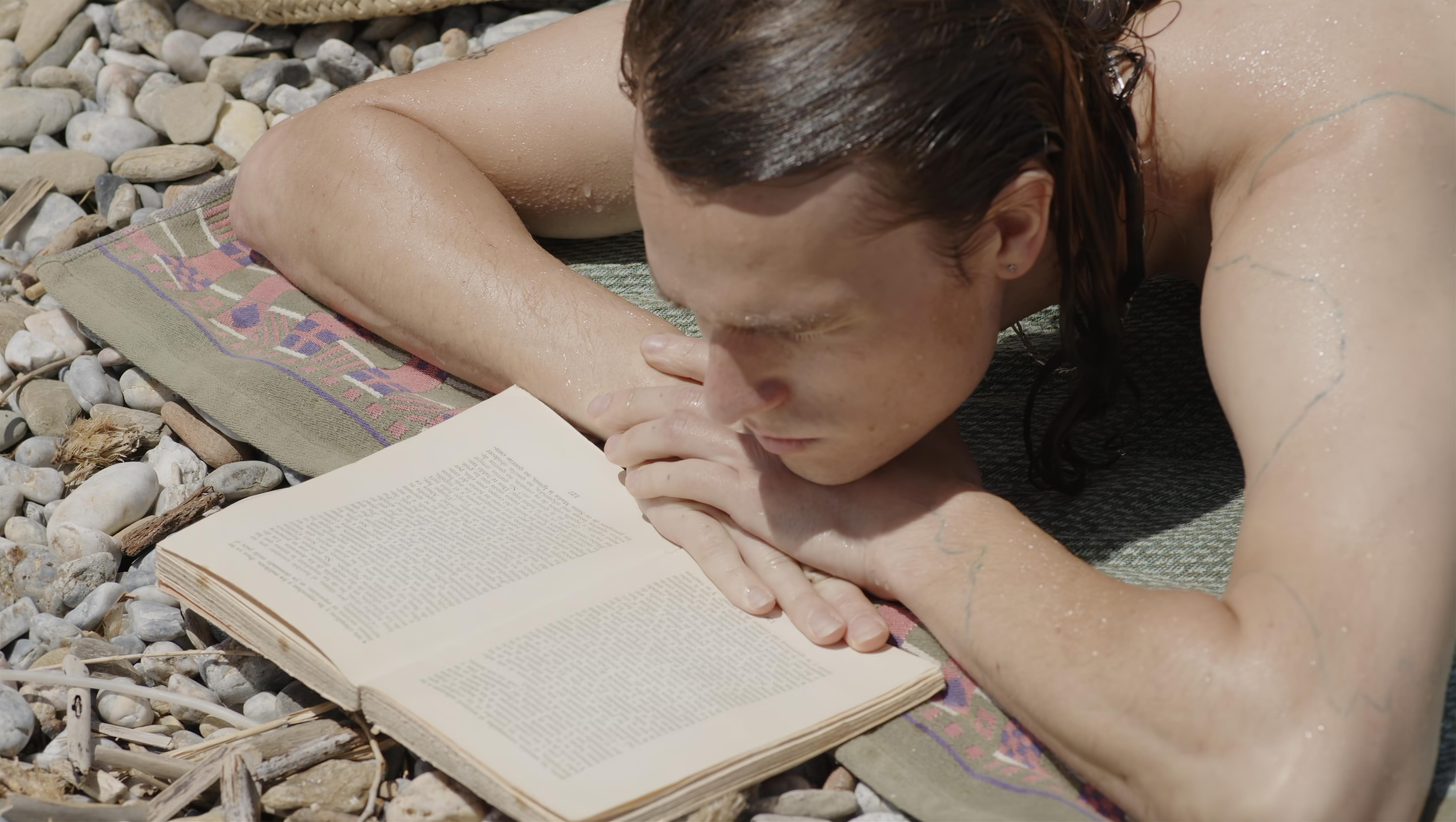
Carles Congost. A finger of ice (Portrait of the twilight artist at Port de la Selva) (stills) © Carles Congost, 2026.
The highlight will be the premiere of Un dit de gel (Portrait of the twilight artist in Port de la Selva) , the new film project by Carles Congost, co-produced with Bòlit, Girona Contemporary Art Centre. Inspired by the song of the same name created by the artist in 2017, the film uses cinematic language to reflect on identity, the passage of time and the memory of summers spent in Port de la Selva.
With a fragmentary and poetic aesthetic, the film avoids tourist clichés to construct an intimate portrait where the landscape becomes the emotional protagonist. The figure of the artist, played by Judit Martín, moves between nostalgia and disenchantment as she interacts with a young character, played by Oriol Valls, in a relationship that contrasts past and present and questions the persistence of memories in the face of the transformation of time.
The installation can be visited from July 18 to August 29, from Thursday to Saturday.
Gastronomy transformed into artistic action
The opening day will continue with Amb pijama o sense , a dinner-performance by Jordi Mitjà that recovers the gastronomic universe of the seventies. Based on the memory of beach bars and large popular dining rooms, the artist proposes a cold and festive menu that transforms the act of sharing a table into an artistic experience.
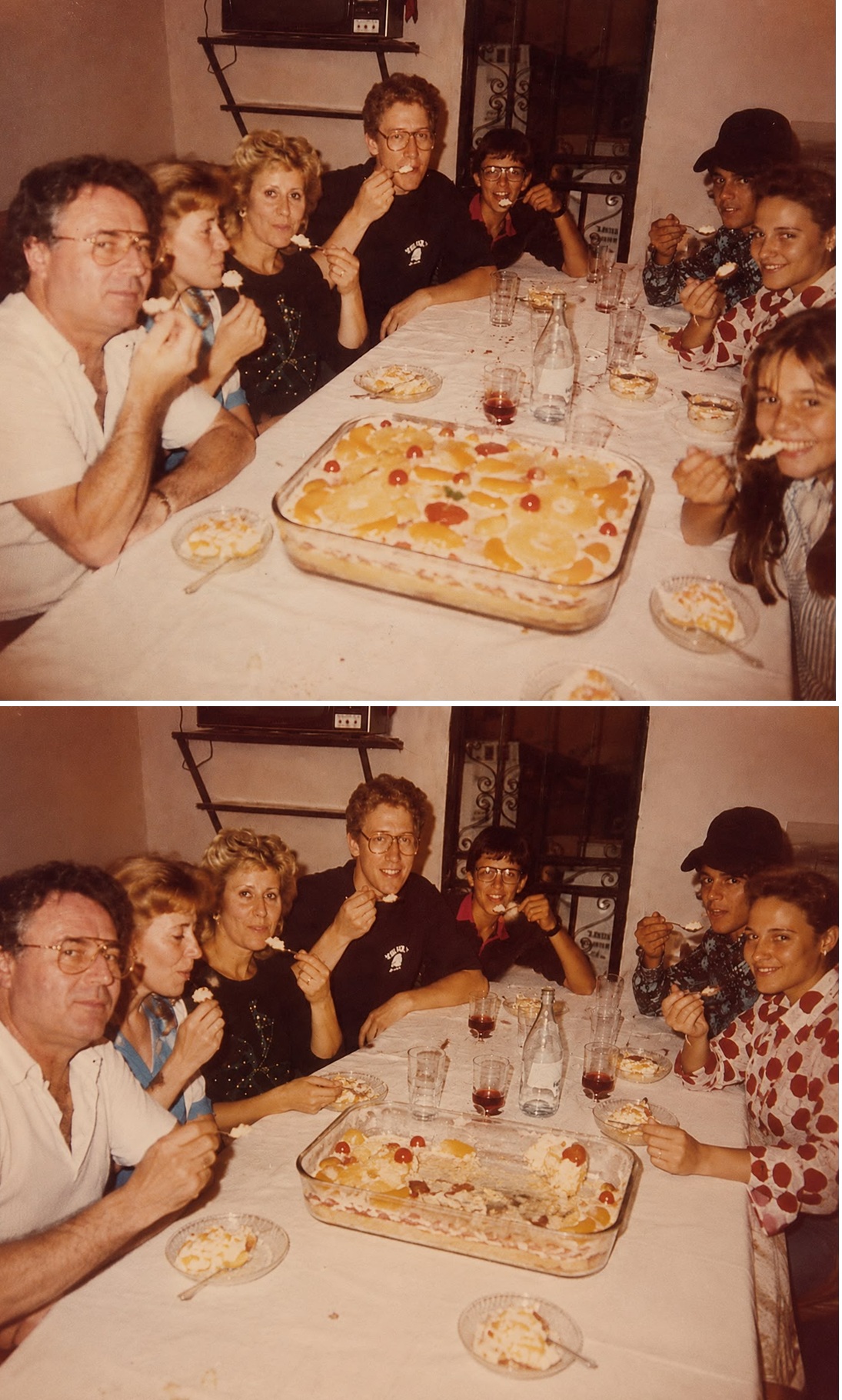
Jordi Mitjà With or without pajamas 2026. © Jordi Mitjà.
The central symbol is the mythical pyjama, a dessert that has almost disappeared from today's catering that here acts as a trigger for personal and collective memories. Mitjà turns this seemingly everyday element into a reflection on memory, family rituals, popular culture and celebration, dissolving the boundaries between the work of art and coexistence.
The proposal requires prior registration and reinforces one of the fundamental ideas of the program: art can also be produced from the most everyday gestures.
The day will culminate with The Congosound DJ Selector, a musical session also conceived by Carles Congost, which expands the emotional universe of his film project. The selection of songs functions as an expanded soundtrack in which music, cinema, landscape and memory merge to reconstruct the generational imaginaries associated with Mediterranean summers.
Poetry as a dialogue between generations
The second major axis of the program is B+C Poesia Baix Continu, coordinated by Roser Domènech, an initiative dedicated to the publication and dissemination of unpublished poetry.
Each edition culminates with the publication of a volume that collects the works of three contemporary authors and with a public meeting at the ARBAR Center, where the poets share their texts with readers.
The 2026 call brings together Cèlia Sànchez-Mústich, Laia Llobera and Montse Maestre Casadesús, three voices that represent diverse sensibilities in current Catalan poetry.
One of the most unique aspects of the project is the concept of "donation", through which each edition recovers the work of a poet from another generation, often little known or absent from the usual circuits. This year this recognition goes to the Figueres-based Carme Guasch, reinforcing the links between contemporary creation and the literary memory of the Alt Empordà.
Imagining new forms of friendship
The program is completed with AA+AA D'una nit. Actions of asymmetrical proximity, a project curated by Myriam Rubio that proposes to expand the idea of friendship beyond human relationships.
From an ecological and interspecific perspective, the cycle proposes a dialogue between body, voice, image and territory to question anthropocentric hierarchies and imagine other forms of coexistence between people, animals, plants and ecosystems.
The interventions of Lu Chieregati, Carme Torrent, Javier Peñafiel and Anna Cornudella will develop during the transition from afternoon to night, establishing a direct relationship with the weather, flora and fauna of the Vall de Santa Creu. Darkness ceases to be just a temporary context to become a space of transformation, where the boundaries between different forms of life become more permeable.
A program that claims the territory as a space for thought
With this proposal, ARBAR consolidates a programming model that moves away from conventional exhibition formats and commits to processes of research, encounter and experimentation. Cinema, poetry, performance, gastronomy and participatory practices coexist in the same structure that understands the territory not only as a stage, but as an active agent of creation.

You may be
interested
...