Opinion
Four stops to understand a summer of art in northern Catalonia
From Girona to Banyoles, passing through Olot and l'Escala, a journey between landscape, memory, denunciation, irony and spirituality that invites you to rediscover four essential creators.
Summer is also a way of looking. When the pace slows down, the necessary time appears to contemplate, establish connections and let the works speak with greater intensity. The exhibitions stop being a one-off appointment and become an itinerary, almost an initiatory journey. In this sense, the north of Catalonia offers this summer an exceptional cultural route, a kind of contemporary Grand Tour that unites Girona, Olot, l'Escala and Banyoles through four artists who, despite their enormous differences, share the same desire: to transform reality into an artistic experience.
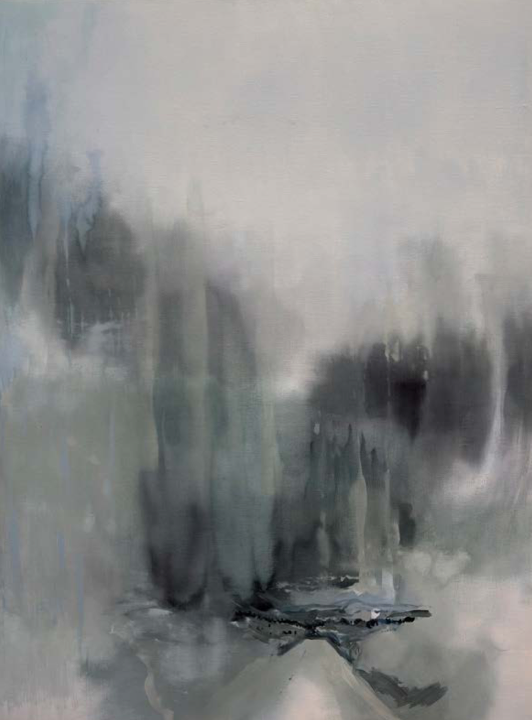
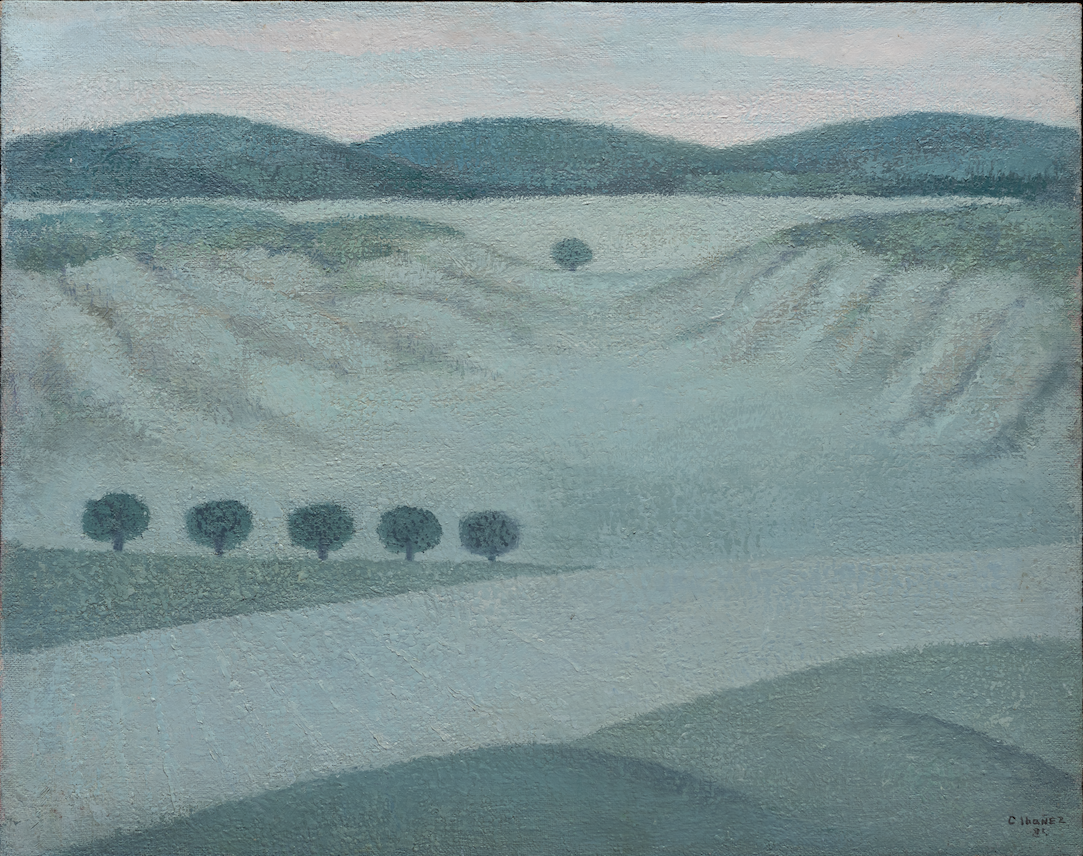
The journey begins at the Museu d'Art de Girona with Concha Ibáñez (1926-2022), coinciding with the centenary of her birth. The exhibition The Evocation of Landscape consciously avoids the anthological format to concentrate on the most essential aspect of her career: the landscape. It is not, however, a naturalistic representation, but an exercise in memory. Ibáñez did not paint what was before his eyes, but the spaces that he had internalized during his numerous travels. Each mountain, each coast or each horizon reappeared again and again filtered by memory, reduced to a formal and chromatic synthesis of extraordinary elegance. His characteristic ranges of colors, restrained but deeply expressive, turned each territory into an emotion rather than a geography.
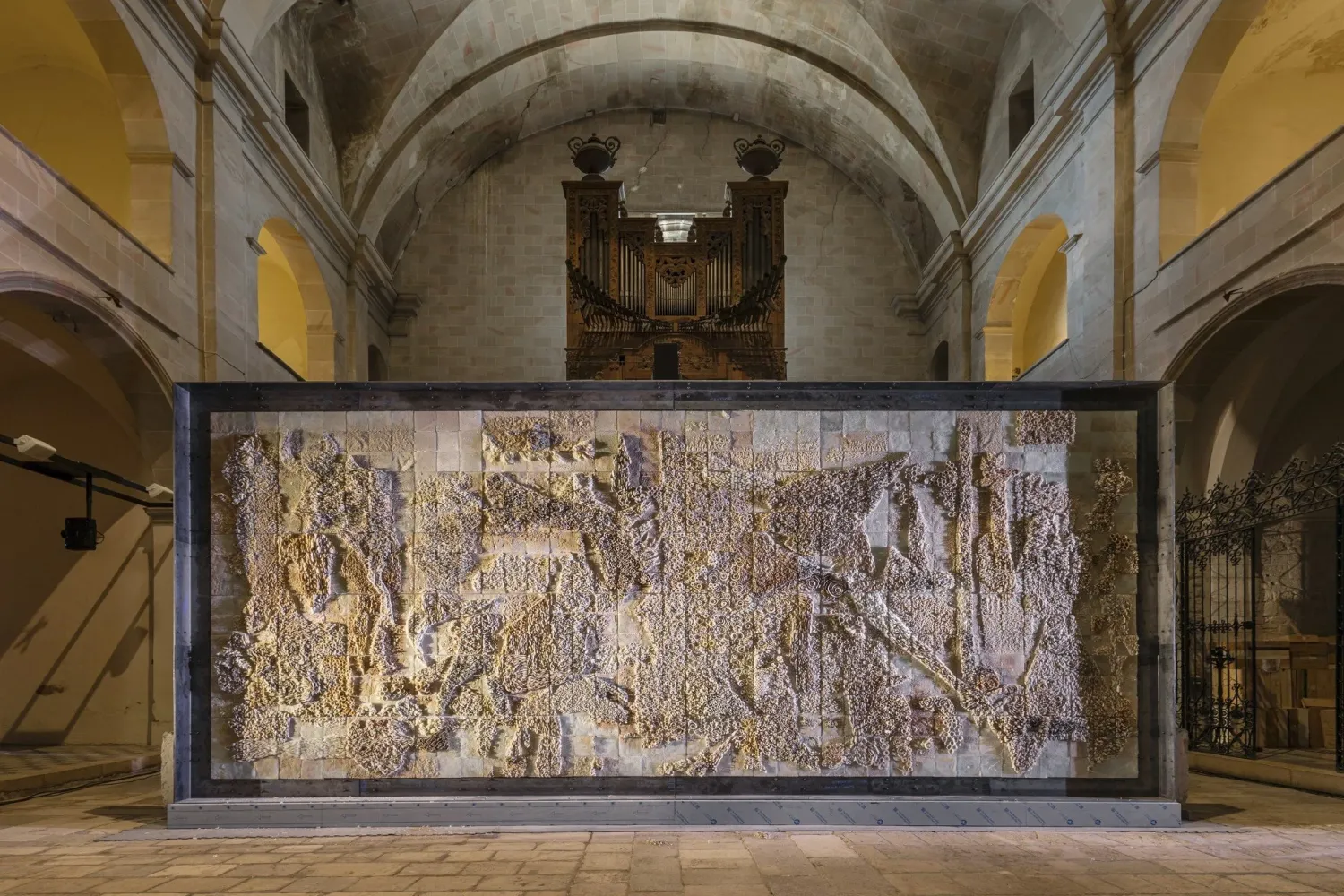
The next stop takes us to Banyoles, where Joan Crous presents a work of monumental dimensions that directly dialogues with one of the great icons of the 20th century: Picasso's Guernica . The Shadow does not aim to reinterpret Picasso's masterpiece, but rather to prolong its cry. Installed in the Monastery, the piece turns that universal symbol of barbarity into a fully contemporary reflection on armed conflicts and the civilian victims who continue to suffer the consequences of war today. Its proposal reminds us that art can maintain its capacity for denunciation intact without renouncing its aesthetic force. It is a work that is uncomfortable, but precisely for this reason it is necessary.
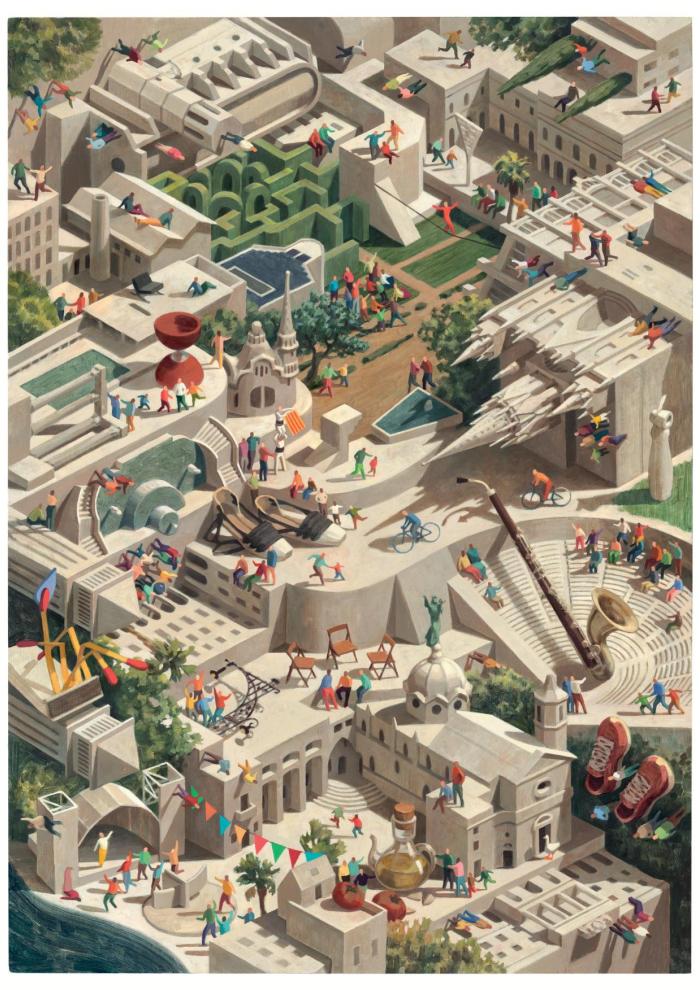
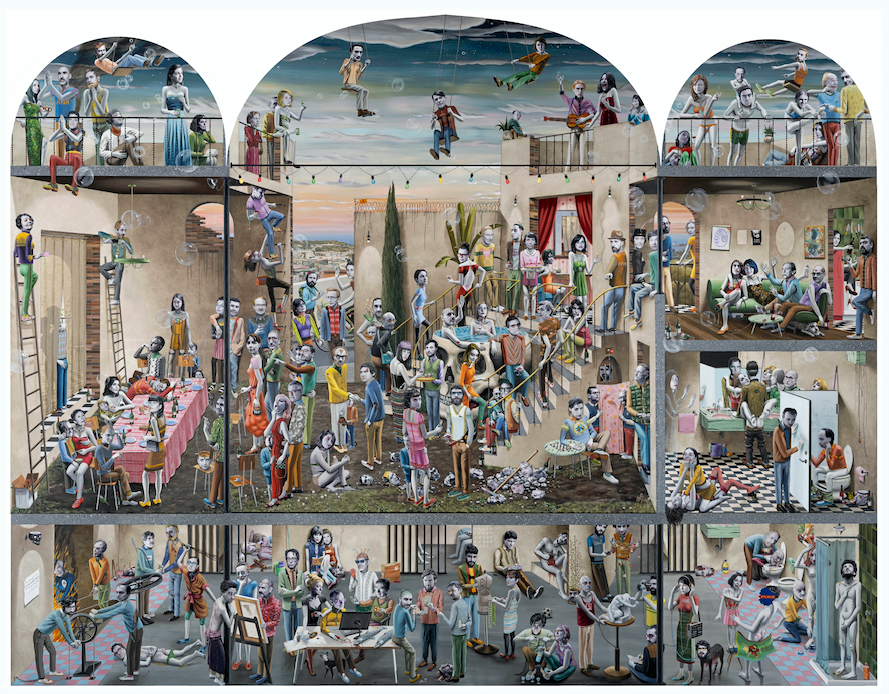
From Olot, the journey continues to the Museu de l'Escala, where Gino Rubert once again demonstrates his extraordinary ability to construct visual stories full of intelligence and humor. Vanity Fair (un altar sin héroe) is probably one of his most celebrated creations. This large contemporary altarpiece brings together 181 figures from the world of Catalan art and culture in an exuberant composition, full of references, double readings and a fine irony. Rubert, an artist renowned for incorporating photography, painting and collage in the same work, turns the artistic system into an object of observation and, at the same time, self-criticism. The result oscillates between the Renaissance fresco, the organized chaos of a comic strip and social satire, inviting the viewer to identify familiar faces while reflecting on the mechanisms of prestige, power and vanity that also cross the cultural world.
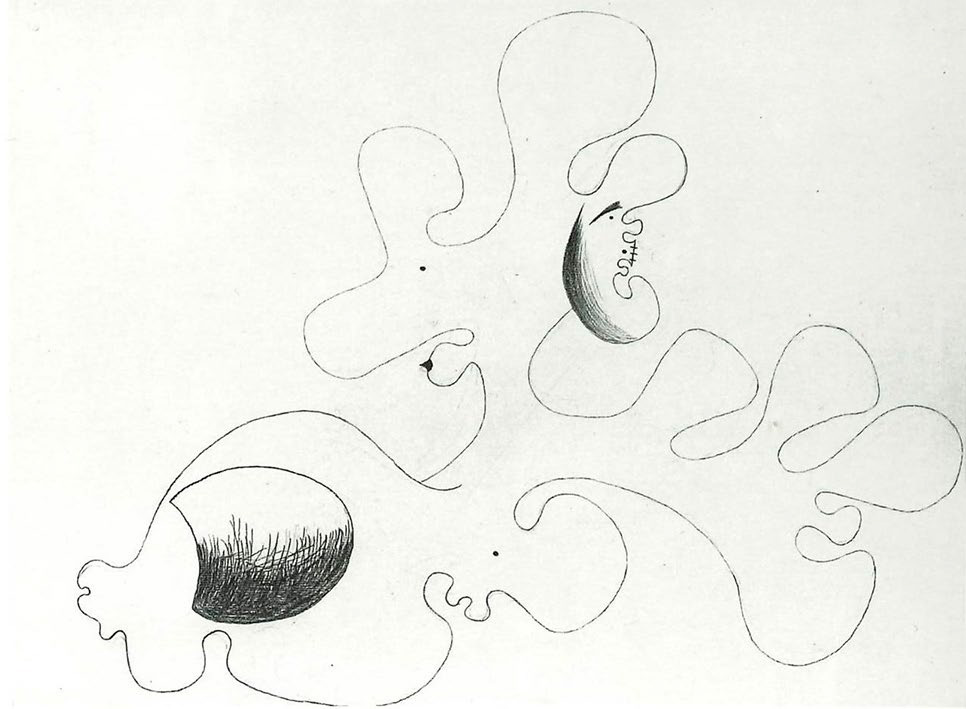
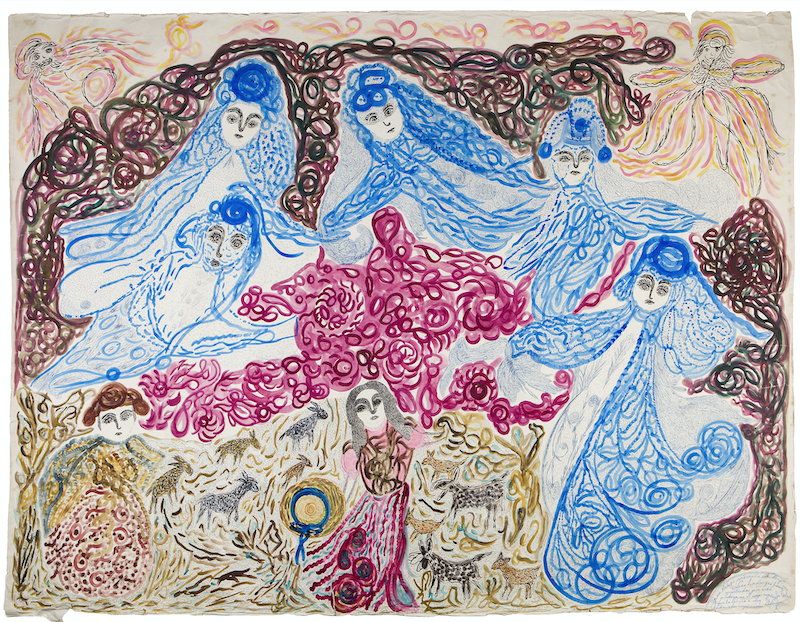
Finally, Olot and the Vayresda Foundation offer a radically different experience with the universe of Josefa Tolrà within the cycle Verònica. Visionary Women . For many years located on the margins of the great narratives of art history, Tolrà is today recognized as one of the most singular figures in Catalan creation of the 20th century. Her drawings, texts and spiritual compositions, born of visions and an intense inner experience after the Civil War, defy any conventional classification. Her work does not seek to represent the visible world, but to give shape to the intangible: intuition, memory, pain and transcendence. At a time when art brut, visionary practices and female voices occupy the place they deserve within museum discourses, this exhibition comes with a particularly significant opportunity.
These four proposals do not share aesthetics or language, but they do share the same attitude towards creation. Concha Ibáñez turns memory into landscape; Joan Crous transforms the memory of conflicts into visual denunciation; Gino Rubert ironically dissects the rituals of the art world; and Josefa Tolrà opens a window onto spirituality and the invisible. Four perspectives that demonstrate that contemporary art does not need to follow a single direction to challenge us.
Perhaps this is the true meaning of the Grand Tour of the 21st century. It is no longer about accumulating monuments or photographs, but about touring territories that allow us to better understand the present. This summer, northern Catalonia offers this possibility: a leisurely journey where each stop broadens our perspective and reminds us that exhibitions, when they dialogue with each other, end up telling much more than the story of each of the artists who star in them.
You may be
interested
...