News
The battle for the Gelman Collection pits heritage, ownership, and circulation of Mexican art against each other.
Defenders of the artistic legacy of the 20th century question the international departure of a collection with works by Frida Kahlo, Diego Rivera and other great Mexican masters.
The departure from Mexico of one of the most important private collections of 20th-century Mexican art has opened an intense debate on the protection of cultural heritage, institutional transparency, and the limits of the international circulation of works considered to be of special historical relevance.
The Defend the Gelman Collection collective has filed three lawsuits against the National Institute of Fine Arts and Literature (INBAL), the body responsible for authorizing export permits for pieces protected by Mexican legislation, considering that there are doubts about the legal basis that allows the temporary transfer of part of this artistic collection abroad.
The legal actions, filed on June 29 and July 1, coincide with preparations for a two-year international tour that will take the collection outside of Mexico, beginning in Spain. Members of the collective maintain that some of the works included are considered "artistic monuments," a category that entails special restrictions regarding their preservation, movement, and export.
A historical collection born in Mexico in the forties
The Gelman Collection was assembled starting in the 1940s by the Jewish film producer Jacques Gelman and his wife Natasha Zahalka, major proponents of modern Mexican art. For decades, the collection became an international benchmark for understanding the country's artistic evolution during the 20th century.
Currently called the Gelman Santander Collection, it brings together 161 works by key figures such as Frida Kahlo, Diego Rivera, José Clemente Orozco, David Alfaro Siqueiros and María Izquierdo.
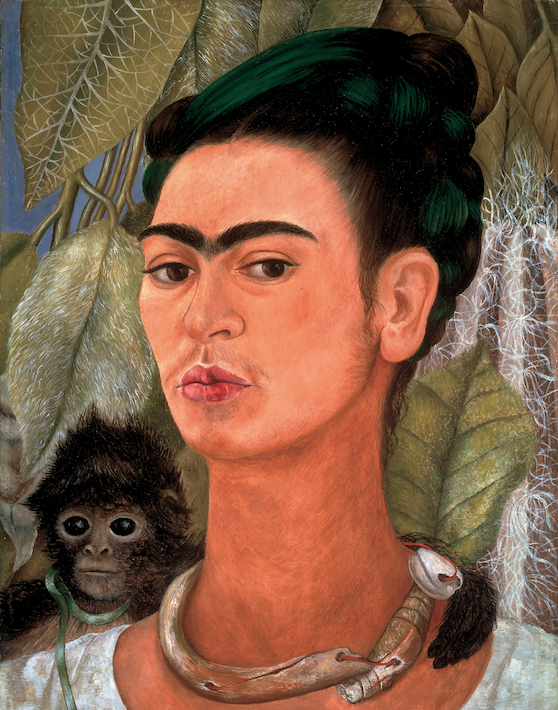
Among her most recognized pieces are Kahlo's oil paintings Self-Portrait with Monkeys (1943) and Diego in My Mind (1943), works that are part of the international imaginary associated with modern Mexican art.
In January, it was announced that the collection would be managed by the Santander Bank Foundation through a five-year institutional agreement. The agreement also revealed that part of the collection had been linked since 2023 to the Zambrano family, known for its business activities in the cement sector.
The European trip that sparked controversy
The first stop on the tour will be in northern Spain, as part of the inaugural program at Faro Santander, the new cultural space launched by the bank, scheduled to open in September. Afterward, the collection will travel to the Beyeler Foundation in Basel and the National Museum of Norway, before returning to Mexico in 2028 for an exhibition at the Museum of Contemporary Art in Monterrey.
Meanwhile, part of the collection can currently be seen at the Museum of Modern Art in Mexico City, where 68 pieces are on display to the Mexican public for the first time in almost twenty years as part of the exhibition Modern Stories: Emblematic Works from the Gelman Santander Collection , which will close on July 19.
Call for greater transparency
The controversy began to grow in March, when hundreds of professionals from the Mexican cultural sector signed an open letter demanding greater clarity on the export process, especially in relation to the works of Frida Kahlo.
"The difference between the efforts made to recover Mexican archaeological heritage and the ease with which fundamental works of national art are allowed to leave the country is surprising," the document stated, warning about the importance of preserving pieces linked to the country's cultural identity.
Art historian Francisco Berzunza and other promoters of the Defendamos la Colección Gelman collective then began to investigate the legal status of the works, questioning aspects related to ownership, management and the conditions of temporary export.
Among their concerns is the acquisition made in 2023 by the Zambrano family from Natasha Zahalka's executor, Robert Littman. The group maintains that Littman subsequently assumed conservation and management responsibilities for the collection, in addition to maintaining ties to its ownership, a situation they consider opaque.
INBAL defends the legality of the agreement
In response to the criticism, INBAL has stated that the removal of the artworks complies with Mexican law and that the collaboration with the Santander Bank Foundation does not constitute a sale or transfer of ownership to foreign institutions.
"The agreement is limited to research, conservation, and international cultural programming. It does not involve the transfer of ownership or the sale of any artwork to foreign institutions," the organization stated, explaining that the name Gelman Santander Collection is solely a reflection of the established institutional partnership.
For its part, the Santander Bank Foundation has stated that it will respect Mexican laws at all times and that the works will return to the country after the international tour ends.
The dispute thus opens a broader debate on the balance between the international dissemination of artistic heritage and the protection of collections that form part of a nation's cultural memory. The Gelman Collection, now a symbol of this discussion, is at the heart of a key question for the contemporary art world: who decides where heritage should be and under what conditions it can travel.



You may be
interested
...