Exhibitions
When the archive reveals another Miró
The Fundació Joan Miró explores the genesis of Untitled (1930) and the dialogue between the artist and the radical thought of Georges Bataille through Le Gros Orteil.
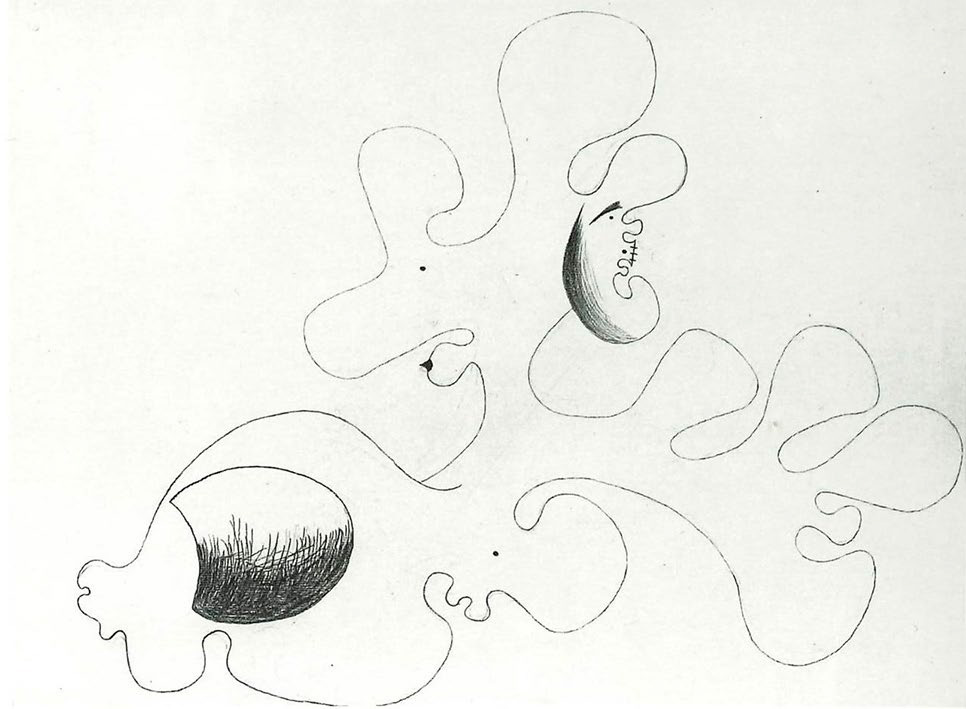
The Fundació Joan Miró Archive continues to open new windows on the career of the Barcelona artist with a program of exhibitions that highlights the documents, sketches and working materials preserved at the institution. Beyond the large exhibitions dedicated to Miró's finished work, these archival proposals allow us to get closer to the creative process, the intellectual contexts and the less visible connections that fueled his artistic practice.
Within this framework is Open Archive 08. Le gros orteil , an exhibition that can be visited at the Fundació Joan Miró Archive from 18 June to 29 November 2026, curated by Teresa Montaner and Elena Escolar. The exhibition takes as its starting point Sense títol (1930), the latest addition to the Fundació Joan Miró Collection, a work acquired thanks to the donation of Françoise Marquet Zao. It is a drawing made with pencil on Ingres paper during the thirties, a piece that expands knowledge about an essential moment in the artist's career.
The exhibition not only presents the final work, but also reconstructs the path that leads to it through the sketches that Miró made for the entire series. This set of drawings allows us to observe how the artist experimented with forms, signs and visual associations before turning them into a definitive composition. The archive thus becomes a living space, capable of showing the fragility and complexity of the creative process.
The title of the exhibition refers to the article "Le Gros Orteil" ( The Big Toe ), written by the French thinker and writer Georges Bataille and published in November 1929 in issue 6 of the French avant-garde magazine Documents. This publication, founded in Paris that same year by Georges Bataille and Michel Leiris, became one of the most radical spaces of European artistic thought between the wars, a meeting point for artists, writers, ethnologists and intellectuals interested in questioning traditional hierarchies of culture.
In Le Gros Orteil , Bataille transformed a seemingly insignificant and even vulgar part of the human body into an element of philosophical and artistic reflection. The big toe, far removed from the ideals of classical beauty and elevated representations of the human being, was transformed into a symbol of materiality, of the contradiction between the sublime and the earthly. The article was part of Documents ' interest in exploring what remained outside the official discourses of art and in claiming a more complex view of reality.
The relationship between this text and Miró's drawings demonstrates the artist's constant dialogue with the intellectual currents of his time. During the 1930s, Miró was going through a period of experimentation in which he questioned the limits of painting, exploring new forms of expression and an increasingly symbolic and essential language. The possible resonances of Bataille's article in this series open up a new way of interpreting works that until now had been read mainly from their formal dimension.
With Opening the Archive , the Fundació Joan Miró vindicates the value of documentary collections as a fundamental tool for understanding the artist's work. Each file, each sketch or each annotation allows us to reconstruct a part of the creative story and discover connections between Miró and the cultural debates of the 20th century. This program of archival exhibitions transforms the preserved materials into a new way of looking at the artist: not only from the final result, but also from the doubts, research and stimuli that shaped his work.
You may be
interested
...