Opinion
Eufònic celebrates 15 years, keeping the artist at the center of the discourse
A reflection on the festival founded and directed by Vicent Fibla that has just been held.
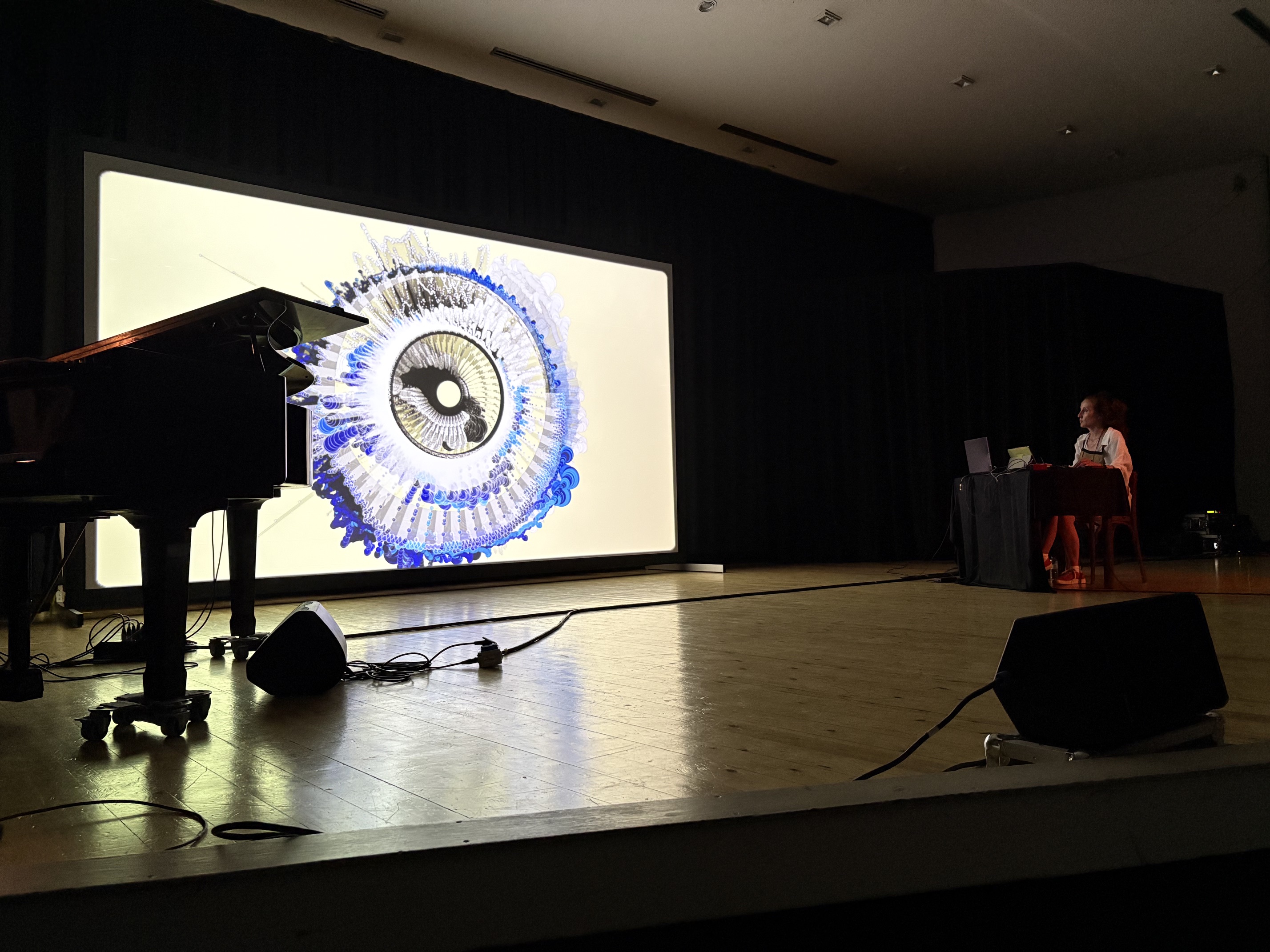
Amposta and Terres de l'Ebre hosted the 15th anniversary edition of Eufònic, the festival founded and directed by Vicent Fibla which, in the face of the escalation of technological advances, continues to defend works with a solid critical discourse and gives the artist the importance he deserves.
In contemporary electronic art there is a temptation that has increasingly become the norm rather than the exception: that of the work of art as a technical feat. The greater the technological deployment, the greater the number of people needed to make it possible. Establishing a large number of agreements and collaborations with institutions and companies of all kinds seems to be an achievement in itself. The result, increasingly often, is a work in which the artist's voice is diluted among so many intermediaries. And what is lost in this process is not a minor detail: it is precisely the capacity of the work to make things uncomfortable, to position itself, to offer a social critique that demands something from the viewer beyond simple fascination with the artifact.
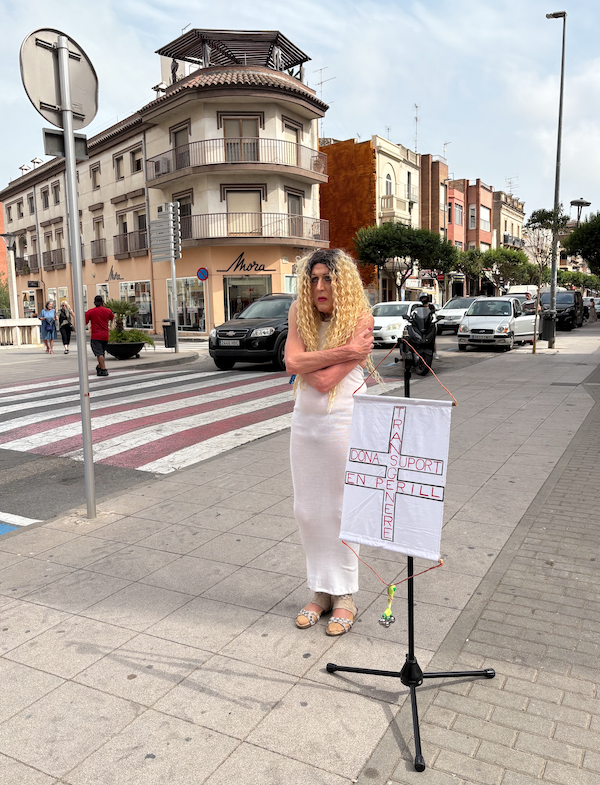
Mandy Romero performance.
Faced with this drift, Eufònic, the Terres de l'Ebre sound, visual and digital-performative arts festival, has celebrated its fifteenth anniversary and, paradoxically, it did so while remaining faithful to the origin of the scene that gave it its name. Not to the chronological origin of the festival, but to a way of understanding electronic art prior to its conversion into a large-format spectacle or multimedia entertainment: that of the early years of sound and digital experimentation, when technology was still a tool for artistic inquiry and not an end in itself. In Amposta, the works that could be seen did not seek monumentality or high-cost productions; rather, they intended for the discourse, the question that each piece formulates, to once again be the center of attention.
The most visible example of this vocation is at Lo Pati, one of the festival's artistic venues, where Canadian artist Navid Navab has presented Organism + Excitable Chaos , an installation that robotically activates a century-old organ through a mechanical system that dialogues with an automated triple pendulum. The result is an unpredictable sound organism, made of vibrations, acoustic turbulence and behaviors that not even the artist himself can fully control. Navab works, as he has explained, on the border between the alchemy of media and anti-disciplinary composition: machines, matter and sound set to generate unstable, almost living forms of behavior. There is no gratuitous technological ostentation here: there is a century-old instrument, material memory of the territory, set to speak again, with a precariousness of control that is, in itself, an aesthetic and ethical position. And, in addition, Fibla has set itself the goal of bringing the winning work of Ars Electronica, the most outstanding work of world digital art, to Terres de l'Ebre.
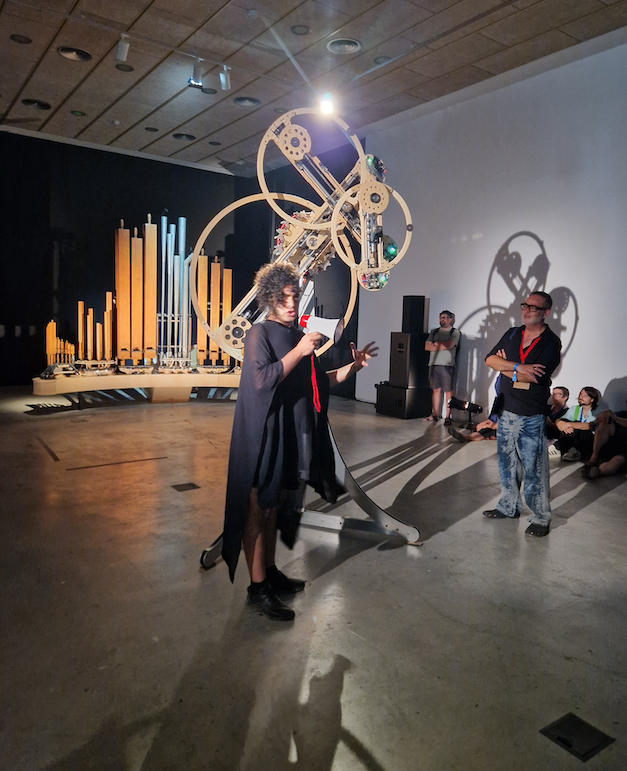
Organism + Excitable Chaos by Navid Navab.
At the FabLab in Amposta, Oriol Parés premieres Esguard , a piece developed thanks to the Reddis / New Art Foundation / Eufònic grant. It is a kinetic installation in which robotic manipulators hold fragments of mirror, generating a geometry of reflections in continuous transformation, the sound dimension of which is born from the mechanical movement itself. There is neither a big budget nor a large scale here: there is an idea (which lacks much development, in my opinion), that of the gaze as a fragment, as an unstable reflection, made with workshop, almost artisanal means, until its final and debatable formal consequences.
Perhaps it was precisely at the FabLab that one of the most evocative, fable-making and melancholic works could be seen. In a small glass space, a modest bedroom table with a desktop computer transported us to the nineties and the already nostalgic era of net art . There, Memory Lane , by Maria Benbeniste and Jana Ramos, invited the viewer to embark on an interactive journey through the different stages of life based on a question as simple as it is persistent: what do we do with our memories? The work proposes an immersive experience that combines video game and physical interface to explore nostalgia and the way in which the past continues to shape our relationship with the present.
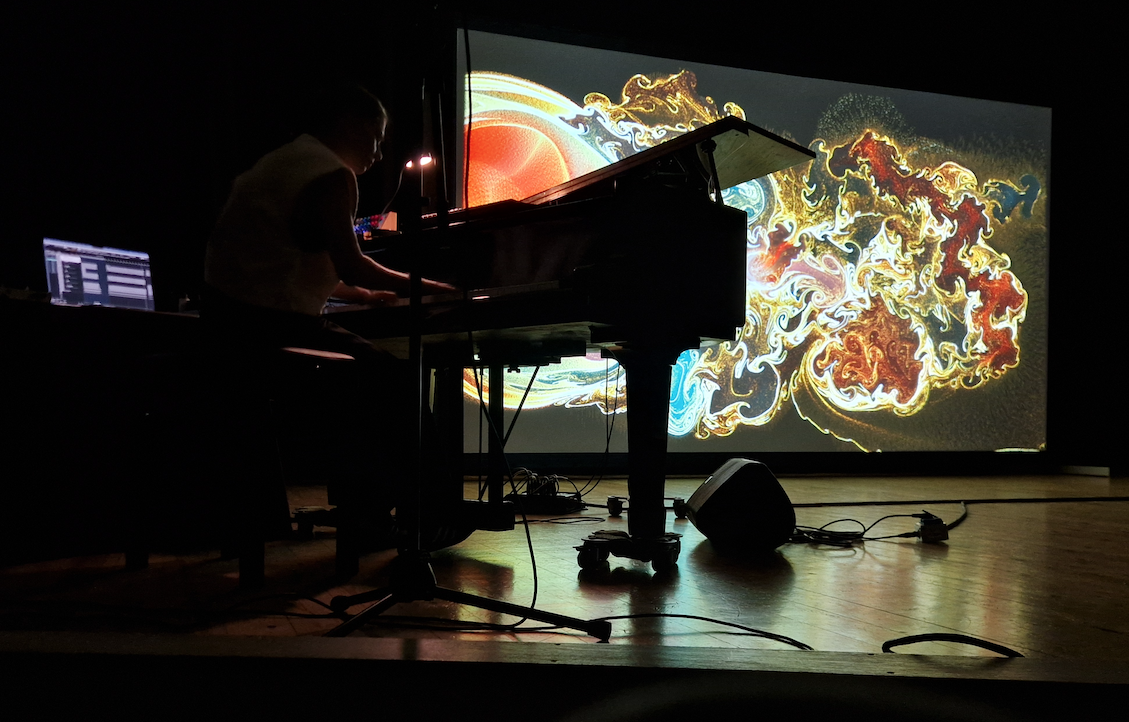
Among the performative events of the anniversary, the reunion of the visual artist Alba G. Corral, linked to the festival practically since its beginnings, with the Polish pianist YANA stands out, in a new audiovisual show that puts Corral's image generated in real time into dialogue with YANA's live piano performance. The very existence of this audiovisual performance says something about the festival model that Eufònic supports: artistic communities that are built over the years, not throw-away collaborations hired for a single pharaonic edition. Maintaining a festival for fifteen years is not easy and doing it from the periphery, with a diffuse programming in the territory, is even more difficult; for this reason, we must wholeheartedly praise the choice of Vicent Fibla, also director of the Mèdol de Tarragona, not to go for what is easy and anecdotal, but to bet on the raw, the hard, without concessions to Instagrammable fashions, such as the performance for the rights of the trans community by veteran Mandy Romero.
This entire exhibition framework has had its theoretical correlate in Eufònic Pro, the cycle of professional meetings that this year has brought together round tables, project presentations and conversations about the challenges of new cultural ecosystems. Josep Piñol's presence in this space of shared thought is not accidental. Recent practice, in particular the project Evitada , moves the artistic gesture towards the act of renunciation. His work was not made and this cancellation, formalized before a notary, with the signing of an avoidance certificate acquired by a collector, becomes artistic matter to question the commodification of the climate crisis and environmental compensation mechanisms.
The point is to renounce visual grandiloquence and opt for narrative and poetics as a vehicle for denunciation and criticism.
Fifteen years after the first edition, the Terres de l'Ebre festival, with Fibla at the helm, is committed to works that are clear in their position: an organ that activates itself or a work that exists precisely because its author decided not to make it. None of them need a large production behind them to make themselves understood and perhaps this is, fifteen years later, the true avant-garde gesture.


You may be
interested
...