Exhibitions
Mythology returns to Madrid with Ouka Leele
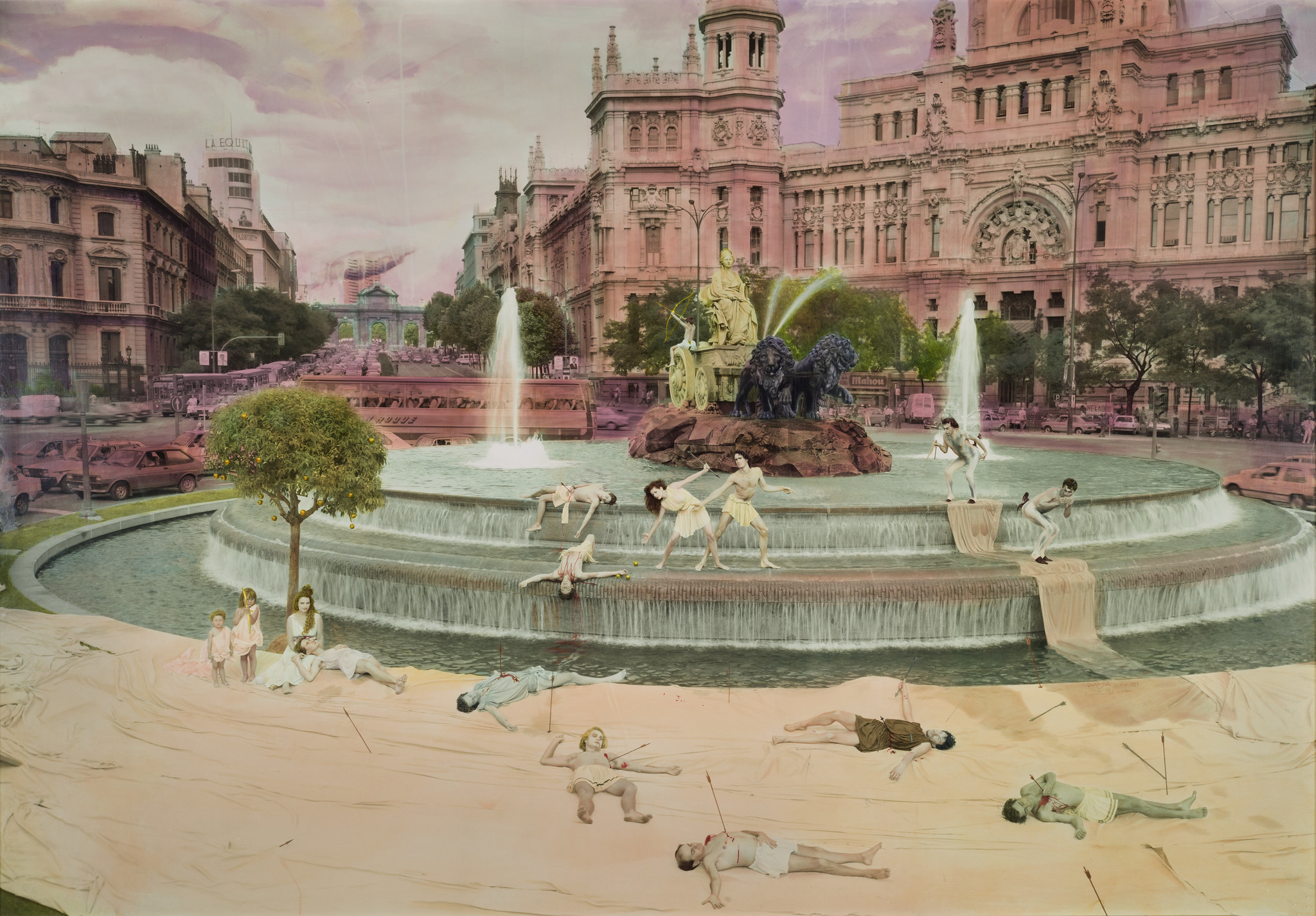
The Alcalá 31 Gallery presents an ambitious exhibition, curated by Julio Pérez Manzanares, that offers a new interpretation of Madrid art from the 1980s through an element as ancient as it is relevant: mythology. Far from understanding classical narratives as a mere iconographic repertoire, the exhibition positions them as a language capable of interpreting the profound social, political, and cultural changes that marked the transition to a new modernity.
The exhibition, which runs until October 18, begins with one of the most iconic images in contemporary Spanish photography. In 1987, Ouka Leele transformed the Cibeles Fountain into an ephemeral stage for Rappelle-toi, Bárbara!, an intervention that recreated the myth of Hippomenes and Atalanta and even brought Madrid's traffic to a standstill. This action, conceived as a blend of performance art, photography, and staging, became a symbol of the creative effervescence of the Movida Madrileña and one of the most representative works of the decade's visual culture.
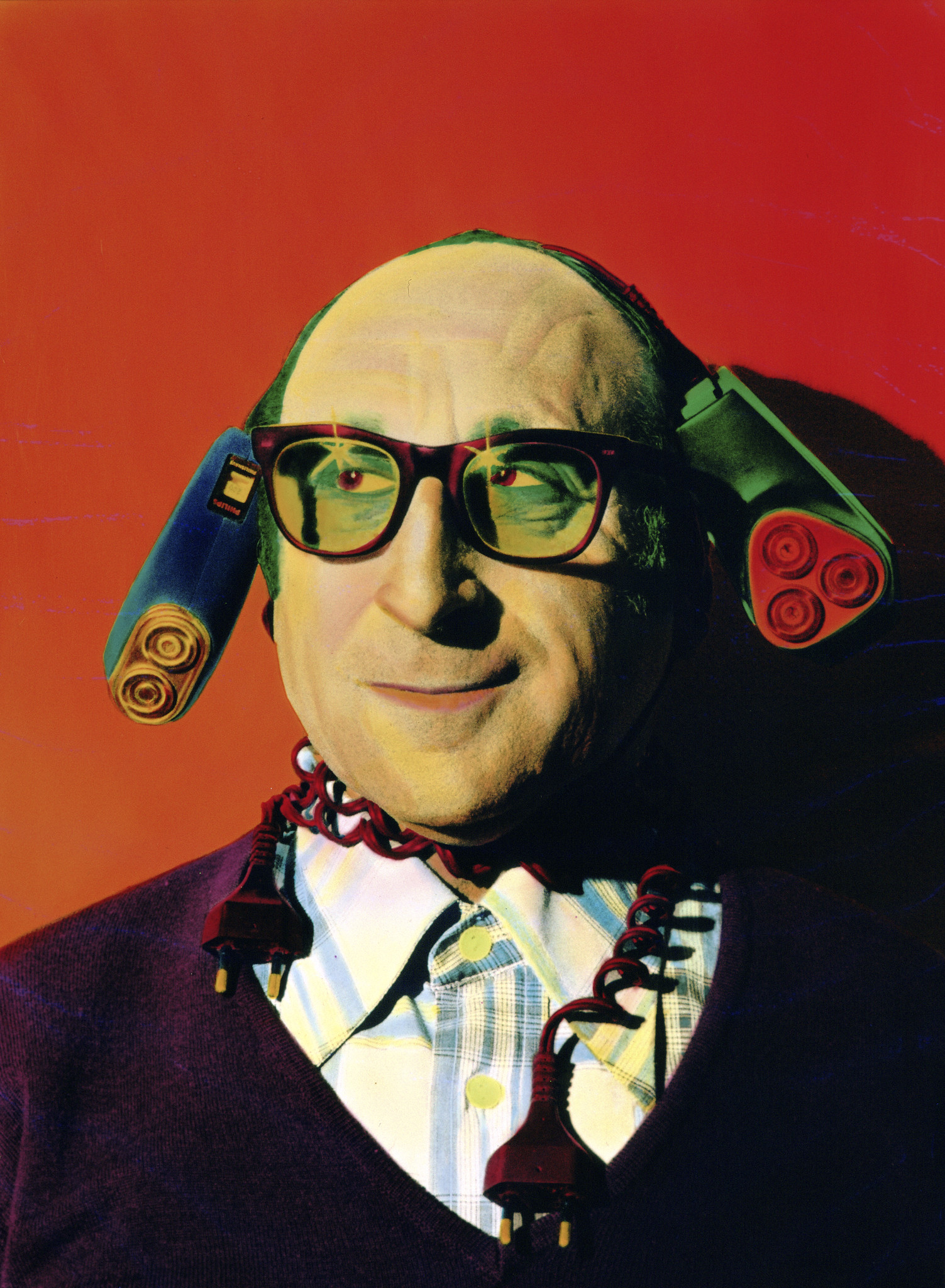
Ouka Leele. Hairdressing (clipper), 1979.
Rather than reconstructing a historical episode, the exhibition uses this photograph as a gateway to analyze how Madrid artists reinterpreted classical myths and generated new mythologies adapted to a society seeking to redefine its identity. The exhibition reveals that, from the mid-1970s onward, stories from Antiquity ceased to be merely scholarly references and became tools for imagining the present and projecting the future.
One of the project's greatest strengths lies in broadening the concept of myth beyond the Greco-Roman imaginary. The exhibition reveals how, during those years, contemporary mythologies also emerged, linked to popular culture, film, comics, music, the media, and the city of Madrid itself. This hybrid universe, where classical heroes coexisted with icons of mass culture, defined much of the artistic language of a generation that broke with traditional models without relinquishing the weight of history.
Photography occupies a central place in the exhibition, but it constantly engages in dialogue with painting, drawing, and other disciplines that characterized the artistic renewal of the time. The influence of the Madrid New Figuration movement, the rise of graphic design, and the incorporation of performative strategies reveal a creative context where the boundaries between disciplines began to blur.
Among the key figures is Carlos Franco, whose work revived mythological tradition from a profoundly personal perspective, constructing an imaginary world in which the classical and the contemporary coexisted with absolute naturalness. Alongside him are artists such as Guillermo Pérez Villalta, Dis Berlin, Pablo Sycet, and Sigfrido Martín Begué, each developing their own iconography in which art history, literature, and popular culture continually intertwine.
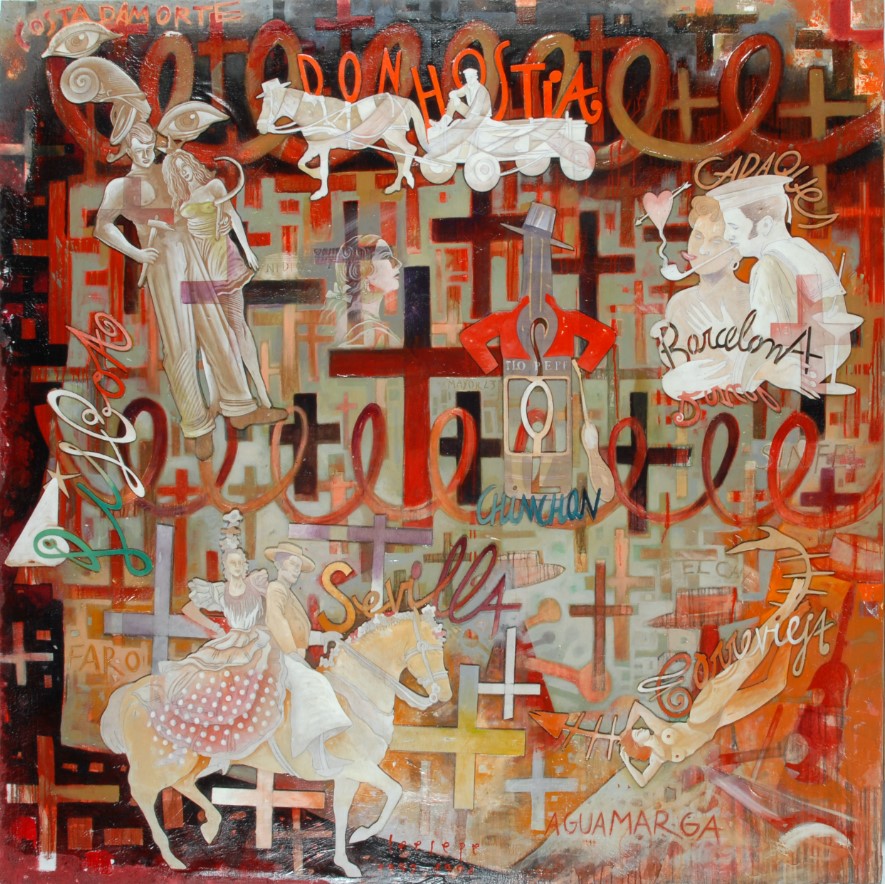
Ceesepe. Spain in flames, 1994.
The exhibition also celebrates the contributions of Ceesepe, whose work absorbed the aesthetics of underground comics and fanzines to construct new urban narratives, as well as those of El Hortelano, who transformed the romantic figure of the artist into a contemporary myth full of lyricism and fantasy. A constant emerges in all of them: the desire to reinvent grand narratives to respond to the concerns of a generation that found a form of freedom in imagination.
From a critical perspective, the exhibition avoids reducing the 1980s to the media phenomenon of La Movida. Instead of dwelling on a nostalgic view of that decade, it proposes a more complex interpretation, where classic references function as an intellectual and visual mechanism for understanding a time of intense transformation. The myth thus ceases to be a vestige of the past and becomes a tool for thought capable of engaging with politics, identity, memory, and new urban imaginaries.
The proposal from Sala Alcalá 31 also confirms the growing interest among institutions in revisiting recent Spanish artistic production from broader historiographical perspectives. By placing mythology at the center of interpretation, the exhibition not only recovers emblematic works but also invites a reconsideration of the conceptual richness of a generation whose legacy continues to influence contemporary art.

You may be
interested
...