Exhibitions
Dora García resurrects silenced voices
Extramurs 2026 turns Barcelona into a space of memory, dissidence and collective action from the Tàpies Museum.
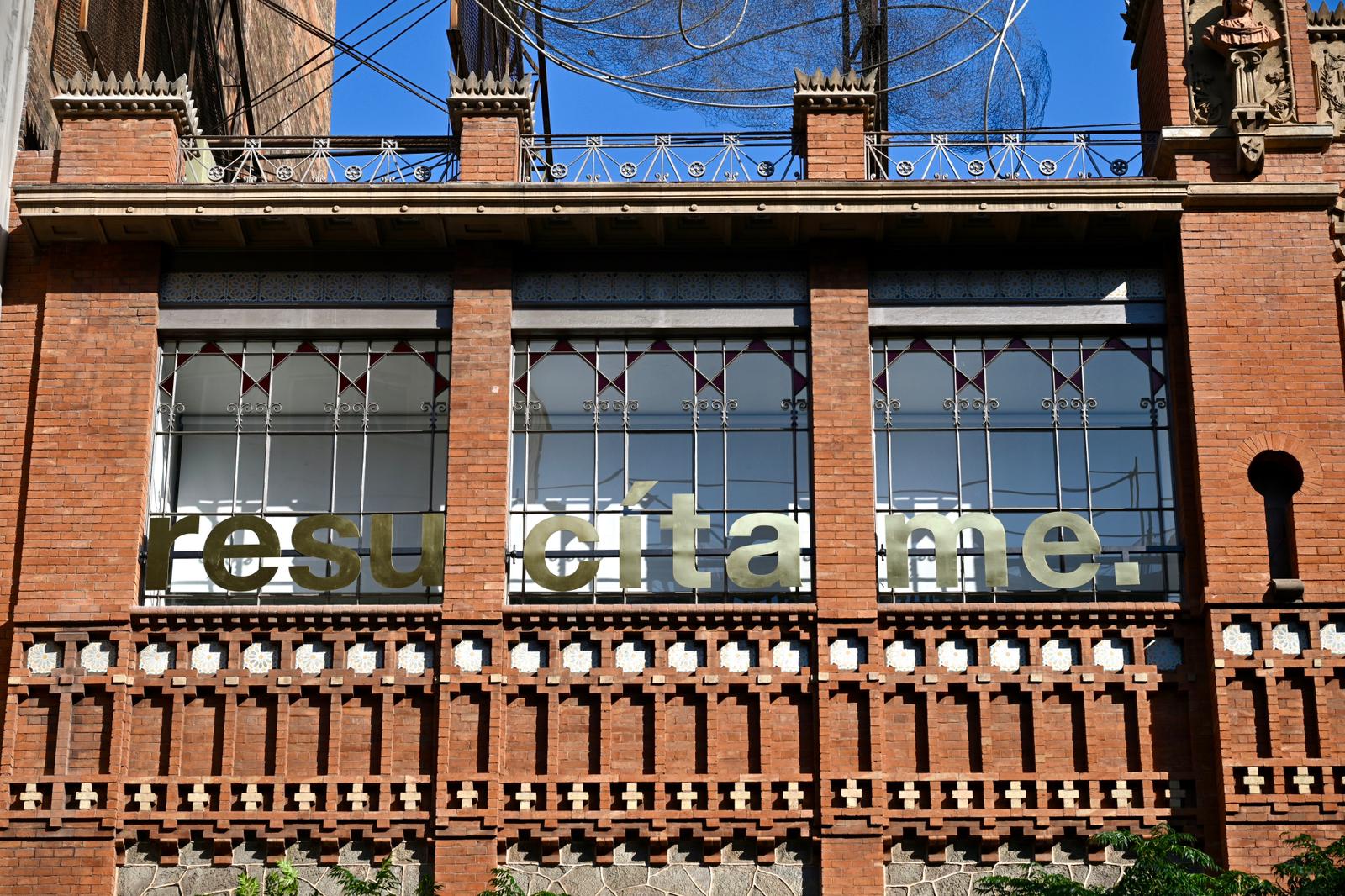
The city can be more than just a passing scene. It can become a place where forgotten memories reappear, where bodies occupy public space as a political act and where art ceases to be an object to become a shared experience. This is the premise of the third edition of Extramurs , the annual program of the Tàpies Museum which, this year, entrusts its development to Dora García with the project Línies de temps / resurrección .
The artist, one of the most influential figures in contemporary European conceptual art, has built a career over more than three decades focused on the mechanisms of language, performance, participation and invisible forms of power. His works often place the viewer in an active position, turning him into a reader, actor or accomplice in an open narrative. Far from conventional representation, García understands art as a space for research into the construction of identities, social margins and stories that official narratives have preferred to erase.
It is no coincidence that his practice dialogues with authors such as Walter Benjamin, Michel Foucault or Jacques Lacan, nor that many of his pieces explore the limits between reality and fiction, between document and interpretation. His participation in the Venice Biennale in 2011 with The Inadequate or cinematographic works such as Segunda Vez (2018) have consolidated a way of doing things in which artistic research becomes a form of critical thinking.
In Extramurs , this conceptual universe takes shape from an idea as old as it is radical: resurrection. Not from a religious perspective, but as a political gesture capable of giving back the presence to those people, stories and struggles expelled from collective memory. Resurrecting here means listening again to the voices that can still transform the present.
The project maintains the essence of Extramurs, a stable line of the Museu Tàpies that since 2024 has been investigating new ways of inhabiting public space through mediation, community work and situated artistic production. After Serge Attukwei Clottey's reflections on racial issues and Elena del Rivero's environmental and territorial approaches, this third edition shifts attention towards memory, dissent and symbolic reparation.
The main intervention occupies the façade of the Tàpies Museum, transforming the former building of the Montaner i Simón publishing house —the work of Lluís Domènech i Montaner— into a threshold between life and death. An enormous poster covered in gold leaf, almost seven metres long, displays a single phrase: "Resurrect me". The simplicity of the message hides a great critical charge. It is not so much an individual demand as a collective question: who deserves to be remembered? What stories have been left out of the books? Who remains absent from the official imagination?
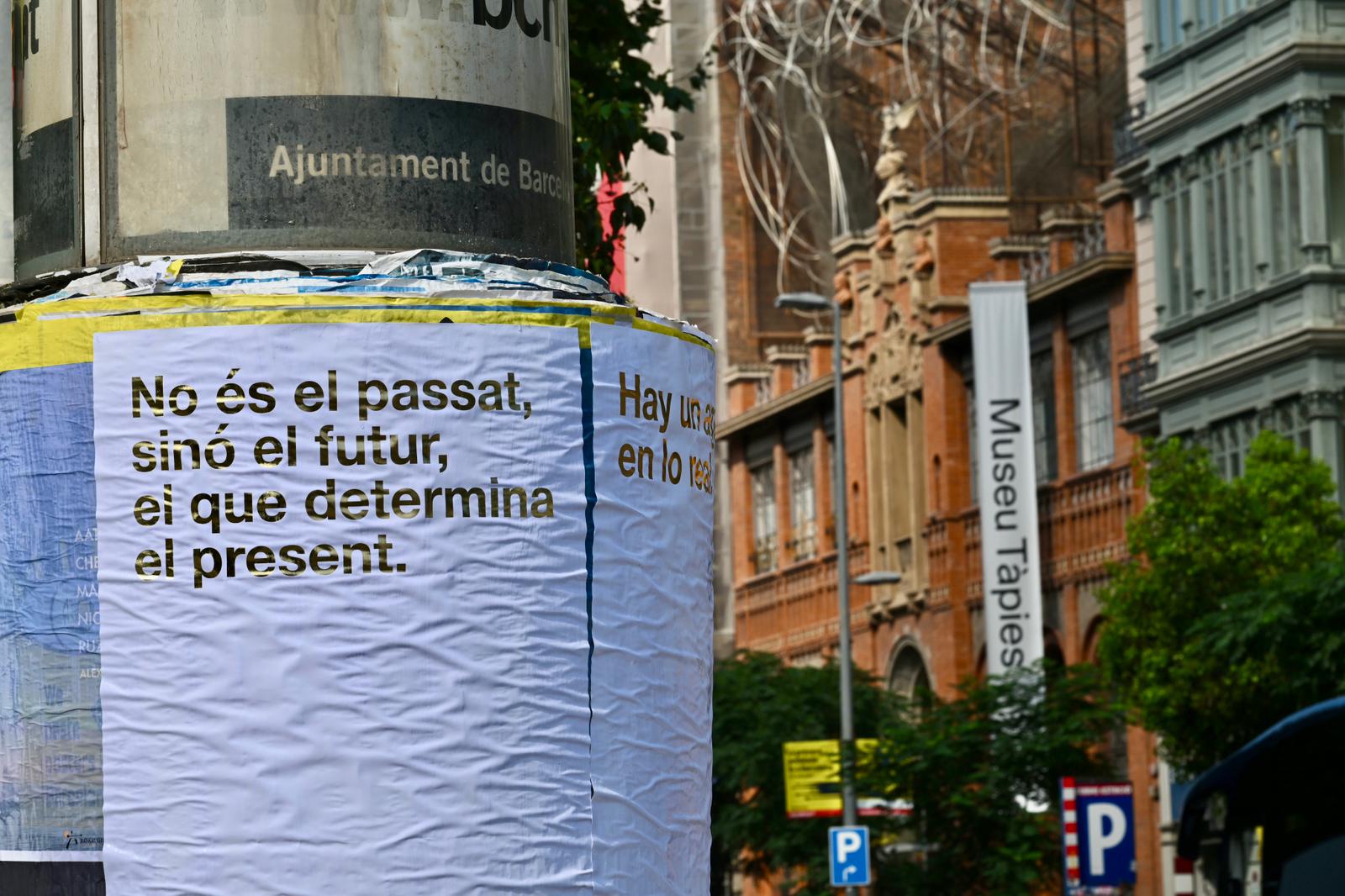
The word, one of the usual materials in García's work, is also deployed throughout the city with the recovery of the Frases de Oro project, initiated in 2021. Several advertising columns in Barcelona will host golden posters that interrupt the daily landscape with statements capable of destabilizing the certainties of the pedestrian. Art leaves the museum to infiltrate the usual circuits of urban communication, visually competing with advertising and transforming the city into a space for critical reading.
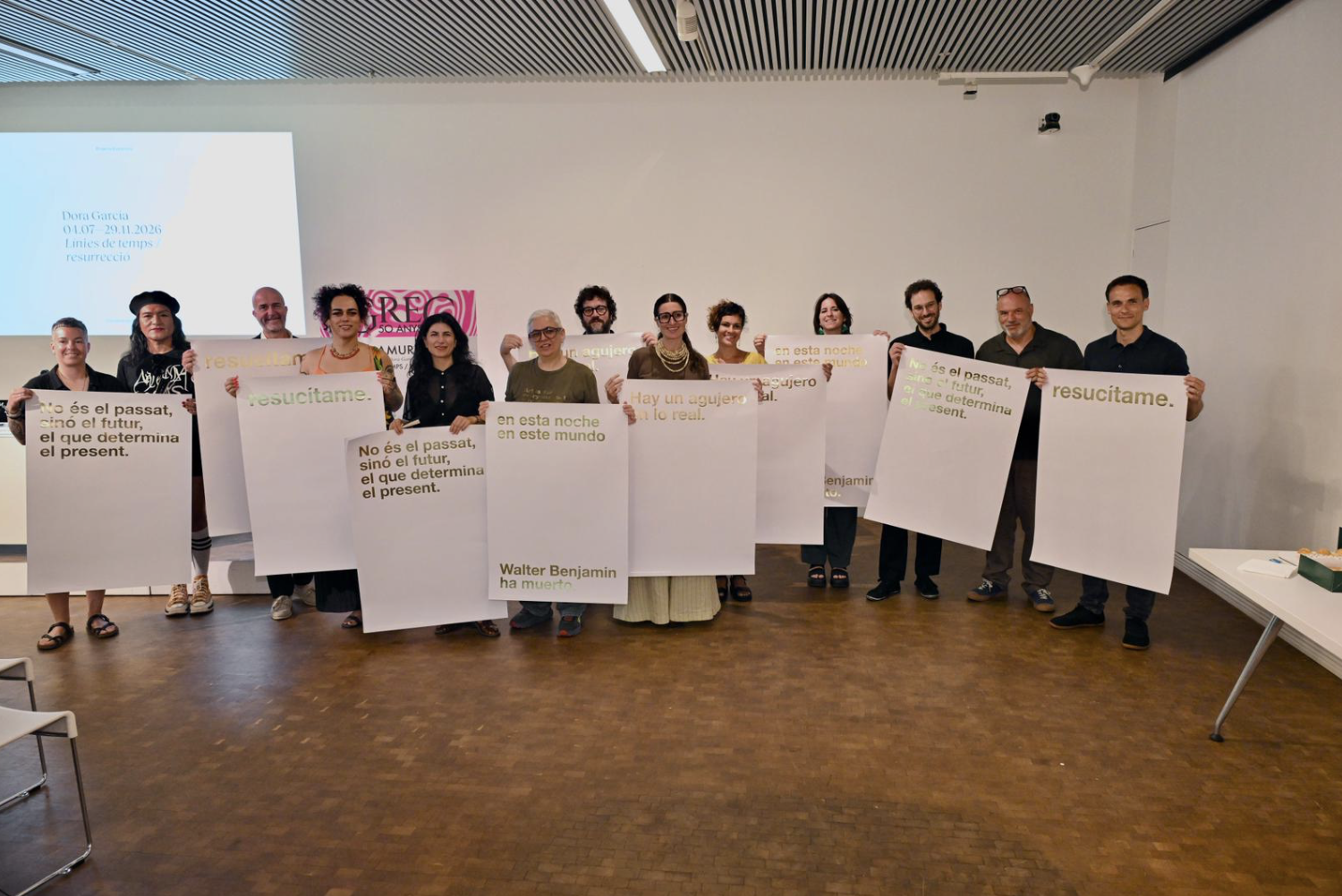
This displacement of the work towards the street is a constant in García's practice. Rather than producing permanent objects, he constructs situations where time, context and participation become artistic matter. The fragility of paper, the ephemerality of actions and the vulnerability of bodies are part of the same aesthetic discourse.
The Extramurs program, which will be on view until November 29th, extends over several months and activates an extensive network of collaborations between cultural institutions in Barcelona. On July 4th, it starts in the Foyer of the Gran Teatre del Liceu with the first session of Corocuerpo, jointly directed by Mari Lyn Diniz and Dora García, followed by the first chapter of the participatory performance El Bicho, with the participation of Erika Michi. This work, structured over two consecutive days, invites the public to be part of the collective authorship of the piece, dissolving the traditional boundaries between artist and spectator.
The inspiration for El Bicho directly refers to The Bedbug (1929) by the futurist poet Vladimir Mayakovsky, a work that allows García to reflect on the unfulfilled promises of revolutions and the persistence of political imaginaries over time.
Two days later, the Teatre Lliure de Montjuïc hosts a conversation between Frau Diamanda and Diego Marchante linked to the magazine Convit/e , promoted by the social production company Mescladís. The day culminates with a new action by Corocuerpo in Plaça Margarida Xirgu, a choral performance dedicated to dissident femininity and inspired by the figure of Sylvia Rivera, one of the fundamental activists of the trans struggle and LGTBIQ+ rights.
The autumn further expands the project with the seminar Death and Resistance, organized at Eina University Center for Design and Art in Barcelona. The sessions will culminate with a tour of the Montjuïc Cemetery, transforming this funerary space into a place of learning about memory, absence and resistance. In parallel, a special issue of the magazine Convit/e will be published entirely dedicated to Extramurs 2026.
The project will conclude in November with the screening of three fundamental films by Dora García within the Loop Festival, at the Filmoteca de Catalunya: The Joycean Society (2013), an exploration of the obsessive readers of Finnegans Wake ; Segunda Vez (2018), inspired by the Argentine writer Oscar Masotta; and (Revolución, cumple tu promesa) Amor rojo (2024), where she continues to investigate the relationship between politics, memory and representation.
The selection of references that run through the entire project reveals the complexity of its approach. In addition to the figures of Sylvia Rivera and Mayakovsky, the thinkers Walter Benjamin and Elias Canetti, as well as the Brazilian singer Gal Costa, are added. Characters from very diverse disciplines who share the same condition: having challenged the dominant discourses of their time. García recovers them not as a nostalgic homage, but as necessary interlocutors to understand the conflicts of the present.
In this sense, Timelines / Resurrection avoids any monumental approach to memory. It does not seek to construct new myths, but rather to question the mechanisms that decide who is remembered and who disappears from collective narratives. Resurrection thus becomes a form of symbolic justice, capable of dismantling everyday structures of oppression and opening spaces for other ways of narrating history.


You may be
interested
...