Exhibitions
The MNBA rewrites its collection with the acquisitions of 2025
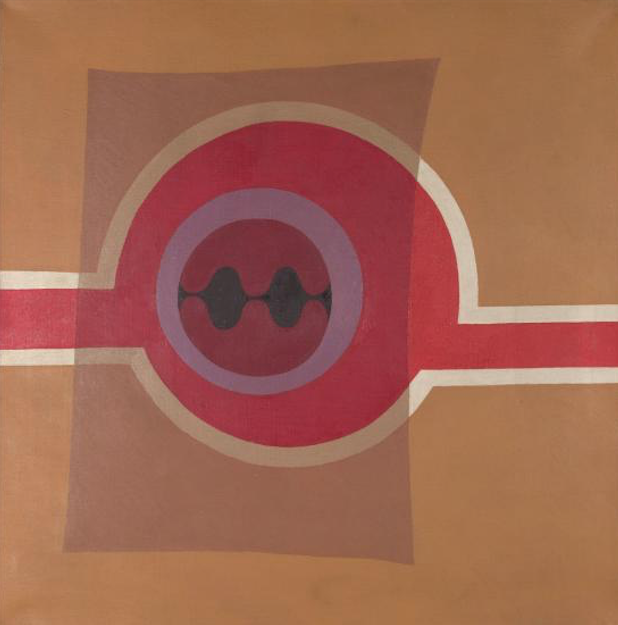
The National Museum of Fine Arts has created an exhibition, on view until August 16, that transcends the nature of a simple display of acquisitions. Beneath the guise of a heritage exhibition, the exhibition proposes a reflection on the mechanisms by which a museum constructs—and also corrects—the official narrative of art history in Chile.
The exhibition brings together 18 of the 55 works added to the MNBA collection during 2025, a group that demonstrates an institutional shift towards a more diverse, decentralized collection that is representative of the multiple voices that have shaped national artistic production. Far from viewing these acquisitions as a mere collection of objects, the exhibition invites us to consider the collection as a living organism, constantly evolving.
The works span a broad temporal and disciplinary range. Painting, sculpture, photography, printmaking, and textile art coexist in a selection where the dialogue between generations takes on special significance. From 19th-century masters to contemporary artists, the exhibition allows us to observe how aesthetic, social, and political concerns transform without losing continuity.
One of the most significant sections comprises a group of six paintings from the historic Club de la Unión, among which stands out a portrait painted in Europe by Alfredo Valenzuela Puelma, a work that once again places the artist within the international context that shaped his production. In addition, there are three pieces that participated in the 1910 International Centennial Exhibition, true visual documents of a foundational moment for Chilean art.
Special attention should be paid to "Caseríos de Valparaíso" (ca. 1911), by Alfredo Helsby, a painting that dismantles the usual image of the artist as a landscape painter dedicated to sublime nature. Here, the port appears as a stage for social and urban tensions, revealing an interest in daily life and the expansion of the city that considerably broadens the critical reading of his work.
However, one of the greatest curatorial achievements lies in the presence of numerous female artists, whose inclusion fulfills a historical obligation of the museum. The exhibition includes the "Portrait of Matilde Pérez," created by Ana Cortés, an essential figure in Chilean modernism and recipient of the 1994 National Art Prize. Also noteworthy is "Pachamama" (1981), by Ester Chacón, where weaving ceases to be merely a craft medium and becomes a sculptural and pictorial language capable of articulating memory, territory, and Andean worldview.
The review continues with "Germinal Four" (1971), by Carmen Piemonte, whose abstraction reaffirms the relevance of a little-studied artist, while the series "Self-Portrait" (1981), by the Brazilian photographer Inés Paulino, acutely documents the intellectual and cultural scene of the eighties, blurring the boundaries between documentary record and identity construction.
The tour also incorporates the expressive power of Laura Rodig with Indigenous Woman (1924-1929), the conceptual dimension of Alicia Villarreal through Transfer Project (1981), and culminates with "Darwin Mountain Range" (2020), by Josefina Guilisasti, a monumental painting that establishes a bridge between the Chilean landscape tradition and contemporary concerns about territory, nature and environmental crisis.
Beyond the individual works, the exhibition gains significance from the process that made them possible. The 55 acquisitions made during 2025 are the result of the work of the MNBA Acquisitions Committee, which has promoted systematic research aimed at identifying gaps within the collection. The strategy is not simply about adding names, but about critically reviewing the criteria that historically defined which artists and narratives deserved a place in the national heritage.
In this sense, the exhibition demonstrates a museum policy that seeks to balance the representation of women artists, strengthen the presence of contemporary creators, and broaden the perspective to include works developed outside traditional channels of recognition. The inclusion of emerging artists alongside established figures results in a less linear collection, more open to dialogue between different generations and regions.
Among the artists whose works entered the collection during 2025 are Dionisio Baixeras y Verdaguer, Eugène Benjamin Selmy, Daniela Bertolini O'Ryan, Gabriela Carmona Siler, Enrique Castro-Cid, Gonzalo Castro Colimil, Rodrigo Castro Torres, Ester Chacón Ávila, Ana Cortés Jullian, Máximo Corvalán-Pincheira, Thérèse Marthe Françoise Cotard-Dupré, Ludmilla (Luma) von Flech-Brunningen, Patricia Domínguez, Andrés Durán Dávila, Virginia Errázuriz Guilisasti, Mario Fonseca Velasco, Nury González Andreu, Zaida González Ríos, Josefina Guilisasti Gana, Alfredo Helsby Hazell, Cristián Inostroza Cárcamo, Pablo Langlois Vicuña, Pablo Lincura, Luis Montes Becker, Patricia Israel, Natalia (Nato) Montoya Lecaros, Mariana Najmanovich Sirota, Camilo Ortega Prieto, Endi Paredes, Inés Paulino Mori, Carlos Peters Barrera, Carmen Piemonte, Hugo Rivera Scott, Laura Rodig Pizarro, Janet Toro Benavides, Marcela Trujillo Espinoza, Alfredo Valenzuela Puelma, Alicia Villarreal Mesa and Félix Ziem, forming a panorama that reflects the breadth of interests and perspectives that the museum seeks to represent today.

You may be
interested
...