Exhibitions
When Dalí turned Gaudí into a modern myth
The exhibition 'Dalí admires Gaudí', at the COAC in Figueres, explores the dialogue between two key figures in Catalan culture and shows how the painter from Empordà contributed decisively to the contemporary reinterpretation of the architect.
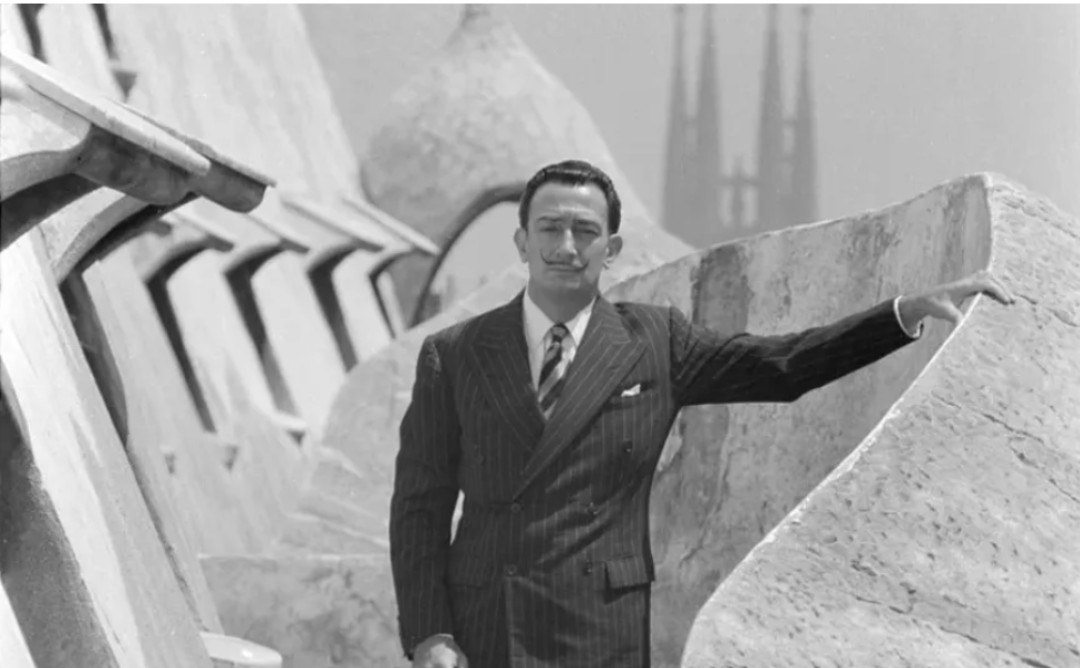
Long before Antoni Gaudí was universally recognized as one of the great geniuses of architecture, Salvador Dalí had already sensed the revolutionary dimension of his work. He not only admired it, but also turned it into an essential piece of his own artistic imagination and a symbol of the most radical modernity. This intellectual and aesthetic relationship is the common thread of Dalí admires Gaudí, the exhibition that the Alt Empordà Delegation of the College of Architects of Catalonia (COAC), in Figueres, is presenting from 3 July to 10 September 2026, as part of the centenary of Gaudí's death.
Produced by the Friends of the Dalí Museums and curated by Josep Playà, the exhibition avoids the temptation of becoming a simple commemorative exercise. Rather, it proposes a critical reading of the way in which Dalí reinterpreted the architect from Reus, placing him outside the limits of Modernism to turn him into a visionary creator, almost a precursor of Surrealism. It is precisely this symbolic appropriation that gives the exhibition a special interest.
The tour brings together photographs, posters, books, drawings, documents and objects that allow us to reconstruct an admiration sustained over decades. The images, signed by photographers such as Josep Brangulí, Melitó Casals Meli, Francesc Català-Roca, Ricardo Sans Condeminas, Robert Whitaker, Patrice Habans, Václav Chochola and Robert Descharnes, not only document encounters or architectural spaces. They also build a visual story where Dalí merges with Gaudí's organic forms to the point that it is difficult to discern where the work of one ends and the mythification of the other begins.
One of the great contributions of the exhibition is to vindicate photography as a fundamental tool in this cultural operation. The snapshots of La Pedrera, Park Güell, the Sagrada Família or the Dalí Theatre-Museum transcend documentary value to become true artistic interpretations. The camera does not limit itself to recording; it actively participates in the construction of a visual story that presents Gaudí as a profoundly contemporary architect.
This process of vindicating art had a foundational moment in 1933, when Dalí published in the French magazine Minotaure the article De la beauté terrifying et comestible, de l'architecture modern style , illustrated with photographs by Man Ray. The text constitutes one of the first international readings that placed Gaudí within the languages of the avant-garde, distancing him from any purely historicist or decorative interpretation. Today it may seem like an accepted idea, but at the time it represented a genuine critical rupture.
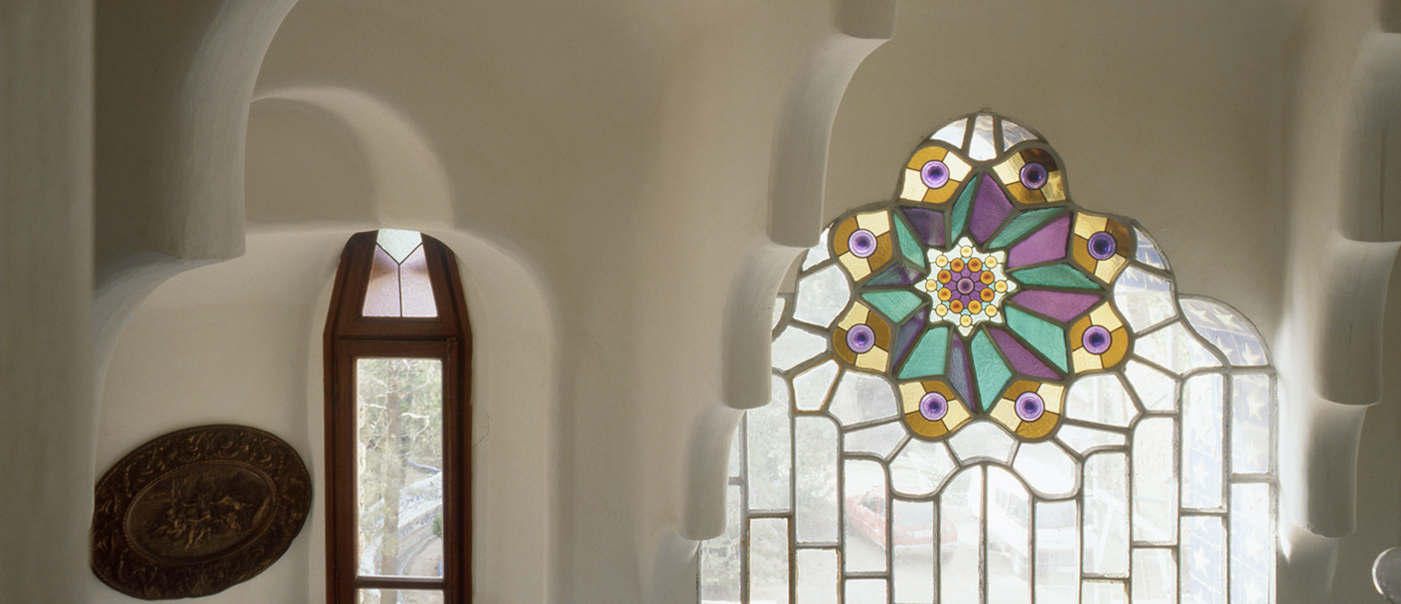
Gaudí's influence is also felt within Dalí's own creative universe. The Dalí Theatre-Museum in Figueres preserves numerous references to the architect: from the Gaudí sofa-window interspersed with an Empordà landscape dominated by Montgrí and Canigó to the altar under the dome, with the twisted Christ surrounded by mirrors, which evokes the theatricality and spirituality present in some spaces linked to Gaudí. Equally significant are the sculptural heads by Eusebi Arnau from the Casa Lleó Morera, integrated into the Dalí scenography as if they had always been part of it.
The exhibition also includes an interesting selection of posters and publications that demonstrate the extent to which Dalí contributed to the internationalization of Gaudí. Highlights include the Surréalisme poster (1969), used by Paris Match ; the Regards sur Gaudí poster (1970), dedicated to the Sagrada Família, and various graphic tributes made during the seventies. A particularly revealing piece is the reissue of the book La visió artística i religiosa de Gaudí , by Francesc Pujols, published in 1969 with a prologue by Dalí and photographs by Clovis Prévost, considered a decisive work in the critical recovery of the architect.
You may be
interested
...