Exhibitions
Nosaltres no tenim por, nosaltres som
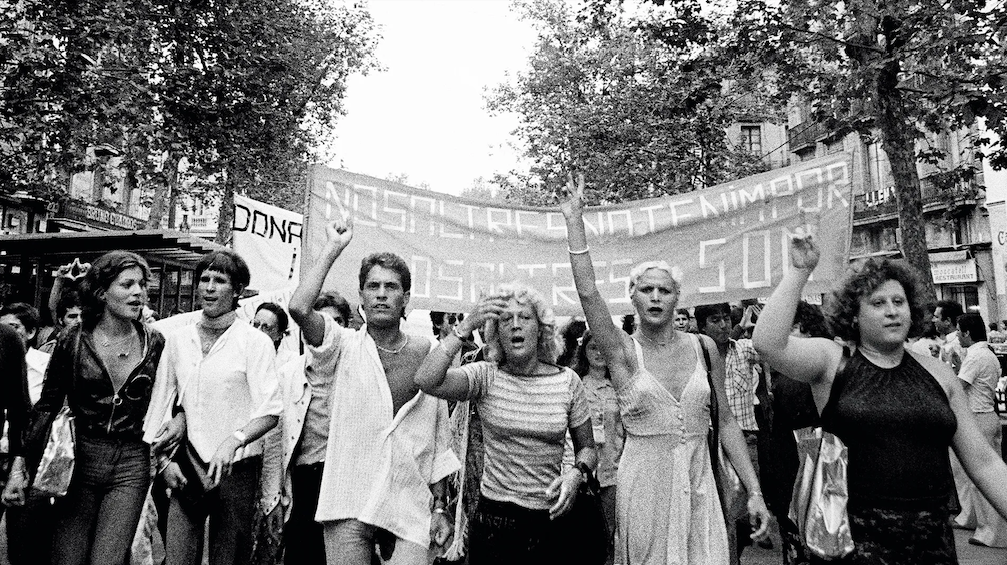
At the Blanquerna Cultural Center-Bookstore in Madrid, as part of PhotoEspaña, the exhibition "Nosaltres no tenim por, nosaltres som" (We are not afraid, we are ) is on display. Curated by Rafael Doctor Roncero and organized by the Ministry of Equality in conjunction with the Delegation of the Government of Catalonia in Madrid, the exhibition runs from June 11 to August 30 and revisits one of the most decisive—and still uncomfortable—episodes in recent Spanish history: the first major LGBTQ+ demonstration on June 26, 1977, in Barcelona.
The starting point is a photographic and political gesture: the images taken by Colita on that historic day. From two rolls of black and white film emerge some 40 photographs that reconstruct not only a march, but also a social climate in transformation. La Rambla appears as a transitional stage where the visible remnants of the dictatorship coexist with the first signs of a still fragile democracy.
The images reveal a contrast that is now almost archaeological: demonstrators in bell-bottoms, with long hair and makeshift banners, facing off against uniformed officers of the 'grays' (the riot police), armed with batons. Among them all, one image stands out as the symbolic core of the exhibition: the banner that gives the show its title, Nosaltres no tenim por, nosaltres som (We are not afraid, we are) , a slogan of unclear origin that encapsulates the tension between fear and the affirmation of identity.
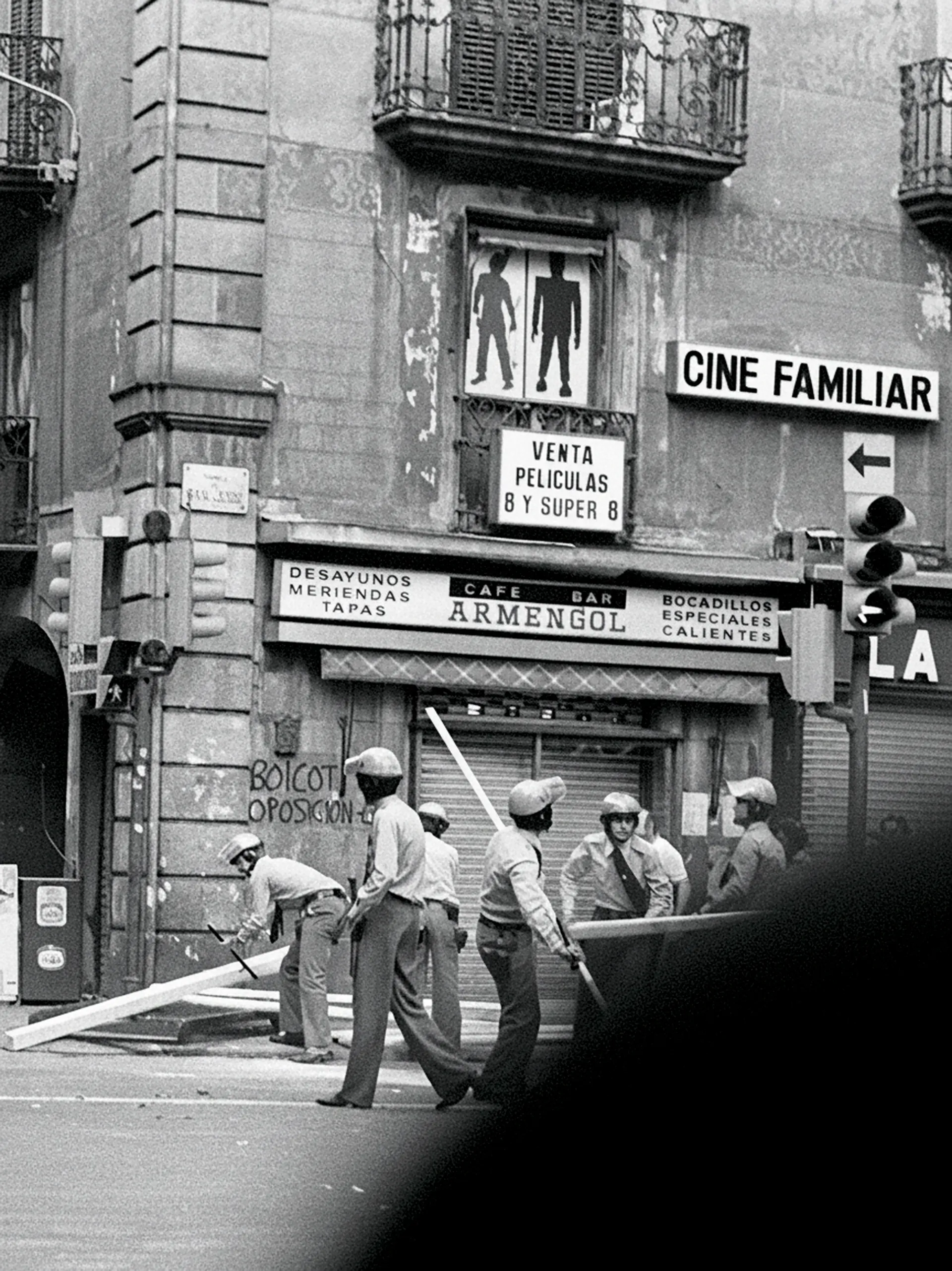
©COLITA Archive.
The exhibition is not limited to nostalgia. While it reconstructs a vanished landscape—no longer-existing shops, telephone booths, cars from another era, even a different pavement on the Rambla—it also offers a disquieting interpretation of the present. The exhibition organizers emphasize that those threats have not entirely disappeared, but rather mutated, reminding us that the fight for rights is not a closed process.
In this sense, Colita's work takes on a dual dimension: documentary and ethical. Her camera not only records an event, but participates in it with closeness and commitment. There is no cold distance or exoticization of the bodies in struggle; rather, there is a will to bear witness that is now read as a key piece of the visual memory of the Spanish transition.
The exhibition catalog emphasizes that this moment as a turning point: a democracy in formation where the street became a space of symbolic, political, and emotional struggle. Slogans, bodies, and banners functioned as tools for visibility in the face of a legal system still marked by repression, especially that stemming from the Law of Social Danger and Rehabilitation, which brutally affected trans and travesti people of the time.
During the presentation, the director of PhotoEspaña, María Santoyo, acknowledged the debt owed to that generation of activists. Her remarks were not only institutional but also personal: the memory of those struggles appears as a prerequisite for current freedoms, but also as a reminder of their fragility. In her interpretation, the past is not closed off, but rather remains as a warning.
The exhibition's curator also introduces a less celebratory and more unsettling reflection: the contemporary difficulty of articulating collective struggles with the same force as back then. In contrast to the unifying power of that demonstration—which brought together nearly 5,000 people—today there is a sense of fragmentation in emancipatory discourses, even when they share structural forms of violence.


You may be
interested
...