News
A stolen Flemish artwork resurfaces
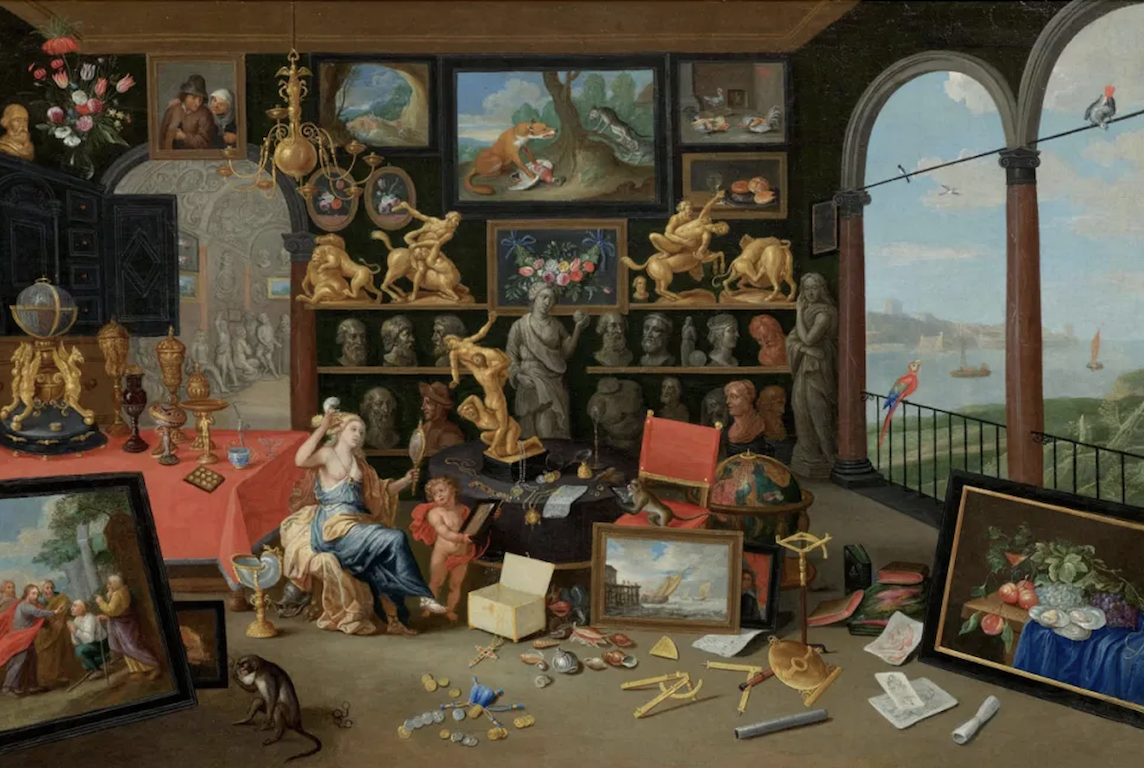
The recovery of a prominent 17th-century Flemish painting once again highlights the importance of traceability and due diligence in the international art market. The London-based Art Loss Register announced the recovery of Interior of a Collector's Cabinet: Allegory of Sight (ca. 1660), a work attributed to the Flemish masters Jan van Kessel the Elder and Abraham Willemsens, which had been stolen in September 2020 from a private residence in Canada.
Following the theft, the piece was reported to the authorities and registered in the Art Loss Register, the international database of stolen artworks. For several years, its whereabouts remained unknown until October 2023, when the work was identified as part of preparations for a future sale organized by Sotheby's auction house.
As part of its provenance verification protocols, Sotheby's compared the painting with the database of stolen works managed by the Art Loss Registry. The check established a direct match with the piece that disappeared in Canada three years earlier, thus initiating a complex recovery process.
According to the British organization, the consignor of the artwork avoided responding to requests regarding its provenance for approximately a year. Finally, the intervention of the Art Loss Register ensured the piece's return on behalf of the insurer AXA XL.
The company had compensated the original owner after the theft, thereby acquiring the legal rights to reclaim the artwork should it reappear. Once recovered, the painting was returned and subsequently included in an auction held in New York.
The work was part of the Master Paintings & Sculpture from Four Millennia Part II sale, organized by Sotheby's. Although initially estimated at between $30,000 and $40,000, collector interest drove the final price to $88,900, more than double the maximum estimated value.
For James Ratcliffe, director of Recoveries at the Art Loss Register, this case is a prime example of the usefulness of registering stolen works in specialized databases. He also emphasized the crucial role played by provenance checks carried out by major auction houses and market agents.
Beyond the financial success of the sale, the recovery of this painting represents a victory for the protection of artistic heritage and for international mechanisms that seek to combat the illicit trafficking of cultural property. In a context where thousands of missing works remain unaccounted for, each discovery reinforces the importance of cooperation between insurers, cultural institutions, law enforcement agencies, and art market professionals.



You may be
interested
...