News
The Reina Sofía turns 40
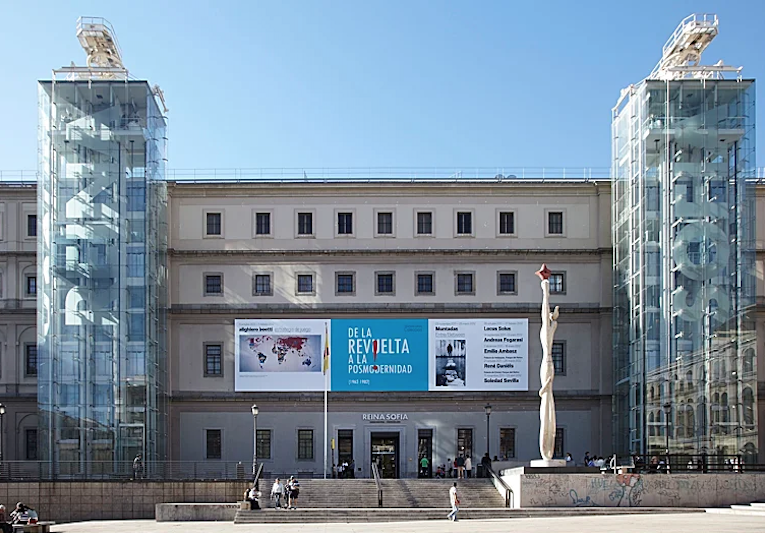
The Reina Sofía Art Centre, the origin of the current Reina Sofía National Art Centre Museum, celebrated its 40th anniversary with an institutional event in the auditorium of the Nouvel building, which brought together prominent representatives from the world of culture, including museum directors, artists, critics, gallery owners, collectors and patrons of the institution.
The commemoration was presided over by the Minister of Culture, Ernest Urtasun, accompanied by the Secretary of State for Culture, Jordi Martí. Although the attendance of the Vice President of the Government, Yolanda Díaz, was planned, her participation was canceled at the last minute. The event highlighted the trajectory of an institution that began as an Art Center and, two years later, would establish itself as one of the leading museums of contemporary art in Spain.
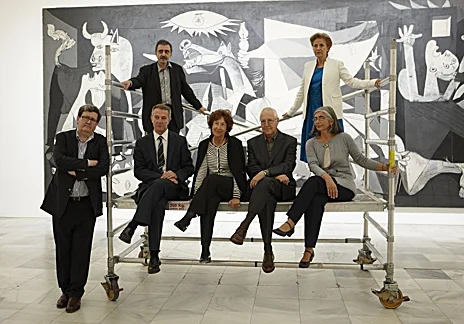
The opening of the event was led by the president of the museum's Board of Trustees, Ángeles González-Sinde, who emphasized the personal and collective connection the institution fosters. She underscored that her relationship with the museum transcends the professional sphere, becoming a form of sustained commitment. In her remarks, she described the Reina Sofía as a "factory of hope" and a space that is not only visited but inhabited, reiterating the idea of culture as a transformative and shared experience.
One of the highlights of the event was the speech by Javier Solana and Carmen Giménez, key figures in the early stages of the institutional project. Solana, current president of the Board of Trustees of the Prado Museum, emphasized the Reina Sofía's consolidation as a major international museum and affirmed that decisions such as the acquisition of Guernica were fundamental to its symbolic and political configuration. For her part, Carmen Giménez recalled the difficulties of the founding process, while also underscoring the privilege of participating in the construction of such an institution.
The museum's current director, Manuel Segade, traced the different directions the institution has taken throughout its history, highlighting their successive contributions. In his address, he emphasized the museum's current social function, its welcoming nature, and the transformative power of the visit. He defined the Reina Sofía as a public space with a critical vocation, capable of generating thought and fostering new ways of engaging with contemporary art.
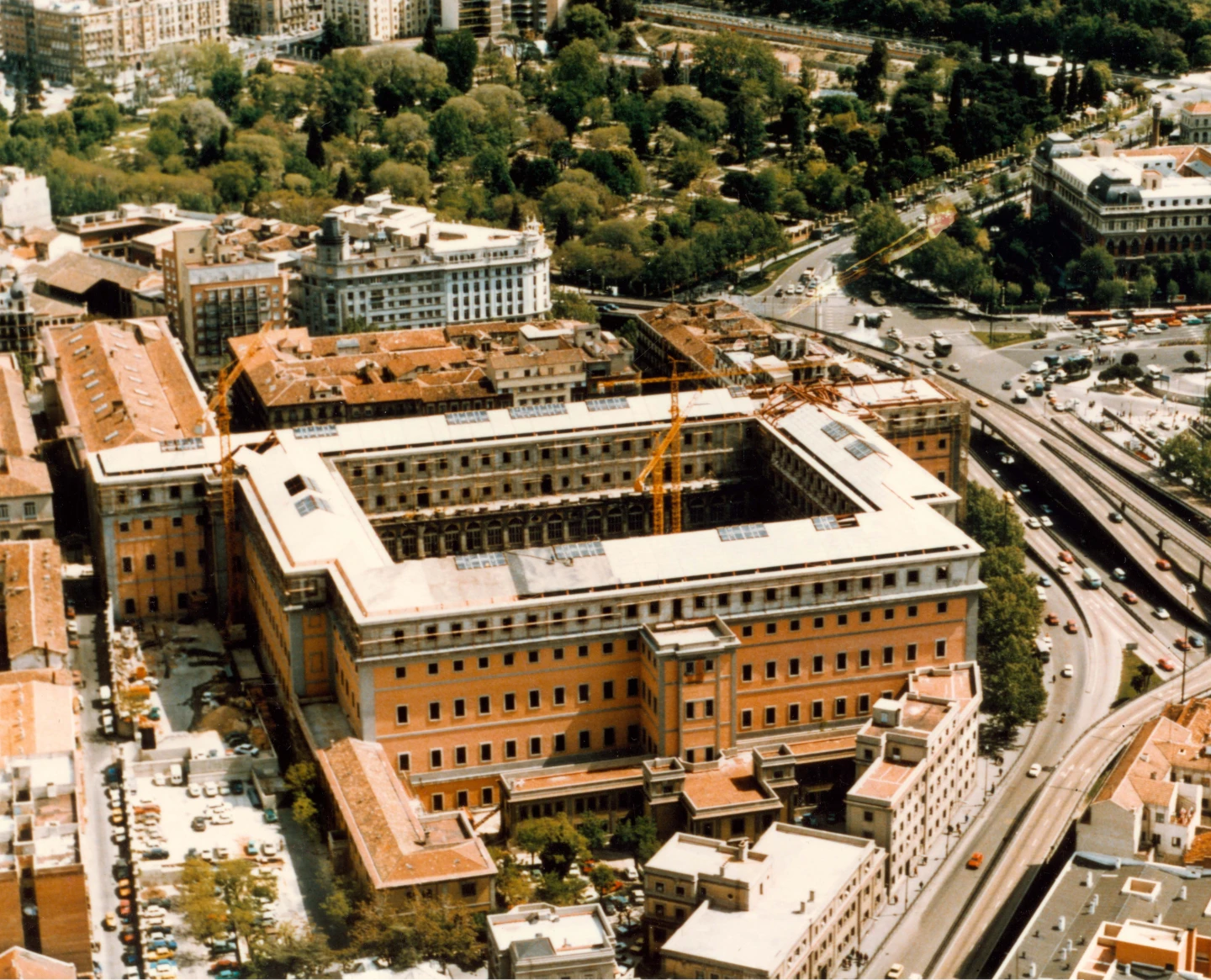
The event was closed by the Minister of Culture, who thanked all those who have contributed to the museum's consolidation over the past four decades, with special emphasis on its staff. In his speech, he described it as a vibrant and dynamic center, an internationally renowned institution that has hosted significant exhibitions and functions as a contemporary forum open to the public. He noted that the Reina Sofía continues to engage with society and remains an active part of the country's cultural life.
Since its inauguration in 1986, the Museo Nacional Centro de Arte Reina Sofía has developed an international exhibition program focused on the most innovative practices in contemporary art. Over these four decades, the institution has consolidated a program that has decisively contributed to establishing it as one of the country's leading cultural institutions, both for the ambition of its proposals and for its impact on the recent history of art in Spain.
In its early years, the museum defined a curatorial approach that shaped its identity through exhibitions now considered fundamental. Among these, the inaugural exhibitions of what was then the Reina Sofía Art Center stand out, such as *References. An Artistic Encounter in Time* and *Processes. Culture and New Technologies*, both from 1986, which established a framework for reflection on the relationships between art, society, and technological modernity. These were followed by exhibitions such as *The Sublime Image* (1987), *Minimal Art from the Panza Collection* (1988), and *Muntadas. Hybrids* (1988), which broadened the scope of research to include emerging contemporary artistic languages.
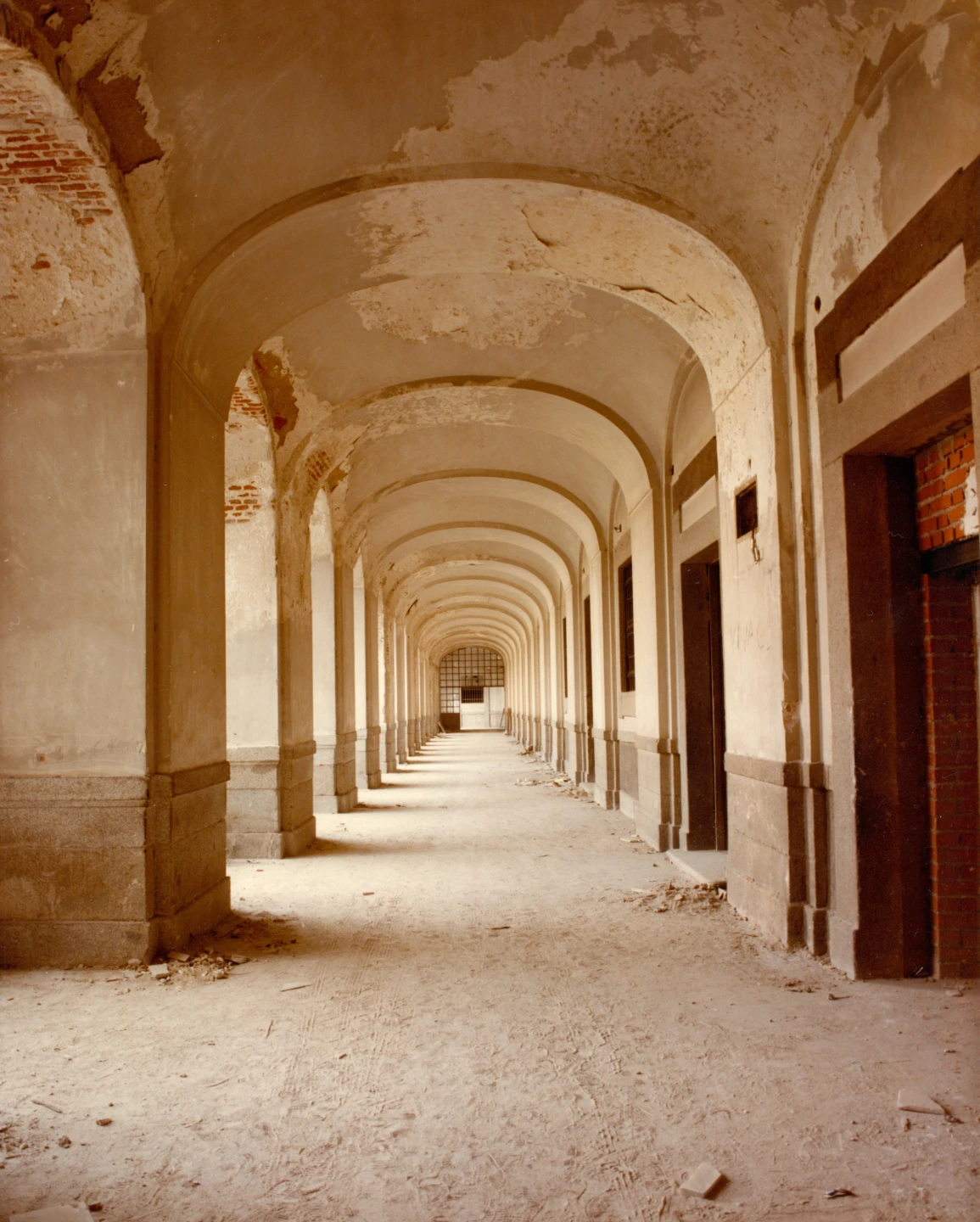
With over 650 exhibitions organized since its inception, the museum has maintained a constant level of activity characterized by large-scale, high-attendance shows. Among the most recent highlights are the Salvador Dalí exhibition in 2013, which drew nearly 730,000 visitors, and Picasso: Pity and Terror in Picasso. The Path to Guernica in 2017, which attracted over 681,000 attendees, solidifying the museum's role as a leading venue for major public exhibitions.
The Reina Sofía's programming has consistently combined solo exhibitions dedicated to essential figures in modern and contemporary art with collective projects of a theoretical nature. The former includes retrospectives of artists such as María Blanchard, Pablo Picasso, and Juan Muñoz, alongside international names like Louise Bourgeois, Joseph Beuys, and Richard Hamilton, whose works have helped define the artistic languages of the 20th and 21st centuries.
At the same time, the museum has promoted group exhibitions with a strong conceptual component that have been key in shaping its collections and opening new critical debates. Projects such as Four Directions played a significant role in the field of contemporary photography, while exhibitions such as Cooked and Raw or ATLAS. How to Carry the World on Your Back?, curated by Georges Didi-Huberman, broadened the reflection on globalization, identity, and visual culture in the contemporary context.
Likewise, the museum has developed critical reviews of historical and artistic contexts through projects such as Versiones del Sur, Encuentros de Pamplona 1972 or Campo Cerrado, contributing to re-examining key episodes of recent cultural history from new interpretative perspectives.
You may be
interested
...