Exhibitions
Minor White, the poet of photography, stars at the KBr in his great European retrospective
The Mapfre Foundation brings together nearly 250 original copies to rediscover the spiritual, visual and introspective universe of one of the essential figures of 20th century photography.
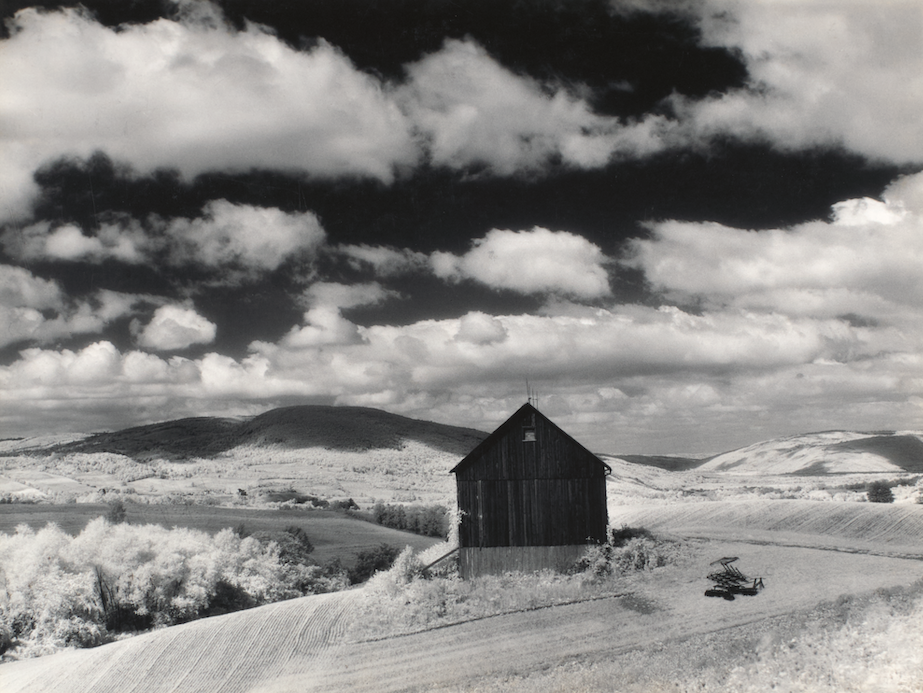
The KBr center of the Mapfre Foundation in Barcelona is hosting the exhibition Minor White , the largest retrospective dedicated to date in Europe to one of the most unique and influential authors of 20th-century American photography. The exhibition, which commemorates the fiftieth anniversary of the photographer's death, offers an exhaustive look at a career marked by spiritual research, formal experimentation and the conviction that photography could become a tool for inner knowledge.
Born in Minneapolis in 1908 and died in Boston in 1976, Minor White was much more than a photographer. A professor, editor, theorist, and founder of the influential magazine Aperture , he exerted a profound influence on the academic, museum, and editorial spheres of photography. His goal was always to elevate the photographic image beyond the visual document and turn it into a space for personal transformation and exploration of consciousness.
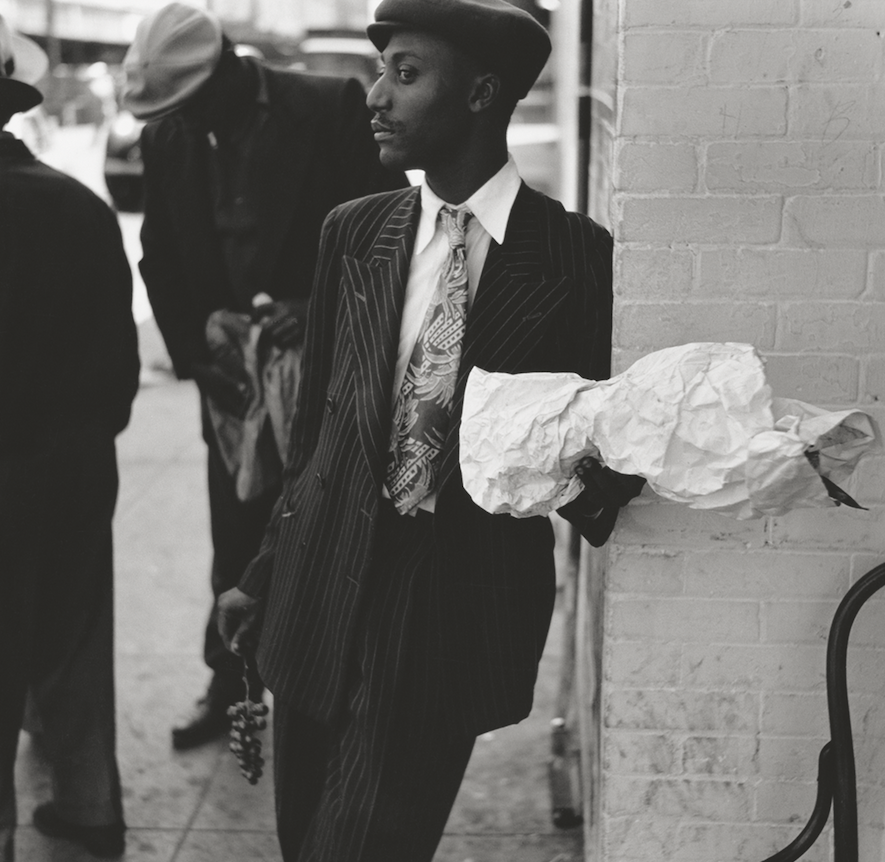
Minor White, Produce Market, San Francisco , August 26, 1949, Gelatin silver copy, x1980-1410, The Minor White Archive, Princeton University Art Museum, Bequest of Minor White, © Trustees of Princeton University, Photo: Allen Chen.
An intellectual disciple of Alfred Stieglitz, White developed the idea of “equivalence,” according to which a photograph not only represents an external reality, but can act as a visual translation of an emotion or an inner experience. This view was deeply marked by his own life trajectory and the difficulty of openly living his homosexuality in an era marked by social repression. Thus, his work was nourished by various philosophical, psychological and spiritual influences that allowed him to construct an intimate photographic language loaded with symbolism.
One of the most innovative aspects of his production was the creation of photographic sequences. For White, an isolated image had a limited capacity for communication; instead, the relationship between several photographs generated new meanings, rhythms and associations, in a process that he himself compared to a “still image cinema”. This conception also demanded active participation from the viewer, who was invited to fill in the gaps and establish his own emotional connections.
The exhibition features nearly 250 period prints, also testament to White's great skill as a printer. Of this set, some 160 photographs form part of the eleven sequences that structure the exhibition itinerary, some of which were never shown during the artist's lifetime and most of which had never been presented in their entirety in Europe.
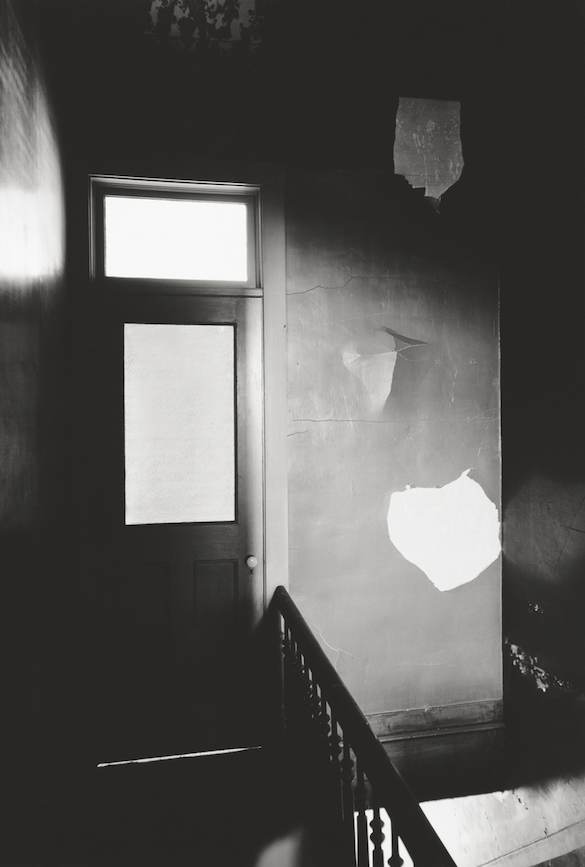
Minor White, Rochester, June 1959, Gelatin silver copy, x1980-3454, The Minor White Archive, Princeton University Art Museum, Bequest of Minor White © Trustees of Princeton University, Photo: Allen Chen.
Curated by Carlos Gollonet, the Mapfre Foundation recovers the figure of a creator who is still insufficiently recognized by the general public, but fundamental to understanding the evolution of modern photography. A work that continues to challenge the viewer from silence, contemplation and the search for an inner truth.
The tour, which is mainly chronological in nature, allows us to follow the different stages of White's life and creativity through the four territories that marked his career—Portland, San Francisco, Rochester and Boston—and observe his evolution from the first images influenced by pictorialism to a photography of great formal and technical precision.
Nature, landscape, portraiture and the male nude emerge as some of the major recurring themes in his work, always imbued with a symbolic and contemplative dimension. Series such as Rural Cathedrals (1955), made after his move to Rochester using infrared film, reveal this desire to capture a hidden reality, what the artist described as photographing things “not for what they are, but for what they can also mean.”
You may be
interested
...