Exhibitions
Alfons Borrell: Who inhabits space?
A reflection on Alfons Borrell's painting as a vital experience that transforms architectural space into a living and habitable presence.
Alfons Borrell's work returns to the Roman Temple of Vic thirty years later, curated by Fernando Marzà, and is also displayed at L'Albergueria and the Col·legi d'Arquitectes from April 24 to June 28.
The general title is Inside the Temple. Alfons Borrell, works in architecture . I say "returns" because it recovers an exhibition held in the Temple itself thirty years ago, in the nineties.
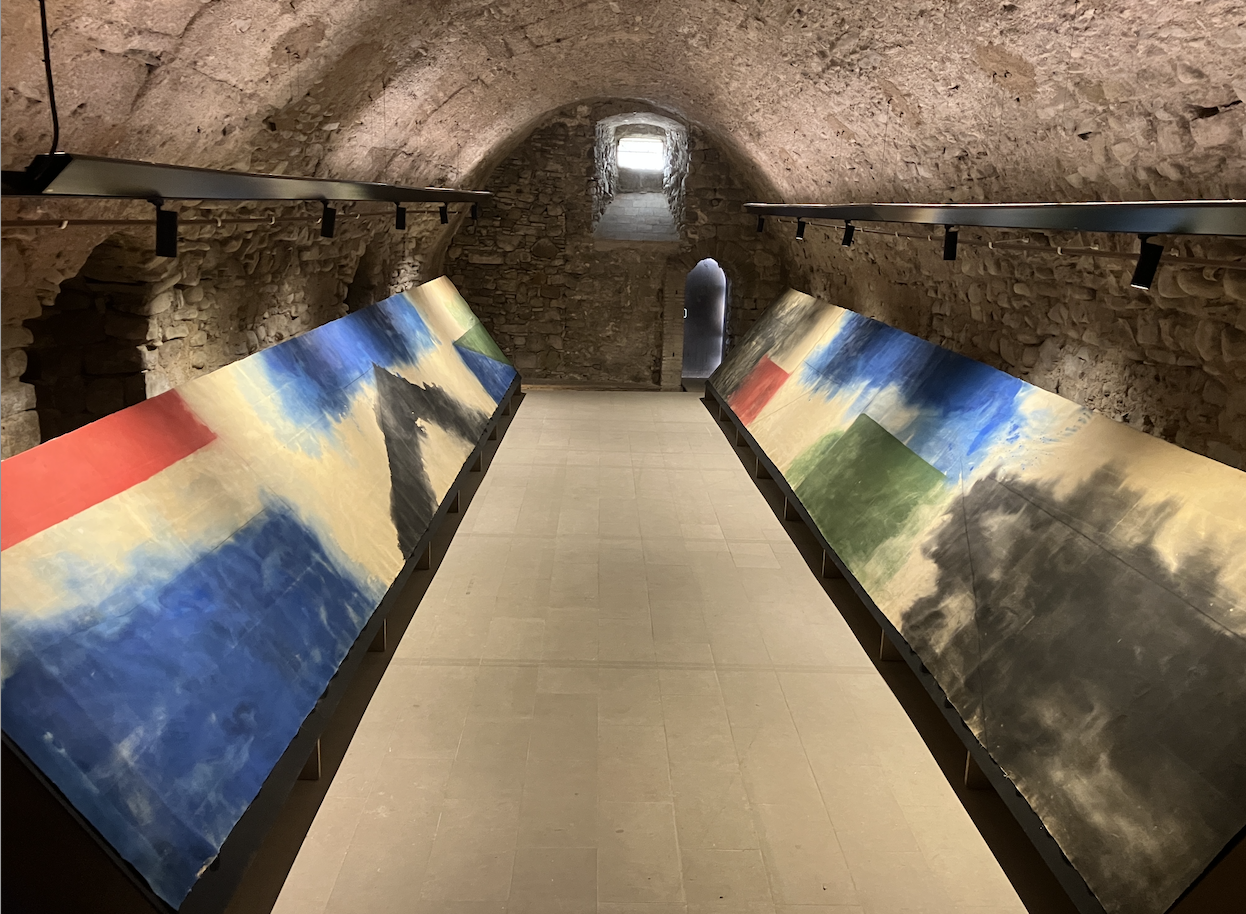
We also know other interventions, such as the large mural for the hall of the Auditorium of the Ateneu de Barcelona in 2010, the sculpture Aéria , projected in 2014 for the Passeig de la Plaça Major in Sabadell, the original mural paintings for the vaulted ceiling of the historic Forn de Sant Jaume in Sabadell and the Capella Blava, an intervention in a funerary chapel of an old monastery in Sabadell. Obviously, this puts the focus on the relationship between the visual arts and architecture. In all of them, color is an active agent capable of organizing and transforming space.
This is a good opportunity to delve deeper into the close relationship between Alfons Borrell's painting and space and architectural space and, above all, his conception of painting.
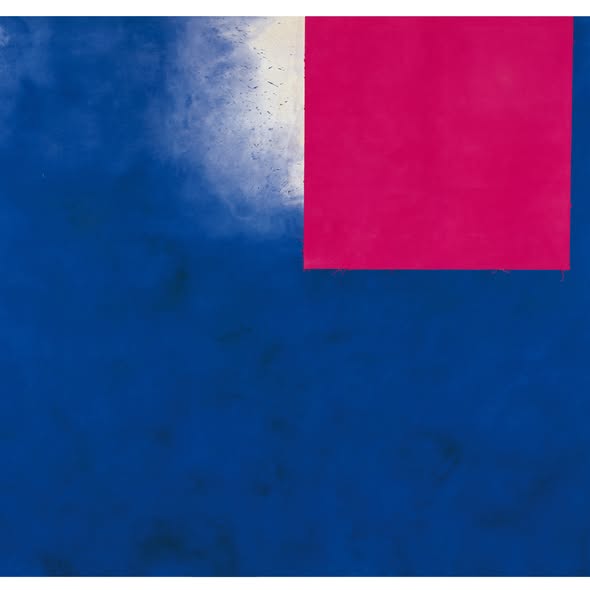
When I visited the great anthological exhibition of Alfons Borrell at the Fundació Joan Miró in Barcelona in 2015, curated by Oriol Vilapuig, I realized that that painting dialogued perfectly with the walls. The more than two hundred works made over sixty years became doors and windows.
But this approach was not enough for me until I heard from the artist himself some fundamental keys, such as, for example, that art was for him a deep subjective experience, an experience of life. This is for me one of the main reasons for the transformation and the cause of the art that has occupied me for so many years.
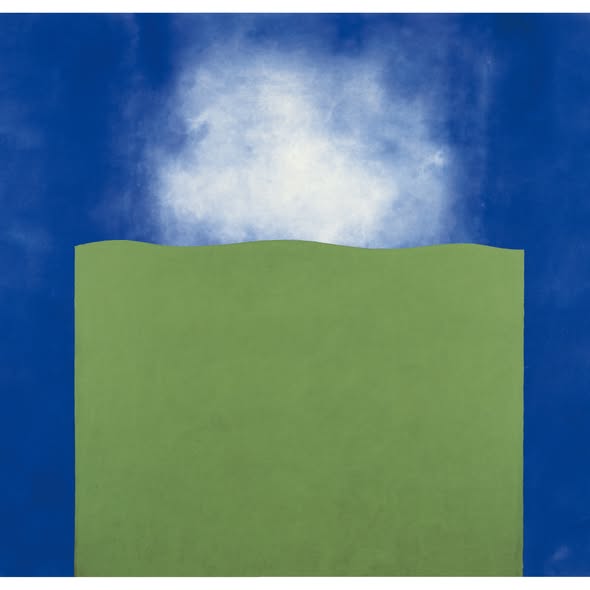
Alfons Borrell confirms this experience of life and art when he assures that he did not want to be a painter, he wanted to be painting. He wanted to disappear as a subject and become part of the painting. He said it with undoubted conviction: to disappear with a sublime expression, "to go beyond the limits of consciousness". This transmutation is made possible by his dialectic of order/disorder. His emblematic colors - white, black, ultramarine blue, orange or ochre - are never applied in a flat way, but rather, even if the canvas is very large, there is always intense movement, thousands of tiny gestures, almost invisible. This vibration makes it very alive, almost organic and existent. It speaks to us.
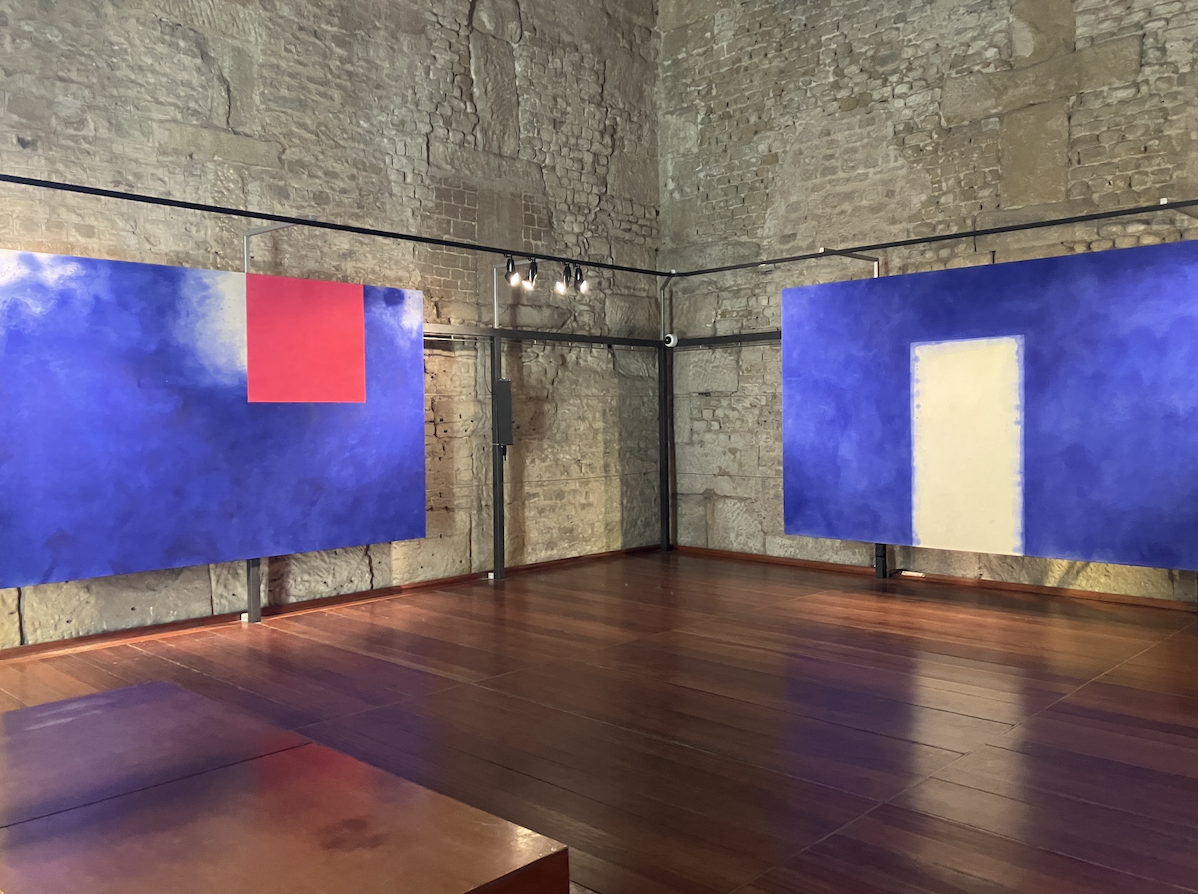
These colors are not the result of an intellectual or urban speculation, as could be the post-pictorial abstraction of the hard edge or the Supports/Surfaces movement, but a reflection of the essential nature with which he relates each color. His art is beyond definitions, it is almost a secret art because it possesses the mystery of alchemical transmutation. Alfons Borrell has the magical and transformative desire of the artist made of painting. For this reason, and in this way, the painting itself becomes a living being, an identity with its own voice and, moreover, in this case, it manifests itself in a Temple.
Painting is the artist, painting inhabits space. This is the pertinent question: who inhabits space? Everything is life. When you look at color you will see a living identity; it is not yours, but the presence of Alfons Borrell himself who has become a painting.

You may be
interested
...