Exhibitions
The Shadow of Memory
Joan Crous turns glass, ash and the vestiges of the present into a powerful reflection on destruction and human persistence.
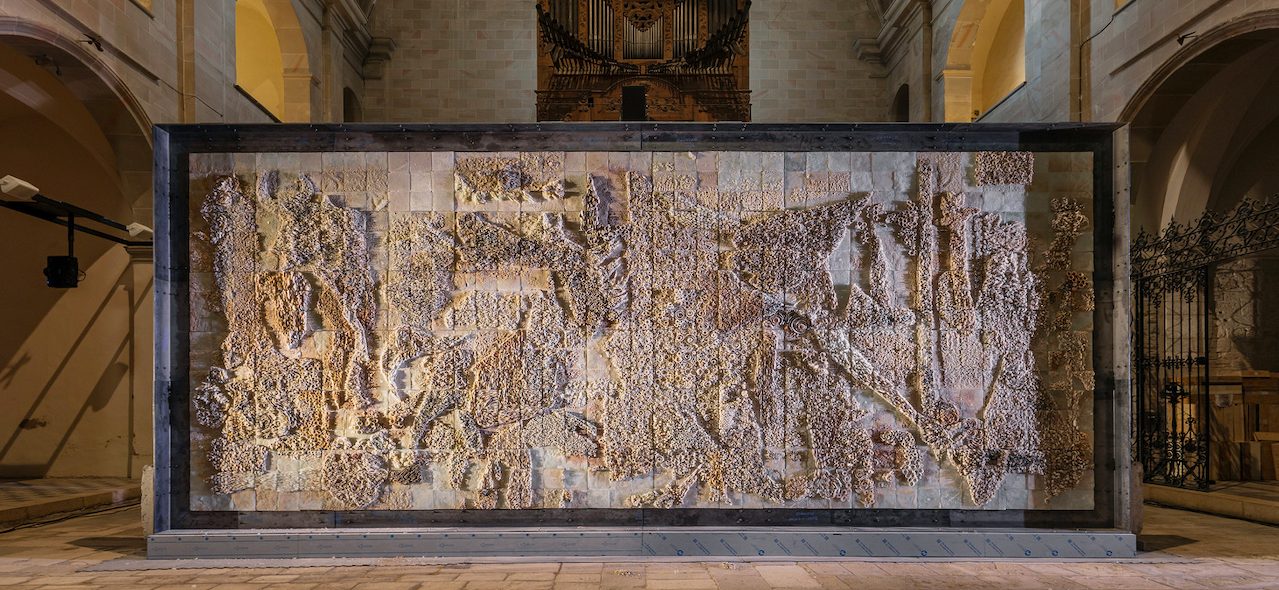
The church of the Monastery of Sant Esteve in Banyoles is hosting L'Ombra. La città degli uomini until August 13, a monumental installation by the artist and craftsman from Banyoles, Joan Crous (Banyoles, 1962), who has been based in Bologna since the 1990s. Conceived over more than five years of work, the piece represents one of the most ambitious, personal and radical proposals of his career. The exhibition is organized by La Bombonera and the Lluís Coromina i Isern Foundation, with the support of the Girona Provincial Council and the collaboration of bonart, an institutional alliance that makes it possible for this large-format artistic proposal to be presented in a heritage space as significant as the Banyoles monastery.
The work, a large sculptural surface seven meters wide by four meters high, is made up of 770 glass paste tiles, earth and thousands of fragments modeled in sand molds. Its visual force is born from a deep reflection on the bombing of Gernika in 1937 and establishes an inevitable dialogue with the ethical and visual memory of Picasso's Guernica , in the context of the commemoration of the upcoming anniversary of that tragic historical episode.
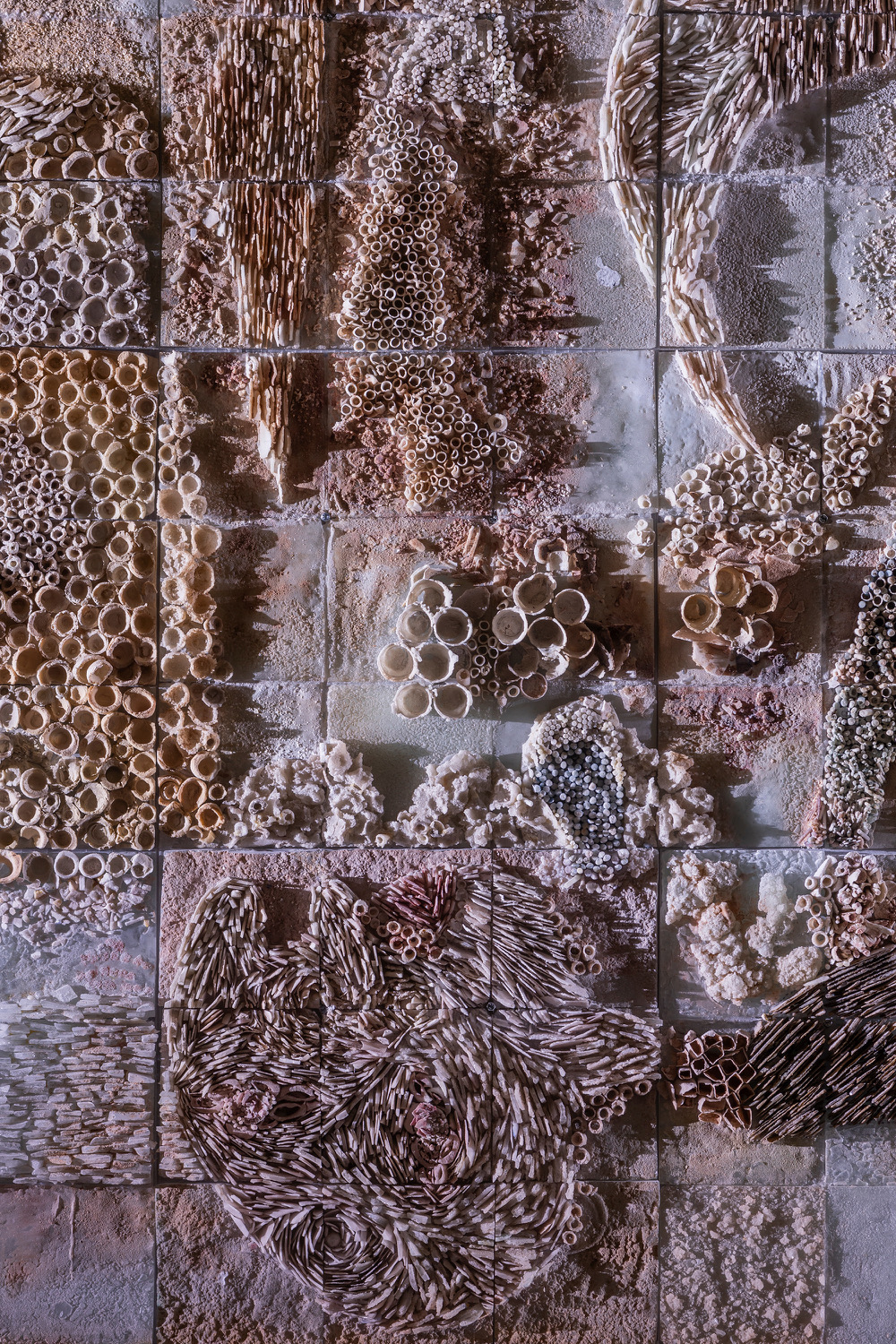
Photo: Yurian Quintanas
However, Crous does not aim to represent war or reconstruct its horrors in a narrative way. The Shadow moves in a much more subtle territory: that fragile space where memory ceases to be a story to become a trace, sediment and matter. The work does not speak of the explosion, but of the silence that comes afterwards; it does not show the event, but what persists when time has passed: the remains, the absences and the shadows.
This idea takes shape through a technique developed by the artist himself, known as “envelopment”, a process of material fossilization in which abandoned objects, fragments of everyday life, dust, ashes and sediments are trapped within the transparency of glass. Deprived of their original function and often also of their recognizable identity, these elements are transformed into silent witnesses of a time that is fading away.
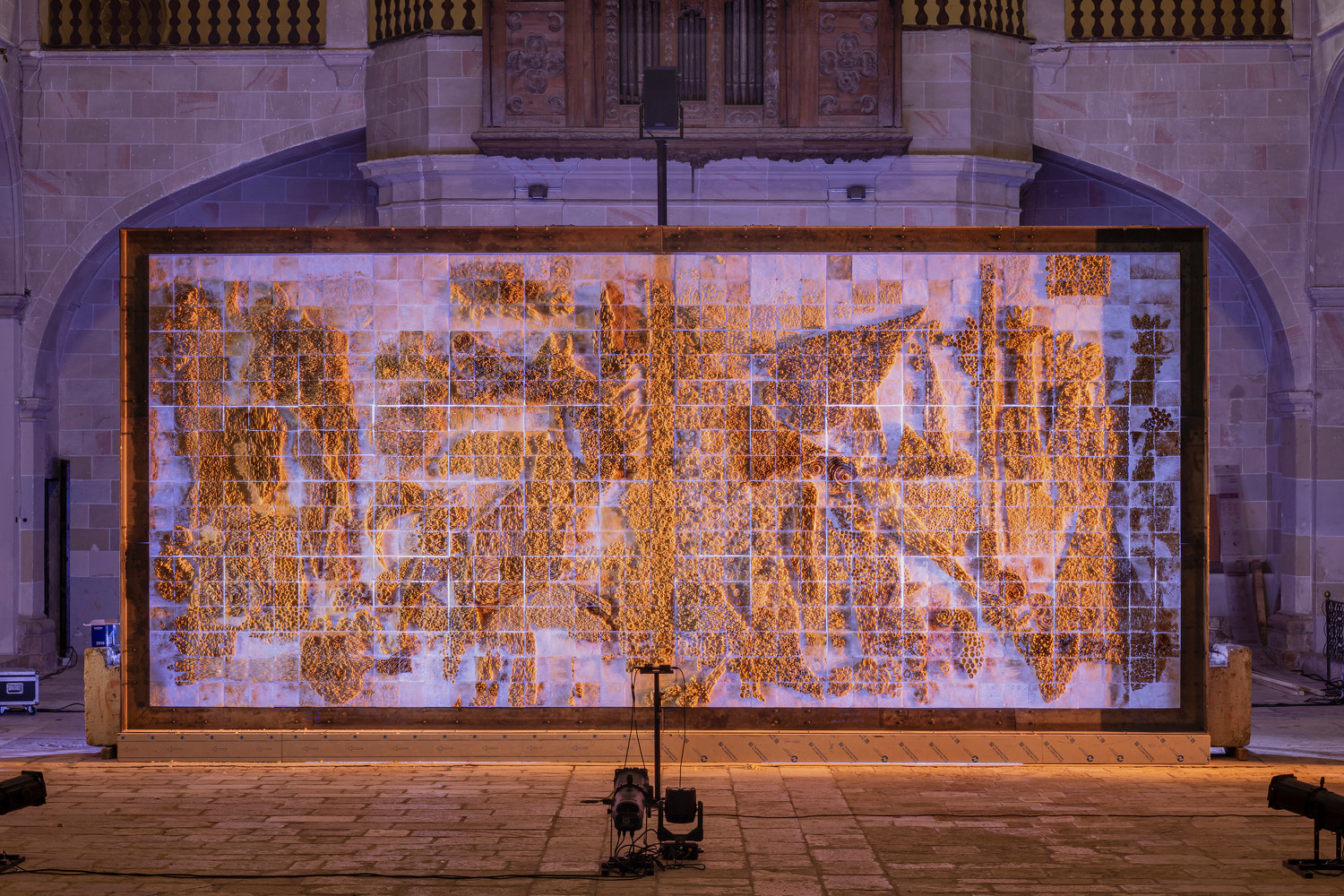
Photo: Yurian Quintanas
Joan Crous's artistic practice is thus constructed as a true archaeology of the present. Memory is not preserved through the document or the story, but emerges directly from the matter: in a crack, in an eroded surface, in a form that still preserves the imprint of what once existed.
Glass dust, ash, transparencies and fractures run throughout the installation. Everything seems to speak of a reality in the process of disappearance, but the loss is never absolute. Beneath the apparently inert surface, a minimal presence still beats, a latent memory that resists the passage of time. It is in this tension between disappearance and permanence that The Shadow unfolds its most moving dimension: a poetic meditation on human fragility and on the capacity of matter to still preserve the echo of the lives that have passed through it.

You may be
interested
...