
Exhibitions
Anna Irina Russell presents the exhibition 'The first flower is born in the air' at the Can Mario Museum of the Vila Casas Foundation
An exhibition that turns breathing into sculptural matter and reflects on vulnerability, the body and the interdependence between living beings.
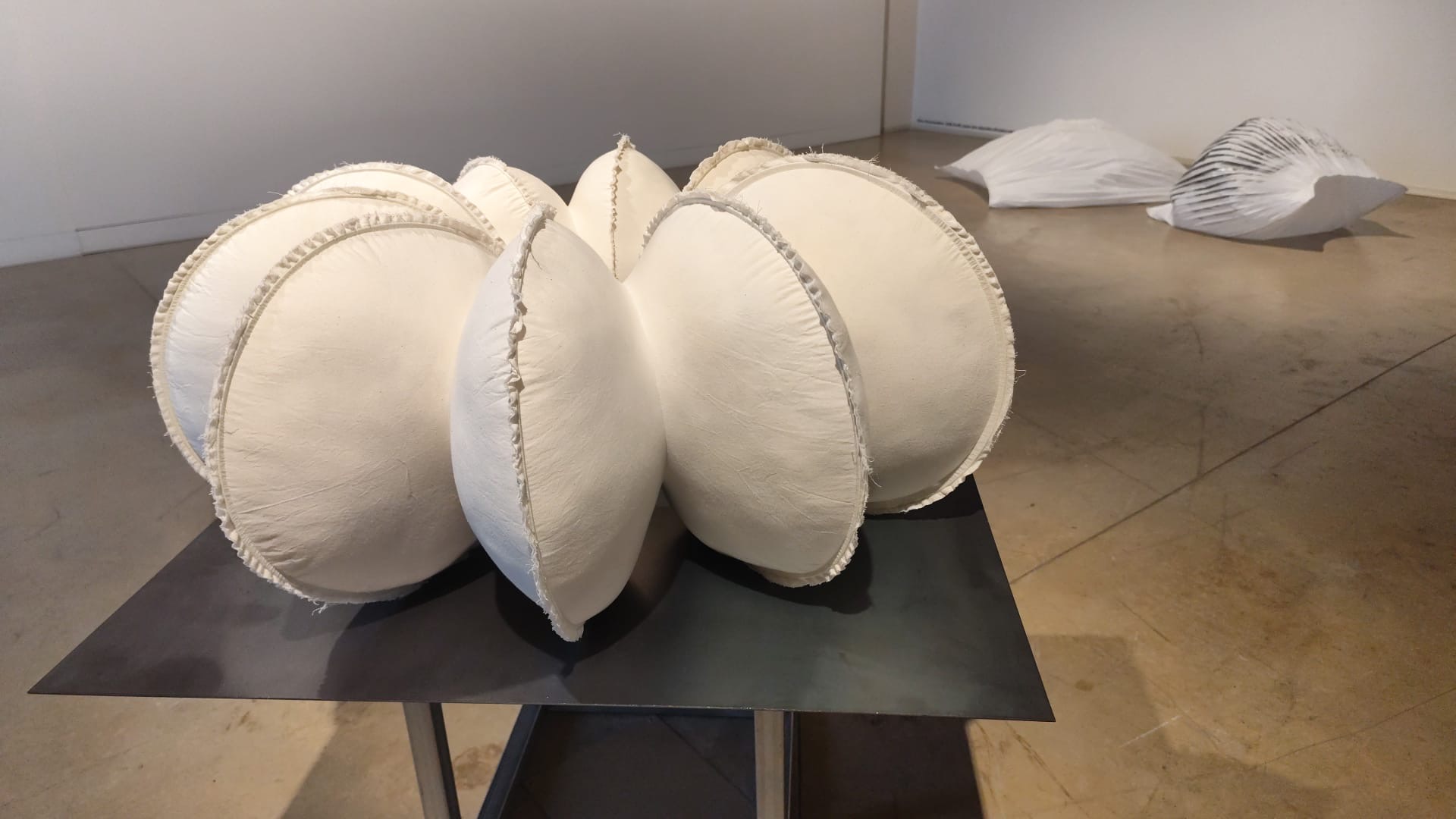
This past Saturday, June 6th at noon, the new temporary exhibition by Anna Irina Russell (Barcelona, 1993) The first flower is born in the air was inaugurated at the Can Mario Museum of the Vila Casas Foundation in Palafrugell.
This exhibition, which has been curated by Blanca Arias, has been specifically conceived by the Museum and displays a set of sculptures, installations, sound pieces and drawings that explore breathing as a physical, affective and political experience.
The director of the Vila Casas Foundation, Bernat Puigdollers, explained that "this project is a good example of the will of the Vila Casas Foundation to spur contemporary creation and contribute to the consolidation of promising young careers at a time when we need it most. We not only want to act as a platform to publicize their artistic work, but also facilitate the production of new works and the materialization of projects made ad hoc for our spaces. We also like to see how the series of intervened catalogs is consolidated, which, with the one we now present from the hand of Anna Irina Russell, reaches its seventh collaboration with a catalog converted into a sculpture, protected by a loose embrace."
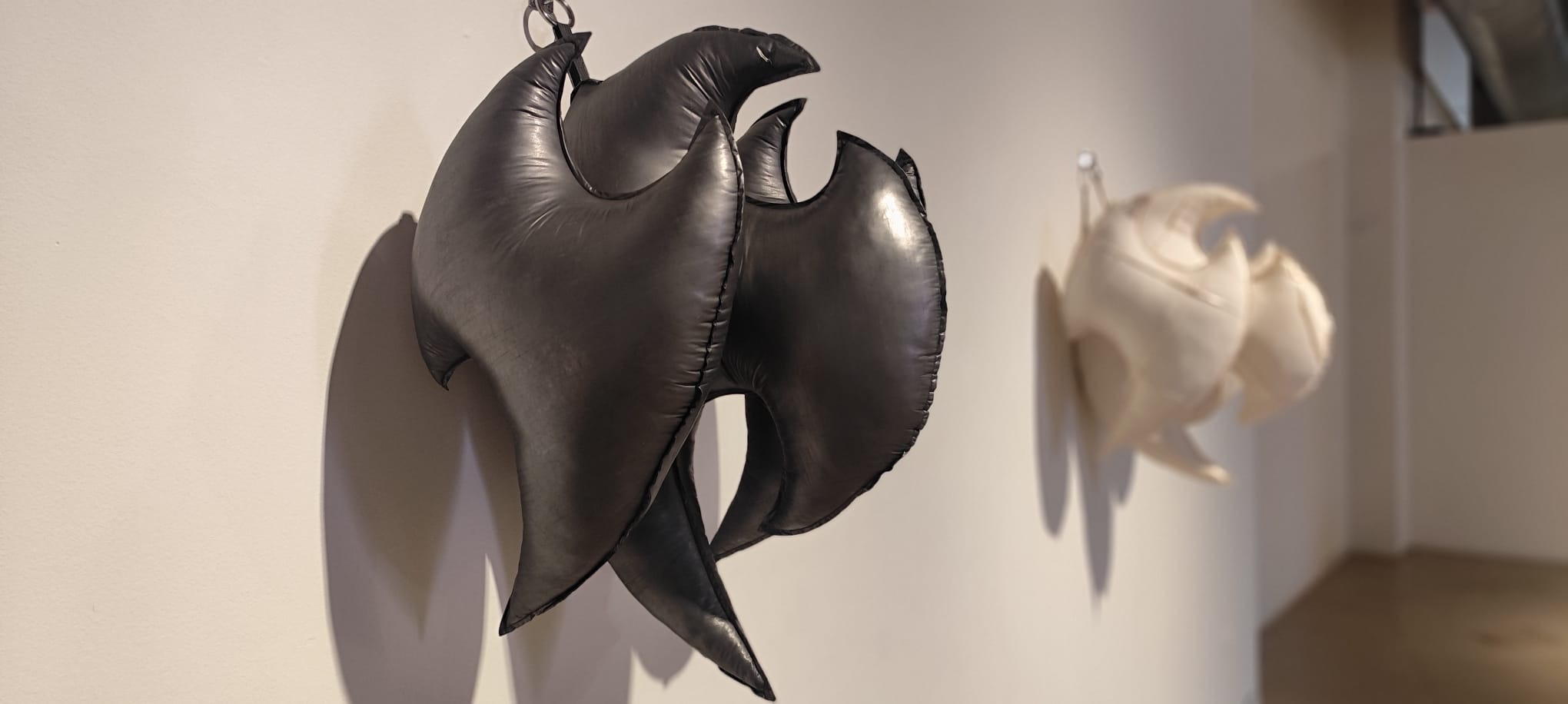
On the other hand, this exhibition brings together some of the lines of research that have structured the artist's work in recent years, such as non-verbal languages, forms of animal communication, soft and inflatable materialities and the relationships of interdependence between living beings. It is from these interests that Russell converts air into sculptural material and proposes a reflection on vulnerability, contact and forms of coexistence.
For her part, the curator of the exhibition, Blanca Arias, wanted to point out that "with this exhibition, designed as a lung that expands and lives with each intake of unfamiliar air, the museum becomes the organism that simultaneously embodies and makes visible the precariousness of breathing, as well as offering us a space in which to breathe in oxygen."
Regarding the articulation of the exhibition, it is divided into three areas: Inhale, Exhale and Aspirate, which cover different dimensions of breathing.
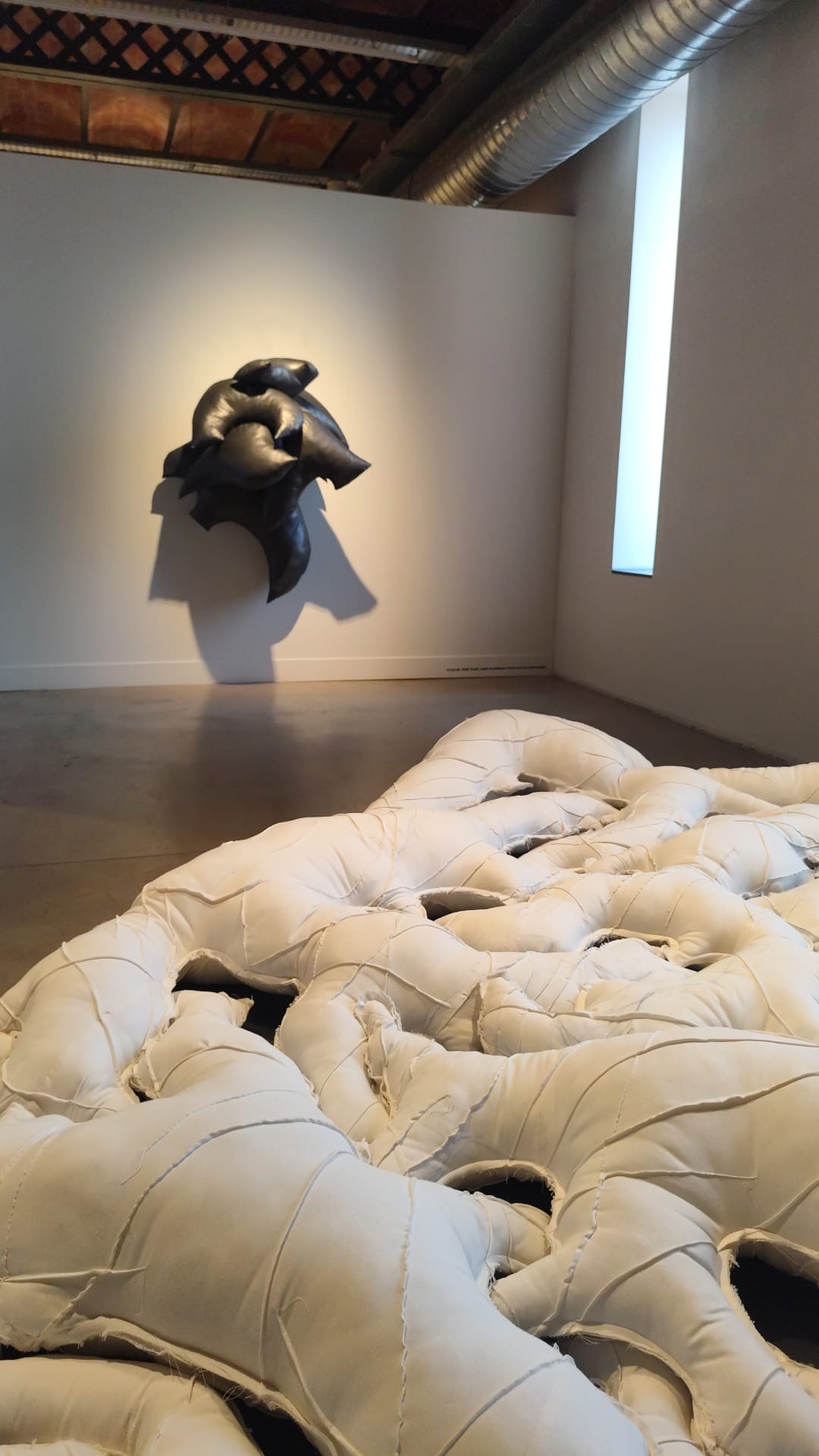
The first poses breathing as a shared experience and reflects on vulnerability and asphyxiation; the second addresses the contact between bodies and the mutual contamination that all coexistence implies; and the third opens a space for imagination and the possibility of more porous, sensitive and interdependent forms of life.
Russell's practice is based on a direct and physical relationship with materials and production processes. The body dimension occupies a central block in her working methodology: her pieces are defined based on the possibilities and limits of her own body, taking as a reference the reach of her arms, the volume they can contain, her hands or the weight she is capable of moving. This practice demonstrates a positioning linked to a feminist ethic that demands the acceptance of bodily and material limits, as well as an artistic practice adjusted to the real conditions of production.
Through inflatable membranes, suspended structures, fabrics, drawings and light and sound installations, the artist creates a sensitive ecosystem inspired by organisms that inflate, transform or modify their bodies to relate to their environment. His research on animal communication is translated into sculptures that breathe symbolically: soft bodies that expand and contract like a breath. It is also important to note that the exhibition maintains a critical dialogue with the sculptural tradition. Russell reclaims materials and processes historically associated with the domestic sphere or preliminary phases of production - such as textiles, raw cotton or graphite - and places them at the center of artistic practice. Seams, stitching, folds and production marks remain visible and become an integral part of the work.
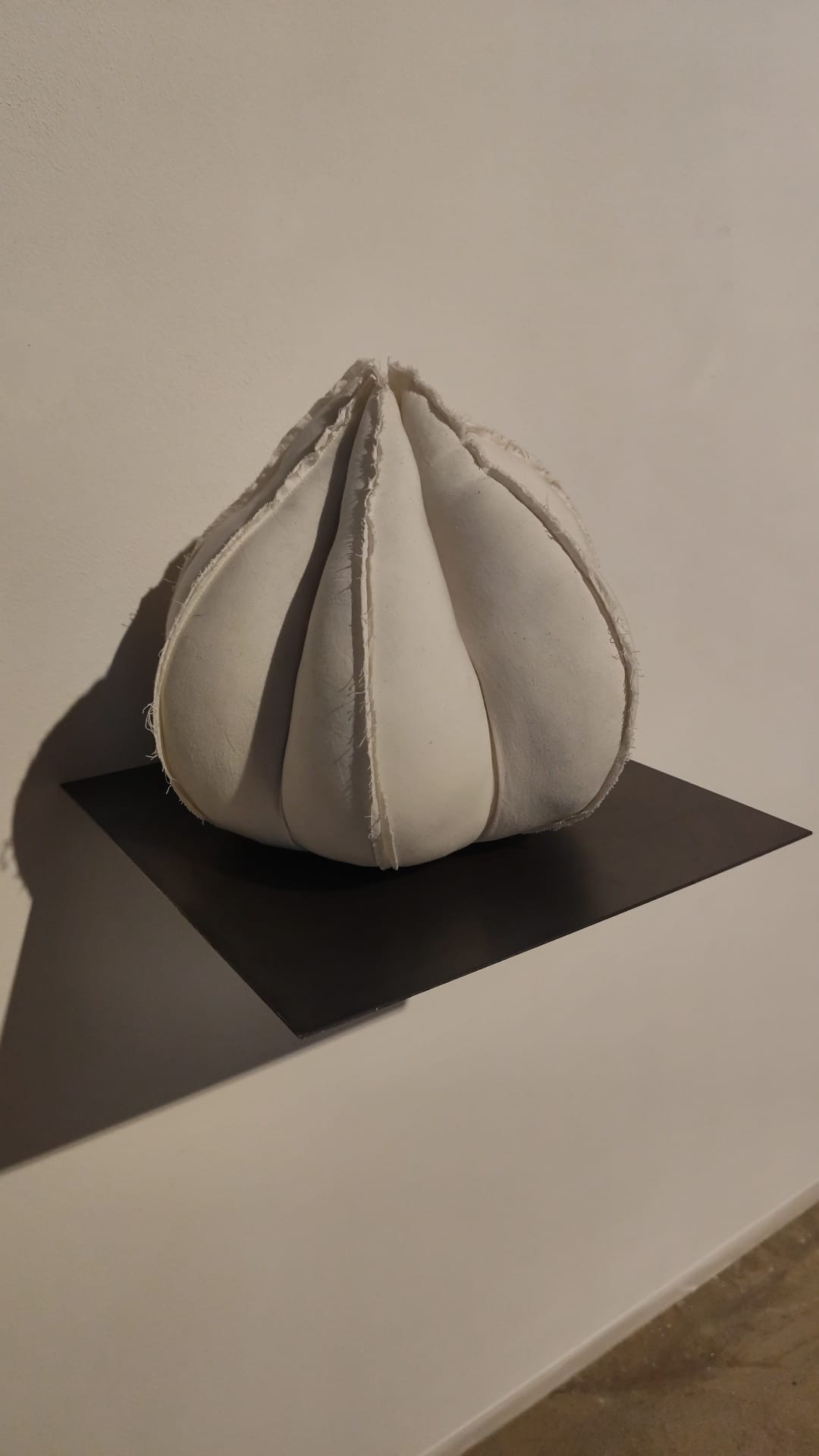
One of the works to highlight in the exhibition is Soplo (2023), which is a work inspired by defense mechanisms present in certain animal species. The piece reflects on the physical and emotional body of protective gestures, as well as on the tensions that go through communication processes. We also find the work Tangram (2023), which is an installation in which emptiness and air acquire their own sculptural presence. Finally, the work entitled Aspirar opens up space for imagination and transformation. The pieces appear deflated, folded or converted into empty skins, suggesting open and changing forms. This area incorporates a series of drawings made to the rhythm of breathing and which are executed on tracing paper with pencil and eraser.
The exhibition ends with the section “A Sigh”, which is a space dedicated to the drawings of Joana Torres, the artist's grandmother. This intervention introduces the only chromatic presence of the exhibition and opens a reflection on affective memory, family genealogies and the transmission of sensibilities and creative practices between generations.
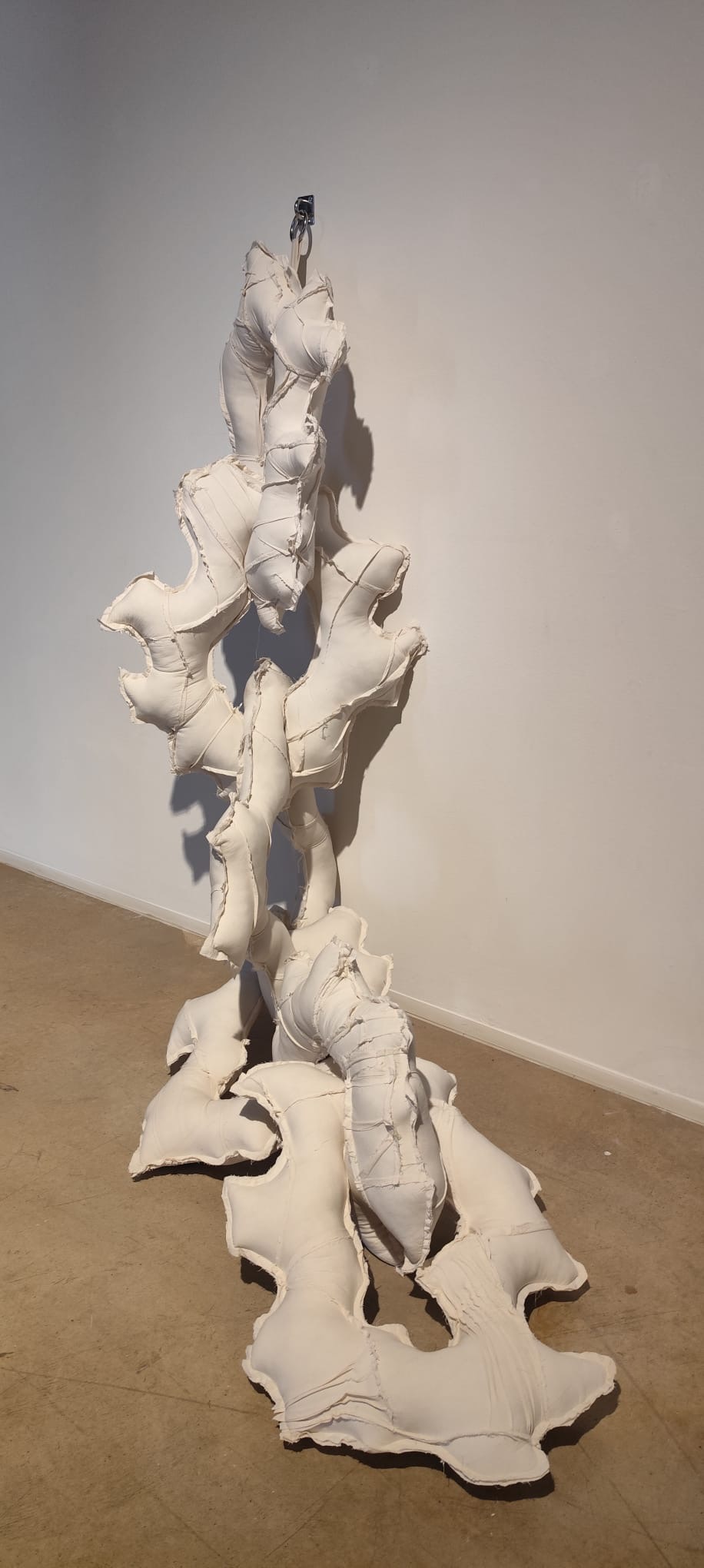
Anna Irina Russell, visual artist
Anna Irina Russell (Arenys de Mar, Barcelona, 1993) is a visual artist who works between sculpture, installation, sound and artistic mediation. Trained in Fine Arts and Sound Art at the University of Barcelona, her practice focuses on non-verbal languages, forms of animal communication and the expressive possibilities of soft and inflatable materials. She has recently presented solo exhibitions at Tabakalera ( Birika keinta elastikoa , 2025) and Bombon Projects ( Un contagion , 2025), and has participated in group exhibitions at institutions and art centres such as the Fundació Joan Miró, Arts Santa Mònica, La Panera, MACBA, La Casa Encendida and the CCCB.
In 2025 he received the Because of Many Suns award from the Taurisano Collection within the framework of Art-o-rama (Marseille), and in 2022 the Miquel Casablancas Award. He is currently an artist in residence at La Escocesa and has previously developed residencies at Hangar and Fabra i Coats. In 2024 he published Tomar aire , an artist's book published by Brillo.

You may be
interested
...