Exhibitions
Goya Black, Motherwell Black
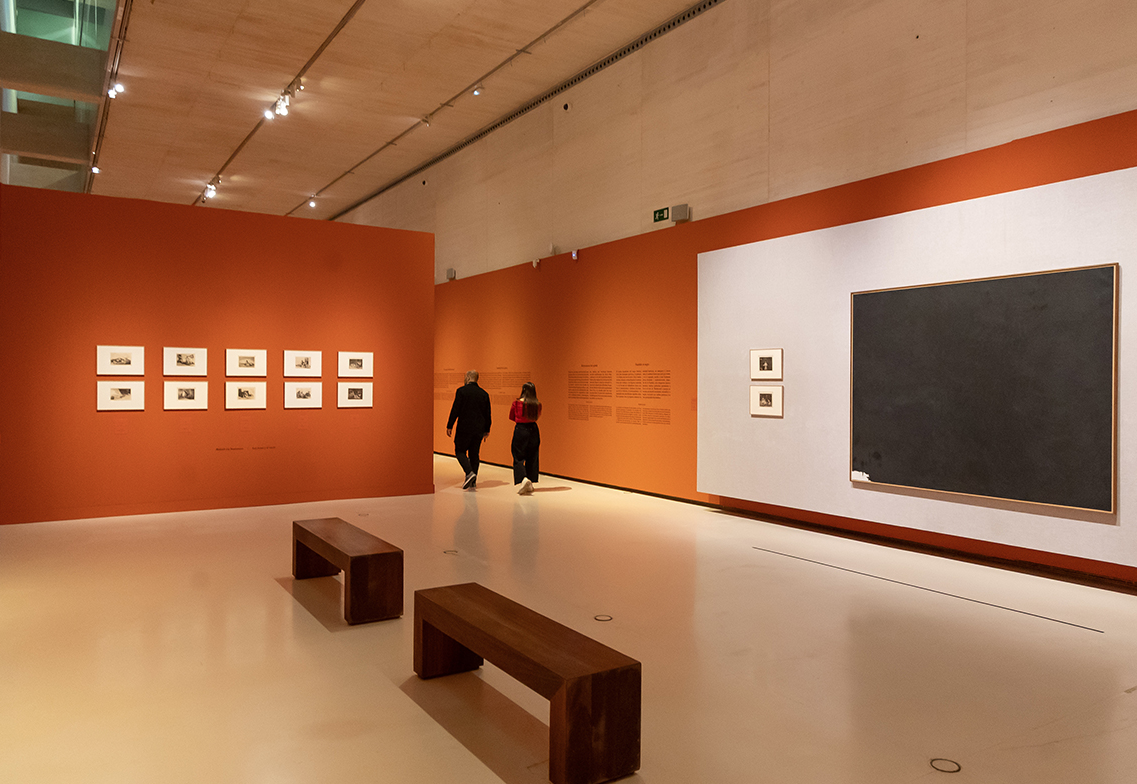
From May 16 to September 27, 2026, San Telmo Museum presents one of the most ambitious exhibitions in its recent program: Black Goya, Black Motherwell. Eighty Disasters and an Abyss , a proposal curated by María Bolaños that establishes an intense dialogue between two works separated by more than a century, but united by the same ethical and aesthetic concern: the representation of pain, violence and collective memory.
The exhibition brings together the complete series of The Disasters of War , the eighty prints created by Francisco de Goya in the wake of the Peninsular War (1808-1814), alongside Iberia , the monumental black canvas that the American painter Robert Motherwell created in 1958 after his first trip to Spain. Two artists from seemingly irreconcilable worlds meet here around the same symbolic territory: black as a moral space.
In Goya's etchings, the ink becomes an open wound on the paper. The scenes of executions, torture, famine, and devastation reveal with unprecedented starkness the consequences of war on the civilian population. Far from glorifying battle, the Aragonese artist forever transformed war painting by placing the anonymous victims at the heart of the narrative. Among the most striking images in the series is also one of the first explicit depictions of sexual violence in the history of Western art.
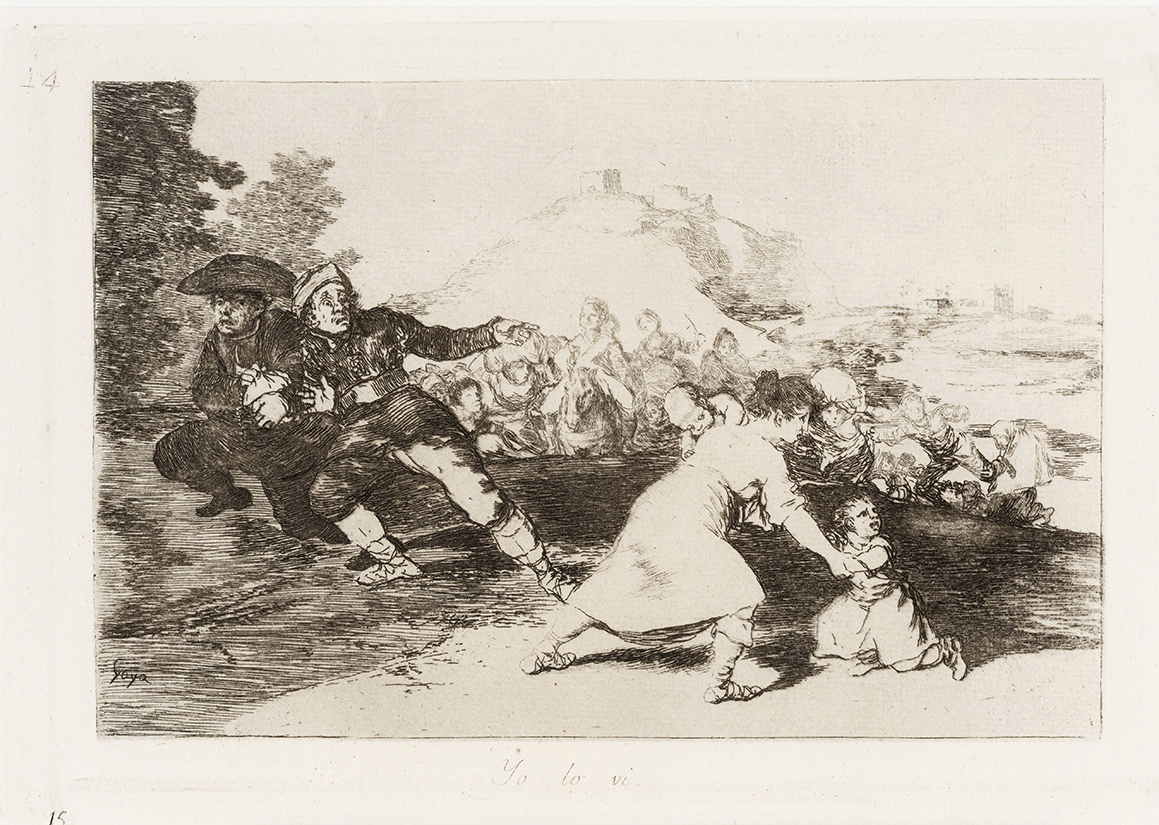
However, the power of The Disasters of War transcends the historical context that gave rise to them. His prints have become a universal symbol of human suffering and continue to resonate with contemporary tragedies. His influence has spanned generations and profoundly shaped the development of modern art.
This very legacy finds an echo in Iberia , the work by Robert Motherwell that occupies the other end of the exhibition. Fascinated by Goya's paintings during his visit to Spain, the artist associated with abstract expressionism created a monumental composition where tragedy is no longer narrated through figures, but rather through an immense dark surface. The black oil paint functions as a space of emotional condensation, a place where the scream is transformed into silence.
The exhibition thus proposes a journey from explicit violence to inner reflection; from harrowing figuration to radical abstraction; from the narration of events to the emotional echo that remains when the images disappear. The visitor experiences two distinct ways of confronting horror, separated by time but connected by the same will to bear witness.
One of the most relevant conceptual axes of the exhibition is the so-called "ethics of the witness." Goya's famous inscription "I saw it" appears as a declaration that goes beyond the simple recording of facts. It is a moral commitment to the observed reality. Goya was a direct witness to scenes of hunger, death, and despair, but his engravings do not merely document them: they challenge the viewer and force them to ask themselves to what extent it is possible to contemplate the suffering of others without becoming complicit in it.
As curator María Bolaños points out, the exhibition traverses "the black of ink and the black of oil paint" to reflect on the persistence of violence and on art's capacity to give form to that which seems impossible to express. In this sense, the exhibition not only reaffirms the enduring relevance of Goya's legacy but also demonstrates how his vision continues to influence contemporary art.



You may be
interested
...