Exhibitions
Paper Tears: watermarks of the past emerge at the Venice Biennale
Clàudia Pagès transforms the memory of paper and water into a visual opera about power, exile and territory.
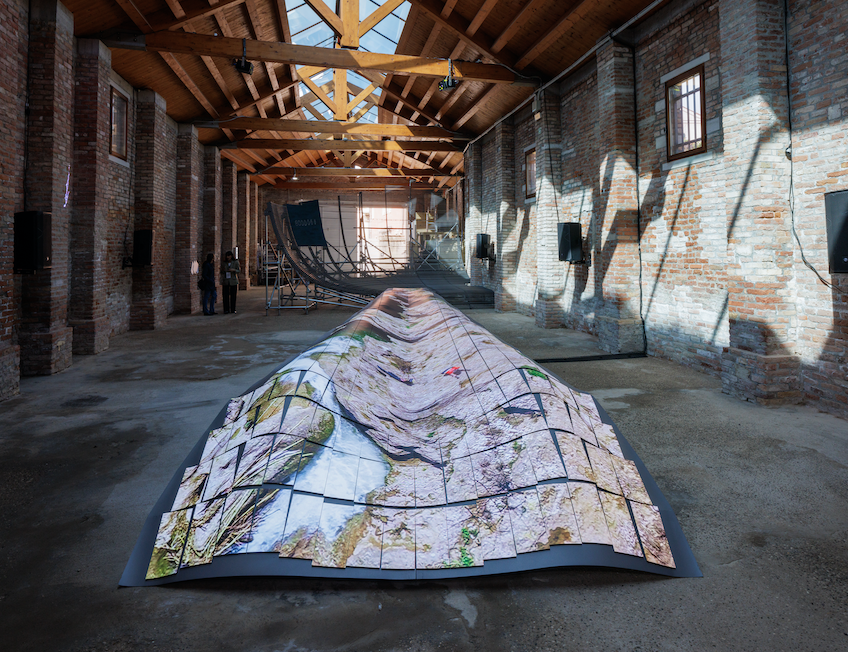
Clàudia Pagès brings Catalonia to the Venice Biennale with Paper Tears , an immersive installation inaugurated at the Docks Cantieri Cucchini in San Pietro di Castello. The proposal, which can be visited until November 22, combines light, lasers, drones, sound, video and dramaturgy to build a sensory experience that revisits five centuries of history through water as a common thread. The work unfolds a great scenic and visual “filigree” that relates the mechanisms of power of the past with their contemporary persistences: boycotts, expulsions, ethnic cleansing and colonial dynamics cross a piece that looks directly at the present.
The artist, who is also a writer and grew up in a family paper mill, has been developing artistic research linked to the memory of paper, water and territory for years. Her work combines performance, writing, orality, video and installation to build networks of poetic micro-stories where language becomes a tool of resistance and political exploration. Her pieces tend to investigate the invisible histories of spaces, the circulation of people and goods, as well as the traces that power infrastructures leave on architecture and landscape.
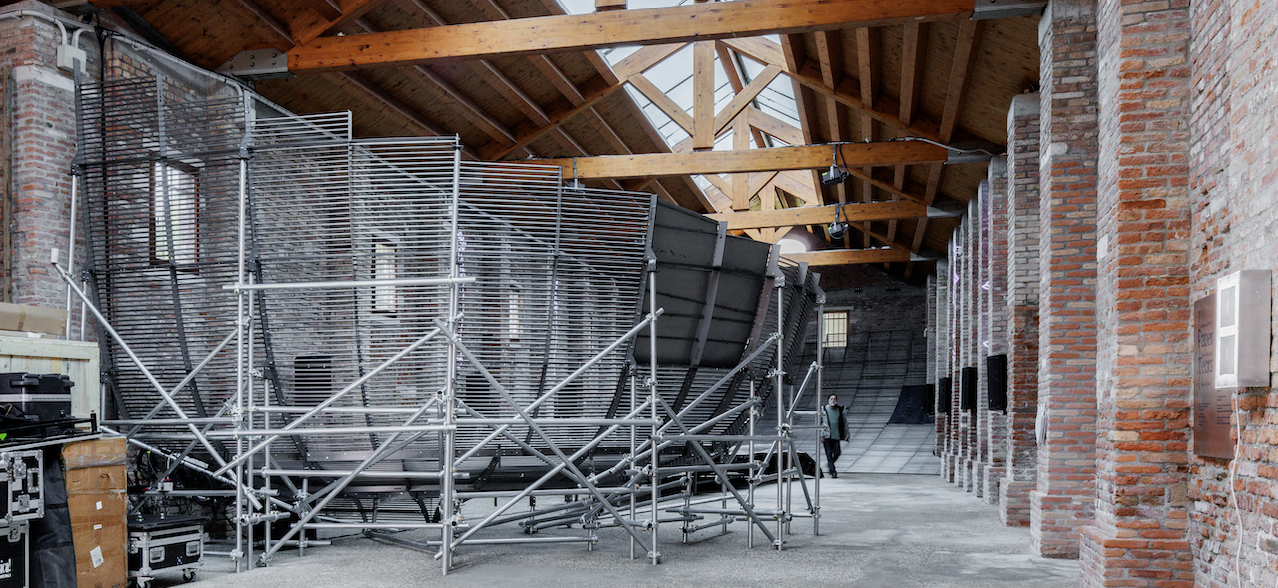
Photo: Ramon Llull Institute.
In Paper Tears , Pagès recovers the childhood fascination with watermarks or watermarks: those seemingly naive symbols that identified craftsmen and paper manufacturers and that were only revealed against the light. On the brick walls of the Venetian nave, four lasers project unicorns, bull's heads, castles or hearts pierced by arrows, while several voices construct a fragmented narrative made of free associations, oral rhythms and historical echoes.
The exhibition space, designed in conjunction with the Goig studio —formed by Miquel Mariné and Pol Esteve— incorporates bleachers that transform the installation into a kind of expanded opera where the public physically enters. Everything is synchronized: light, sound, images and movement. To record the territory, the artist has worked with drones that offer multiple perspectives of the spaces linked to the hydraulic and paper heritage of Catalonia.
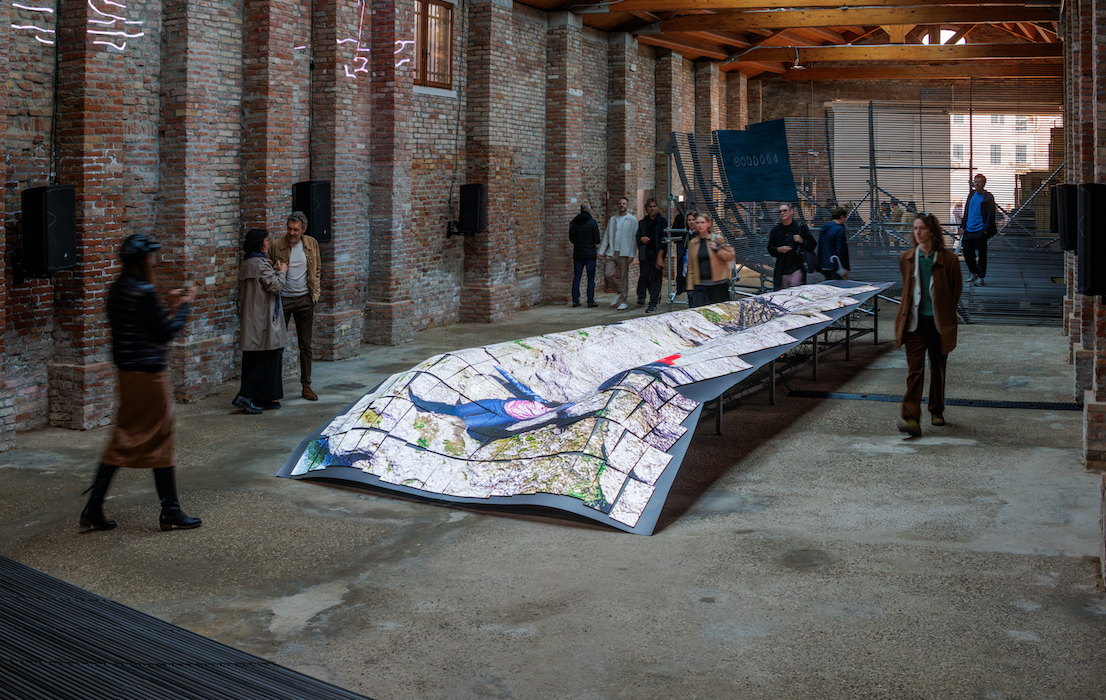
Photo: Ramon Llull Institute.
The images of water that appear in the video installation come from places such as the Pont Nou in Sant Pere de Riudebitlles, the Gorgs del Diable in Orpí, the Deus in Mediona or the Bassa de Capellades. Based on these landscapes, Pagès connects the history of paper production with episodes such as the expulsion of the Muslims - former paper producers in the peninsula -, the subsequent import of Italian paper and the trade routes linked to the colonization of America.
Pagès defines it (Venice) as “the city of the watermark”, also evoking Joseph Brodsky’s Watermark , the text that the poet dedicated to the Italian city. In Paper Tears , watermarks cease to be simple signs hidden within the paper to become visible traces of memory, violence and collective resistance.

You may be
interested
...