News
Guernica doesn't move. Sixena does. Why?
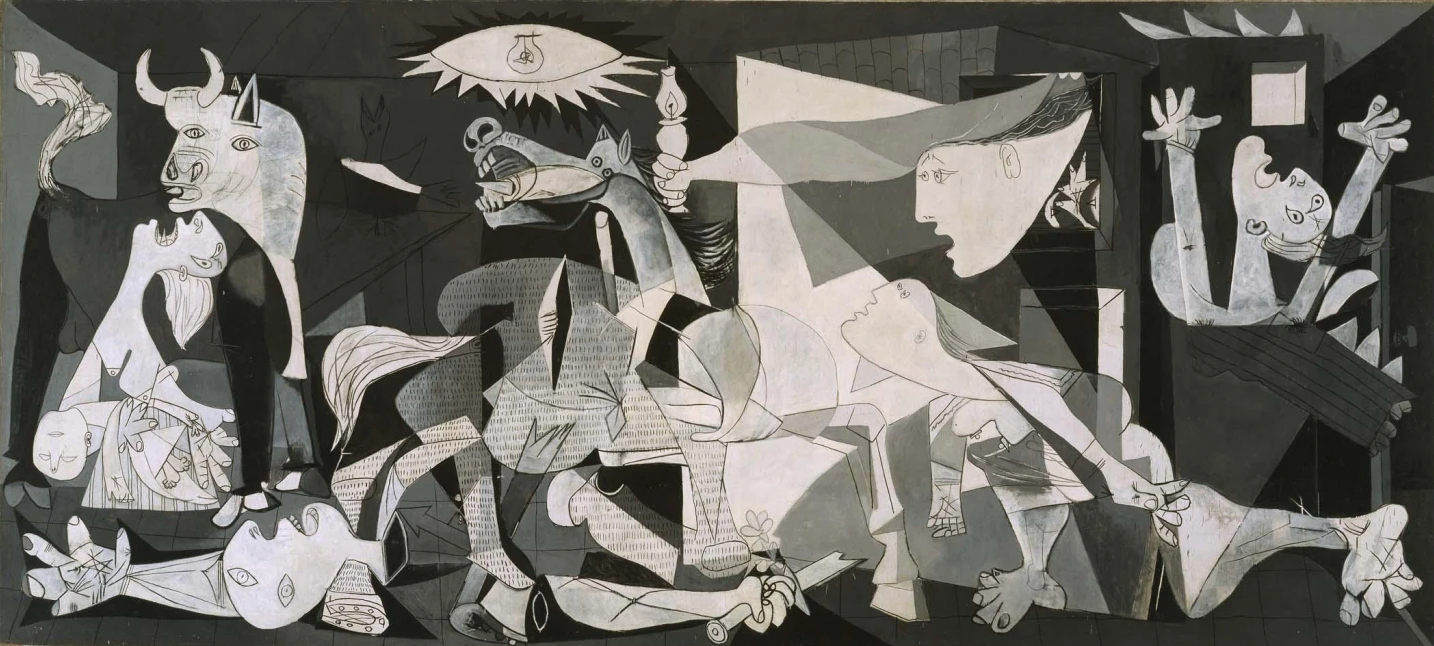
There are decisions that are presented as technical, but which in reality are deeply political. The debate over the transfer of Guernica once again demonstrates this: what cannot be moved is not always what is most fragile, but what is most sensitive.
Guernica was not born as a motionless piece. On the contrary. It is a work conceived to travel and to make an impact. In 1937, Pablo Picasso painted it for the Pavilion of the Republic at the International Exhibition in Paris, in the midst of the Civil War. It was not an object of silent contemplation: it was a visual weapon, a denunciation. And, as such, it moves.
Then came exile. The painting began a long international tour—Europe, the United States—and ended up staying for decades at the MoMA in New York. Picasso had made it clear that he would not return to Spain until there was democracy. And so it was. In 1981, Guernica finally returned, first to the Casón del Buen Retiro and later to the Museo Reina Sofía, where it was installed as a centerpiece, almost sacralized.
This journey is no small one. We are talking about a work that has crossed continents, that has been assembled, disassembled, transported and relocated in multiple contexts. And now, instead, we are told that it cannot be moved. That the risk is too high. That conservation prevents it.
The debate has been reactivated because the Basque government has requested the temporary transfer of the work on the occasion of the ninetieth anniversary, "90 years", of the bombing of Gernika. The proposal is not minor, but not extravagant either: take the painting to Bilbao, to the Guggenheim, one of the most prestigious museums in the world. A facility with all the technical, logistical and conservation resources that can be required today. It is therefore difficult to understand that a specific transfer, under exhaustive protocols, is so categorically ruled out.
In this context, the institutional effort that falls on specific figures is also surprising. The role of Pepe Serra at the head of the MNAC is paradigmatic: often practically alone in defending a coherent heritage criterion, in the midst of an institutional ecosystem that tends to avoid conflict or dilute it.
That may be true. But then the inevitable question arises: why do other works move?
The case of Sixena is paradigmatic. Mural paintings torn out, fragmented, restored, moved and finally returned in the midst of a highly intense judicial and political process. No one will deny the technical complexity of the operation. But it is being done.
And this is where the discomfort emerges. Not because the two situations are identical—they are not—but because the criteria seem to vary depending on the context. When a work does not move, it is for conservation. When another does, it is for restitution. In both cases, the arguments are solid. But so is the suspicion that they are not the only ones.
Guernica is not just a painting. It is a symbol of State, an international icon, a consolidated political narrative. Moving it is not just a technical operation: it is altering a symbolic balance. Sixena, on the other hand, falls into another category, that of territorial litigation, patrimonial reparation, legal dispute.
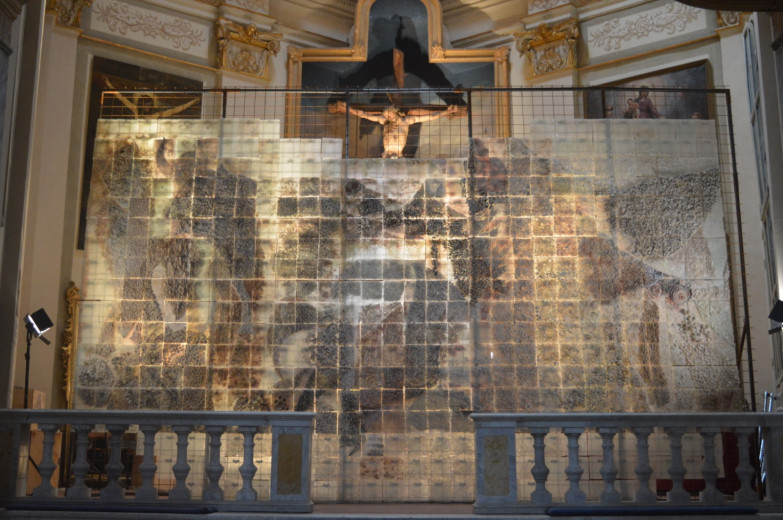
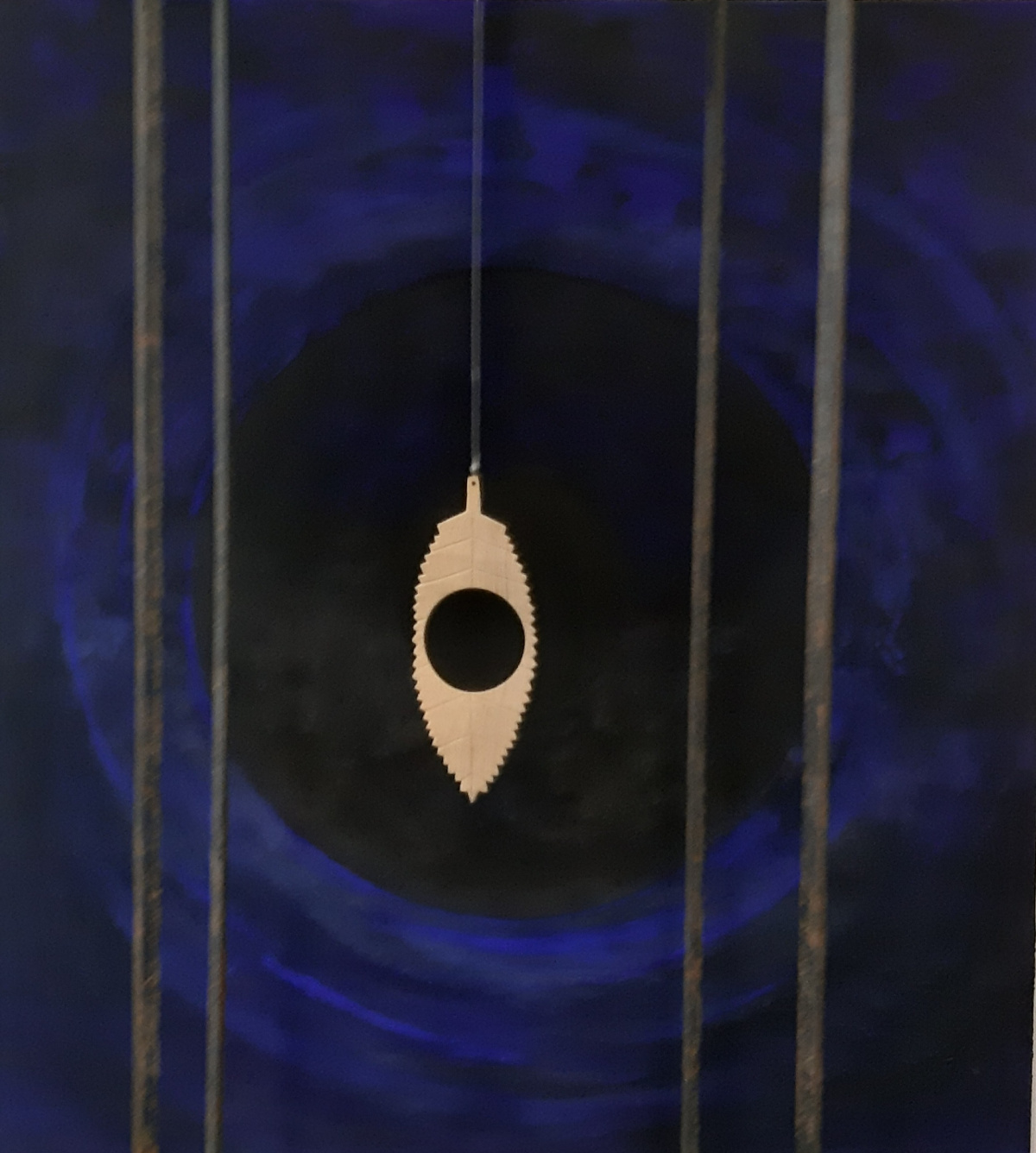
Work by Joan Crous that will be exhibited in Banyoles from June 13th.
In parallel, this ninetieth anniversary is also generating responses from contemporary creation. The Catalan artist Joan Crous, based in Bologna, has produced a monumental glass work inspired by Guernica, presented in the Cathedral of San Petronio. The piece, which can be seen this June in Banyoles, functions as a contemporary and materially fragile homage to an image that continues to be collectively incandescent.
Perhaps, then, the question is not whether Guernica can be moved or not. Perhaps the question is who decides when a work becomes untouchable and when, on the other hand, it becomes movable.
Because in the end, beyond conservation, what moves—or doesn't—is power.


You may be
interested
...