
Opinion
The art of the five continents confronted at the Louvre
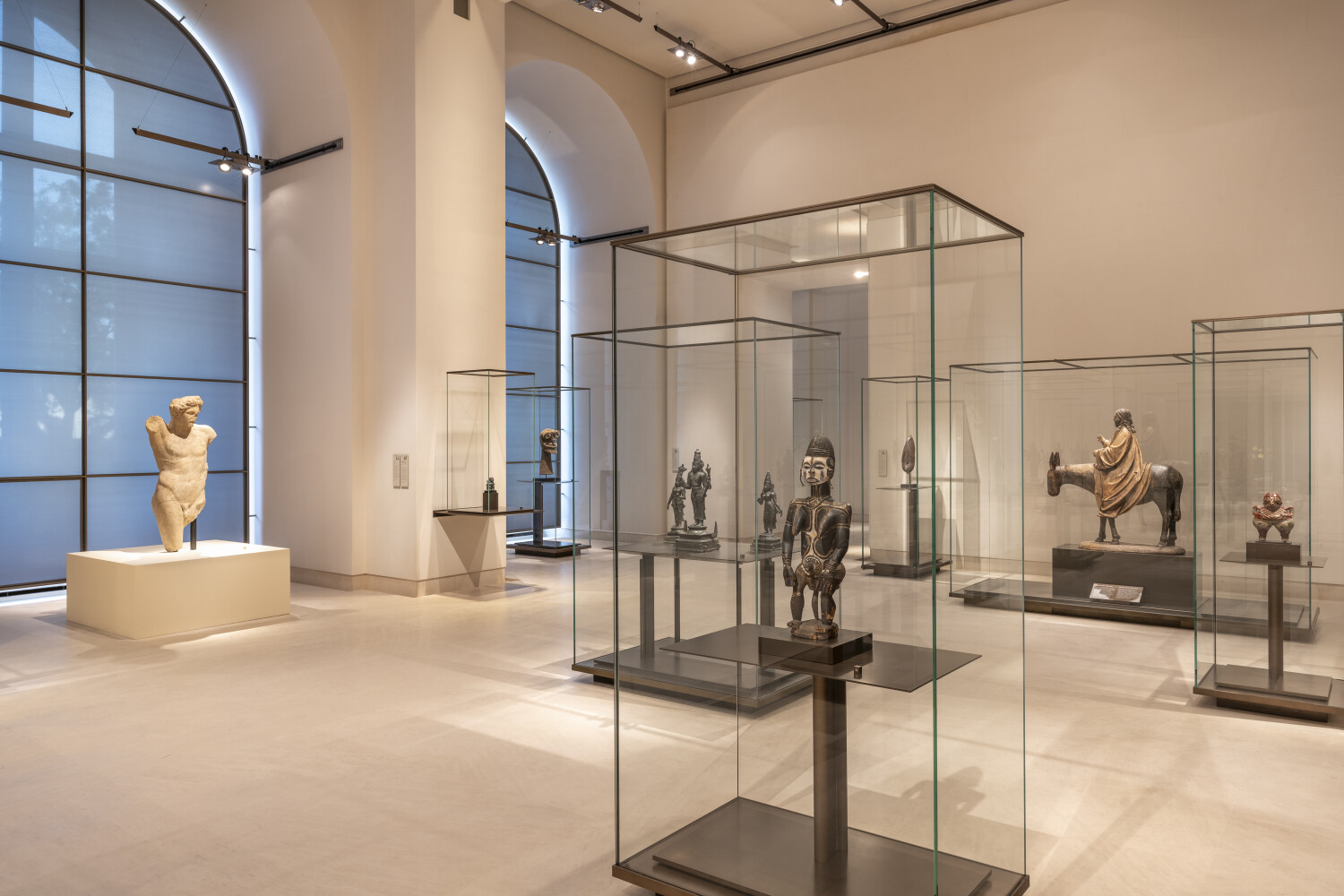
The so-called gallery of the five continents opened on December 3, 2025 and is the result of the collaboration between the Louvre Museum and the Quai Branly-Jacques Chirac Museum with the patronage of the Marc Ladreit de Lacharrière Foundation. It is located in the Pavillon des Sessions, which is also accessed through the Lion Gate in the Denon wing of the Louvre. The 130 works on display come from the Louvre Museum and the Quai Branly-Jacques Chirac Museum, but also from the Guimet Museum of Asian Arts, the National Museum of the Navy, the National Library of France, the Aquitaine Museum, the Boulogne-sur-mer Museum and the Federal Republic of Nigeria Museum. This is a project conceived in 2000, at the time of President Chirac, which was intended to bring works of art from Africa, Asia, Oceania and America into the holy of holies of French museums of Western art.
The works in the Gallery of the Five Continents are grouped into sections dedicated to eight universal themes: being born and dying, believing, manifesting authority, consolidating prestige, guiding luck, explaining the world, reconciling the elements, passing from one world to another; so that formal or symbolic correspondences between objects that come from very distant places and times are perceived.
The museum's clear and sober concept was the work of architect Jean-Michel Wilmotte. The works dominate a neutral space created for them, designed to visually dialogue with each other. They can be viewed from almost any side and when you look at one, you can't help but see the one next to or behind it. All the works chosen are extraordinarily beautiful aesthetically. In each one, you can sense the sense of artistic creation, all the stronger the further apart the geographical locations or chronologies of origin are. Despite everything, the viewer remains bewildered when reflecting on the reasons for each selection. Because it is not even a question of inviting the visitor to a traditional comparison of forms and styles (as is evident in the idea of maternity, for example, or in representations of power). The files for each work limit themselves to indicating the geographical origin and the hypothetical dating as well as the collector's origin. Instead, history - understood as the history of human time - is forgotten in order to show works of art that are children of that history. A history that is that of a Europe that has colonized the other four continents for centuries is forgotten and passed over in silence.


You may be
interested
...