Exhibitions
A world in struggle
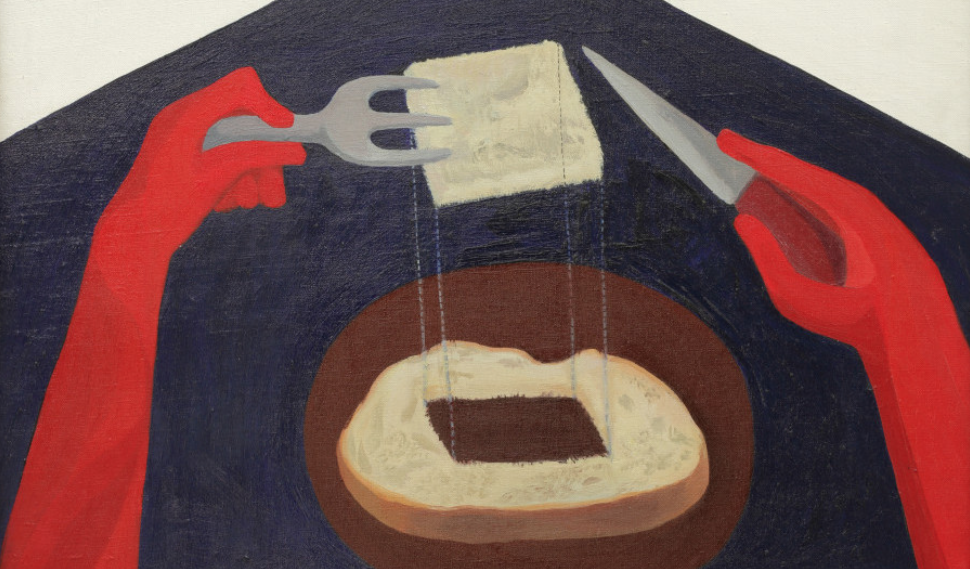
When he took office as art director of the Vila Casas Foundation, Bernat Puigdollers stated that the orientation he wanted to give to the Foundation's work had a double direction: that of discovering and promoting young creators and that of recovering trajectories, and specifically he emphasized the generation of artists who had their moment of splendor between the eighties and nineties.
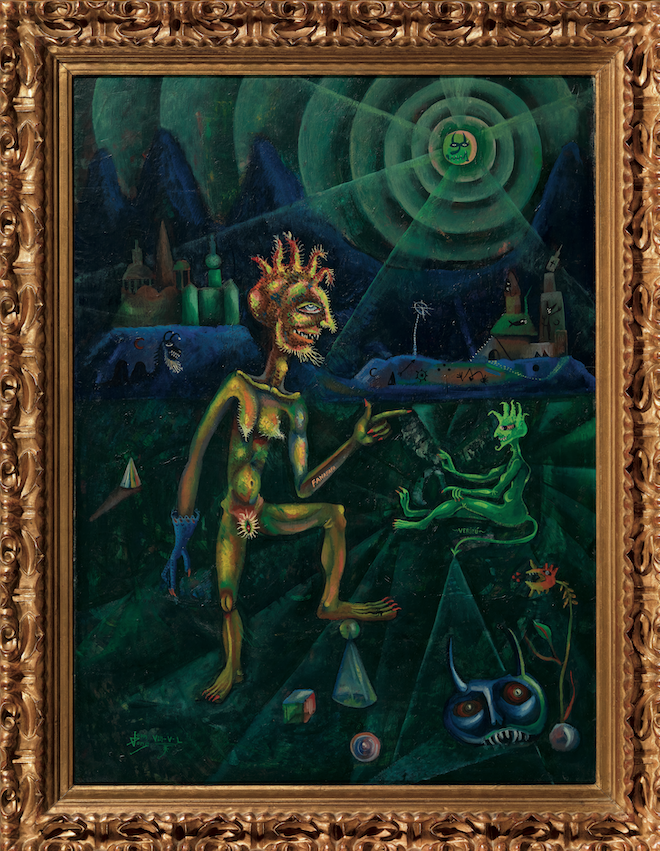
True to this purpose, from April 10th the rooms of the Espai Volart will host the exhibition that, under the title A World in Struggle , will be the first major retrospective dedicated to Esther Boix i Pons and will do so to coincide with the centenary of her birth on March 26th, 1927. After studying at the Escola Superior de Belles Arts de Barcelona —where she received an academic-oriented education that she considered useless for what she wanted to do and which she had to unlearn—, Boix founded the Postectura Group together with the sculptors Francesc Torres Monsó, Josep Maria Subirachs and Josep Martí Sabé, and the painters Joaquim Datsira and Ricard Creus. Bernat Puigdollers has studied the work of this group in depth, on which he has already curated an exhibition at the Museu d'Art de Girona in 2022.
The work of these early years is characterized by a dark palette and a hard look, embedded within a naturalistic realism that, in Puigdollers' words, is a reflection of a society immersed in the misery of the post-war years: humble interiors, hunger and existential emptiness. The fact of receiving a scholarship from the French Government, which in 1953 took her first to Paris and then to undertake a real tour of London, the Netherlands and Italy, meant opening her up to a new world oriented towards intellectual and sensitive enrichment. Her marriage in 1956 to Ricard Creus and her move to Milan, where they actively participated in the cultural life of the city, resulted in her painting becoming much more open and vitalist and evolving towards an expressive style with a strong charge of social criticism. In fact, according to Puigdollers, Boix understood painting as a tool for claiming individual and collective rights and freedoms, and actively participated in initiatives such as Estampa Popular Catalana and in the anti-Franco struggle. In the works of this period, from a figurative style with forceful shapes and intense colors, the denunciation of the social injustices that the Franco dictatorship entailed dominates and traditional gender roles are questioned, especially the feeling of seclusion suffered by women. It is necessary to emphasize the fact that, guided by the desire to put art at the service of people, Ester Boix, together with Ricard Creus, was the founder of the Escola d'Expressionió L'ARC, and the publication of the book L'art a l'escola had a great influence on the students of the time.
From the late 1970s, her work took on a new direction and entered the stage that she herself calls "the hour of singing". These are pieces in which the dominant theme is the landscape, where a strong ecological awareness is detected; in many of them the fusion between humans and nature is pursued and lyricism gains prominence.
In 1994, the Fontana d'Or in Girona dedicated a retrospective to her and in 2006 the Museu d'Art de Girona organized the exhibition Ester Boix: miralls i mirages . The retrospective Un món en luita , which can be seen until July 12 at the Espai Volart, does justice to one of the most interesting artists on the Catalan artistic scene of the 20th century.

You may be
interested
...