Exhibitions
Dalí and Gala under Horst's lens. Art, fashion and creative complicity at the Castle of Púbol
The exhibition 'Dalí/Horst. Crossed Gazes' explores the dialogue between surrealism, haute couture and photography on the 30th anniversary of the opening of Púbol Castle to the public.
"Dressing is essential to success. In my life, there are rare occasions when I have made a fool of myself by dressing in civilian clothes. I always wear Dalí's uniform." —Salvador Dalí
The relationship between Salvador Dalí, Gala Dalí and photographer Horst P. Horst is the focus of the new temporary exhibition at the Castell de Púbol, one of the emblematic spaces of the Dalí Triangle. The exhibition, entitled Dalí/Horst. Crossed Gazes , explores the link between art and fashion through iconic images, pieces of clothing and period documentation that bear witness to a creative complicity sustained over decades.
Inaugurated by the president of the Gala-Salvador Dalí Foundation, Jordi Mercader, the exhibition is part of the celebration of the 30th anniversary of the opening to the public of the Castell de Púbol, Gala's residence. The exhibition, which can be visited until January 6, vindicates the figure of Gala and her anticipatory vision, especially in relation to the construction of a modern and free feminine identity.
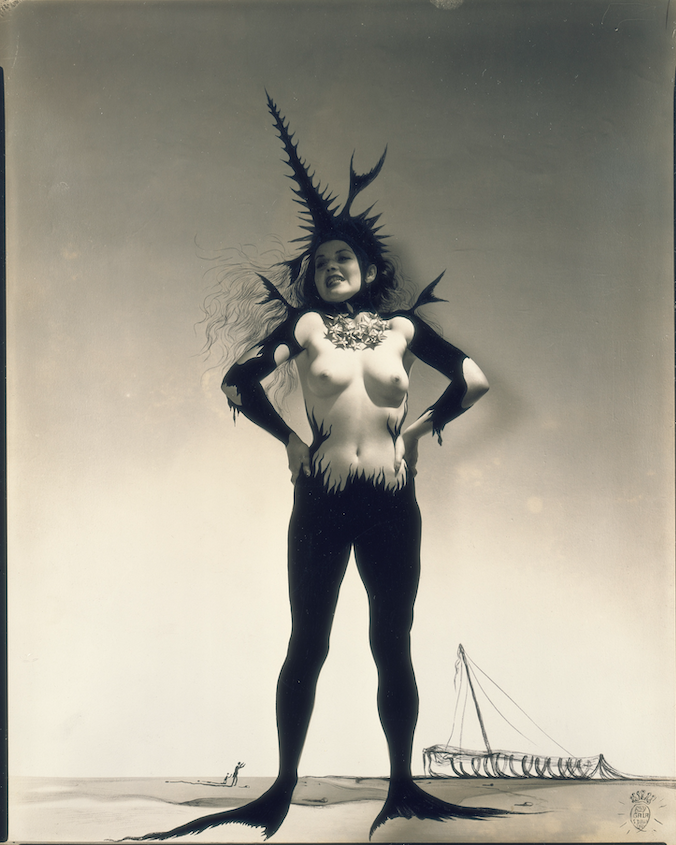
Costume design for Dream of Venus, 1939. Baltimore Museum of Art.
The exhibition tour brings together twenty-seven pieces, among which stand out several photographs by Horst —known especially for his work in Vogue magazine—, three unpublished contact sheets and a period photograph edited by Dalí. Also on display are three pieces of clothing linked to Dalí and Gala, two of which had never been shown before and have been restored for the occasion. The set is completed by four historical issues of Vogue , a facsimile of Town & Country and the painting Dematerialization near the Nose of Neró (1947), a work that dialogues with the aesthetic and conceptual imagination of the period.
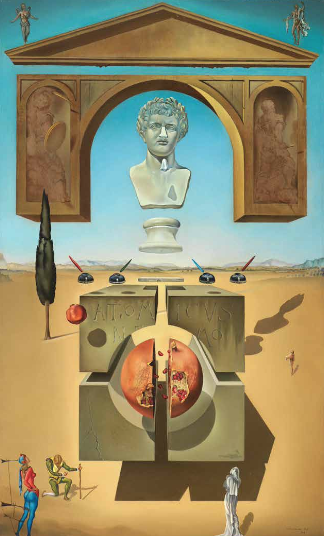
Salvador Dalí. Dematerialization near the Nose of Nero, 1947. Oil on canvas. Cat. No. P 626.
Creative dialogue
The first section, Creative Dialogue , focuses on the beginnings of the collaboration between Dalí and Horst in the late 1930s. From the very beginning, artist and photographer transformed the act of looking into a deliberately poetic gesture. The fascination with the classical world, the scenographic construction and the formal idealization articulate a relationship based on the conception of the image as an artistic object in itself.
Dream of Venus 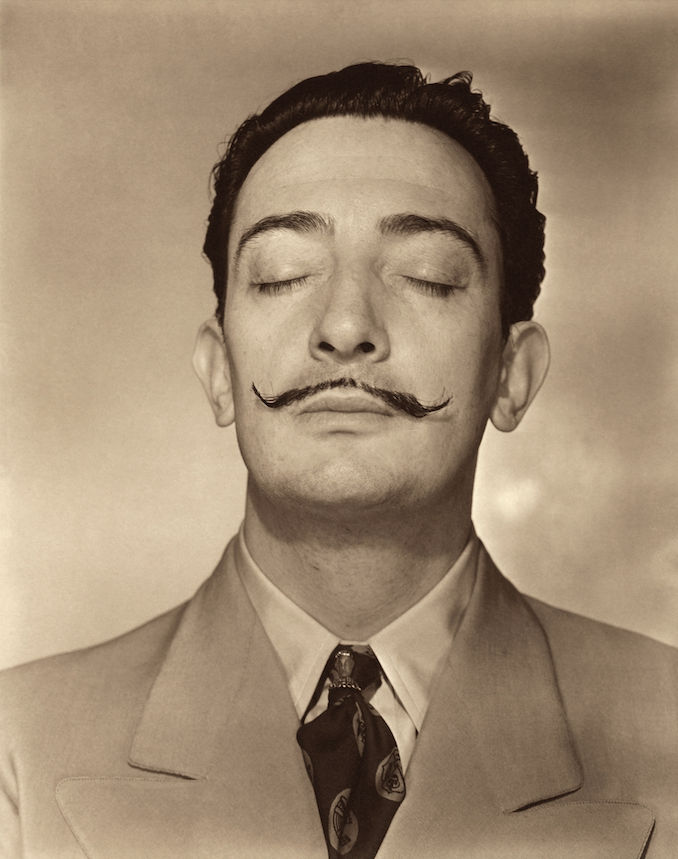
Salvador Dalí, 1943. Horst P. Horst.
In 1939, within the framework of the creation of the Venus Dream pavilion for the 1939 New York World's Fair, the first major creative exchange between Dalí and Horst in North America took place. From that meeting, the famous photographs with nude models remain, previously decorated by Dalí and Gala with elements of the marine imagination. Among these, the legendary galalite star necklace designed by Elsa Schiaparelli for the summer collection of 1939 stands out.
Fashion and Surrealism
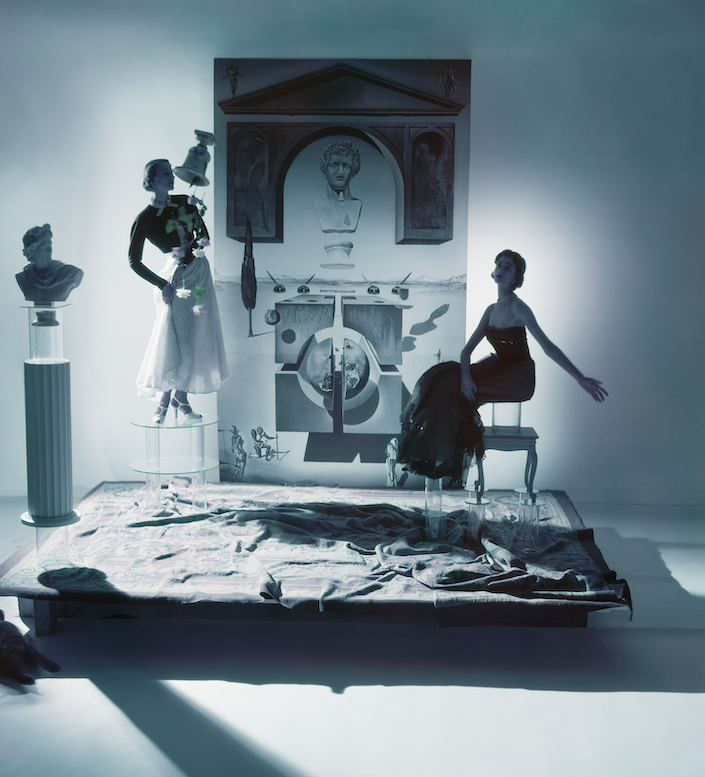
During the thirties, Surrealism moved beyond the strictly artistic sphere to project itself into fashion and commerce. Dalí understood this new arena as an ideal platform to disseminate his symbolic universe to the general public. His collaborations with Schiaparelli on haute couture designs, his contributions to Vogue and the surrealist window displays conceived for the New York department store Bonwit Teller demonstrate this desire to break down boundaries between disciplines.
Staging beauty
From an early age, Gala and Dalí were photographed by the most prestigious photographers of the 20th century, aware of the power of the image in the construction of myth. Faced with the lens of creators such as Man Ray, Brassaï, Cecil Beaton, Irving Penn and Philippe Halsman, the couple constructed a sophisticated and theatrical public image.
In this context, Horst's style reveals itself in all its uniqueness. Despite the appearance of naturalness, his studio portraits are conceived almost like sculptures: light, composition and gesture respond to meticulous planning. Rather than exploring the psychology of the model, Horst seeks to capture an idealized idea of beauty and elegance.
The relationship between Dalí, Gala and Horst —both personal and professional— extends over several decades. The collaborations, encounters and documents brought together in the exhibition allow us to reconstruct a fruitful dialogue between art, photography and fashion that contributed decisively to defining the visual aesthetics of their time and that, today, continues to challenge the contemporary gaze.

You may be
interested
...