News
Artist Albert Porta has died at the age of 79
Known as Zush (1968-2001) and later as Evru (2001-2025), he was one of the most unclassifiable creators on the Catalan artistic scene.
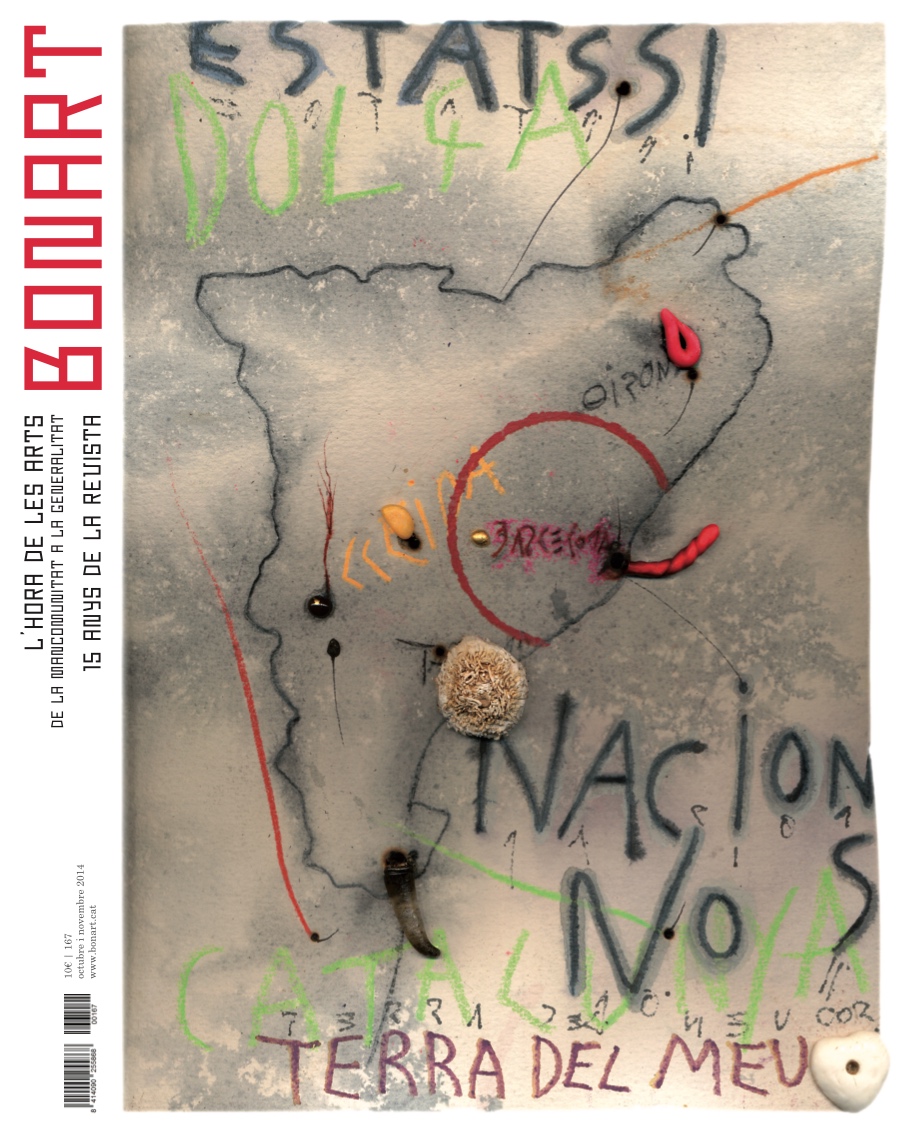
Self-taught, his work was based on British Pop and psychedelic and hallucinatory art, to which was added the magical and oneiric tradition of the group “Dau al Set”. He created his own language based on an inner cosmos of fantastic signs that explored the duality between the universe as a whole and the world as individuality. His personal mythology of an autobiographical nature was nourished by obsessive beings, strange, erotic and esoteric characters, as well as kabbalistic signs in precise and virtuoso compositions that seem to have emerged from a dream.
In 1962, he met the gallery owner René Metras, who encouraged him to develop and continue his creative career. He became involved with young artists in the city and shared his first studio with Jordi Galí and Sílvia Gubern, where they organized exhibitions in the garden with Ángel Jové and Antoni Llena, forming the group “Jardí del Maduixer”. He presented his work for the first time at “Presencias de nuestro tiempo” (1964); two years later, the exhibition “Galí, Fried, Porta” (1966) is considered one of the first local pop art exhibitions and finally in 1968 his first solo exhibition, “Alucinaciones” (Galeria René Metras), was held. That same year, Porta was arrested and, after spending thirteen days in the Model prison in Barcelona, he was hospitalized for three months in the Frenopàtic Hospital. There, one of the patients at the center called him Zush for the first time, a name that the artist adopted.
At the beginning of his career as Zush (1968-2001), one of the periods of highest creativity was that of Ibiza, between 1968 and 1983, in which he experimented with very diverse formats and techniques, such as fluorescent painting illuminated by black light. He stated: "I would say that in Ibiza, instead of being underground, you are in the clouds most of the time". He progressively created his own State, Evrugo Mental State , a territory of expressive freedom that he materialized through paintings, drawings, sculptures, photomontages, collages, books and digital art. He established his own code of communication (alphabet, anthem, flag, passport, currency) generating a unique relationship between his introspective state and external reality. Thanks to a scholarship from the Juan March Foundation, in 1975 he moved to New York, dividing his time between this city, Ibiza and Barcelona, where he currently resided. In 2001, Zush shed the personality with which he had operated throughout his thirty-three-year career and during the retrospective Zush.Tecura at the Museu d'Art Contemporani de Barcelona (MACBA) he became Evru. On his re-transformation he said: “Zush got a little carried away, especially when the Museu Nacional Reina Sofia and the MACBA in Barcelona dedicated a major retrospective to him. He was fat, chubby and only thought about getting rich. He had fallen into all the traps of the market and fame. Then I made him disappear to seek the territory of freedom”. If Zush defined himself as a “digital psychomanual” artist, Evru did so as an “artciemist”, that is, artist, scientist and mystic.
Evru, was one of the pioneers of digital art in Spain. He began applying this technology to his paintings in the 1980s as Zush, and used it at the end of that decade with seemingly conventional techniques. to creations made through computer image processing that were subjected to manipulations, alterations and decompositions of construction and deconstruction, thanks to advanced technology.
Zush's conviction that there is an artist within each of us and that art is therapy is evident in his own words: “We all have our nightmares and one way to heal is to get them out and make friends with them”; a phrase that brings him closer to Freudian theories. The work of art, then, serves to express unconscious desires repressed by the mind, in the same way that dreams give life to censored desires, or to substitutive deformations. “The artist's responsibility is to keep this healing magic alive.” Following this premise, his interactive application Tecura was born, which he started in 1999. With this program, Evru made his motto "Art to heal you" a reality, promoting the participation of groups of people with diverse abilities.
The overflowing, personal and singular discourse of Zush/Evru -very coherent throughout his career- is of such a resounding iconographic and mental richness and such an impactful psychological force that it recalls the process of psychic automatism of the surrealists. And the fact is that his universe is not simply limited to his plastic work, but is the result of an entire attitude to life. He turned his creation into a true extension of his mind. Imaginative esoteric figurations, delirious characters, beings metamorphosed in a paranoid reverie, calligraphic texts encrypted in a private code... are reborn in a psychic projection as a response to a vital need to express the ebullience of his existential experiences.
Significant exhibitions such as the Kassel Documenta (1977) or the Sâo Paulo Biennials (1967 and 1979), Sydney (1979) or Istanbul (2019) stand out and a long history with museums and centers: Guggenheim (New York, 1983), Pompidou (Paris, 1989), Center d'Art Santa Mònica (Barcelona, 1998), Museu Nacional Centro de Arte Reina (Madrid, 2000), Contemporary Art Museum (Barcelona, 2001), Sofía Today Art Museum (Beijing, 2007), MoMA Duo Lun (Shanghai, 2007) or Ibiza Contemporary Art Museum (2022). The Suñol Foundation exhibited an individual in 2024 with the title Porta}Zush. 1961-1979 which showed the genesis of his mythology and iconography, as well as the evolution of his career. The Suñol Collection has an extraordinary collection with more than 300 works, and reflects the great bond and admiration that Josep Suñol felt for the artist. He also formed part of the team of artists at the Senda Gallery and with Tornar a ser (Barcelona, 2020) he resumed his artistic activity after a few years of retirement due to health issues. He also received several awards and recognitions: National Engraving Award (1997), Laus Award (1999), City of Barcelona Award (2000) or ACCA Art Criticism Award (2003).
You may be
interested
...