interviews
Pau Gonzàlez Val: "We want to guarantee access to culture for everyone"
The president delegate of the culture area of the Barcelona Provincial Council highlights how culture can play a fundamental role in issues such as the climate emergency and on the Sixena conflict prioritizes the conservation of the works
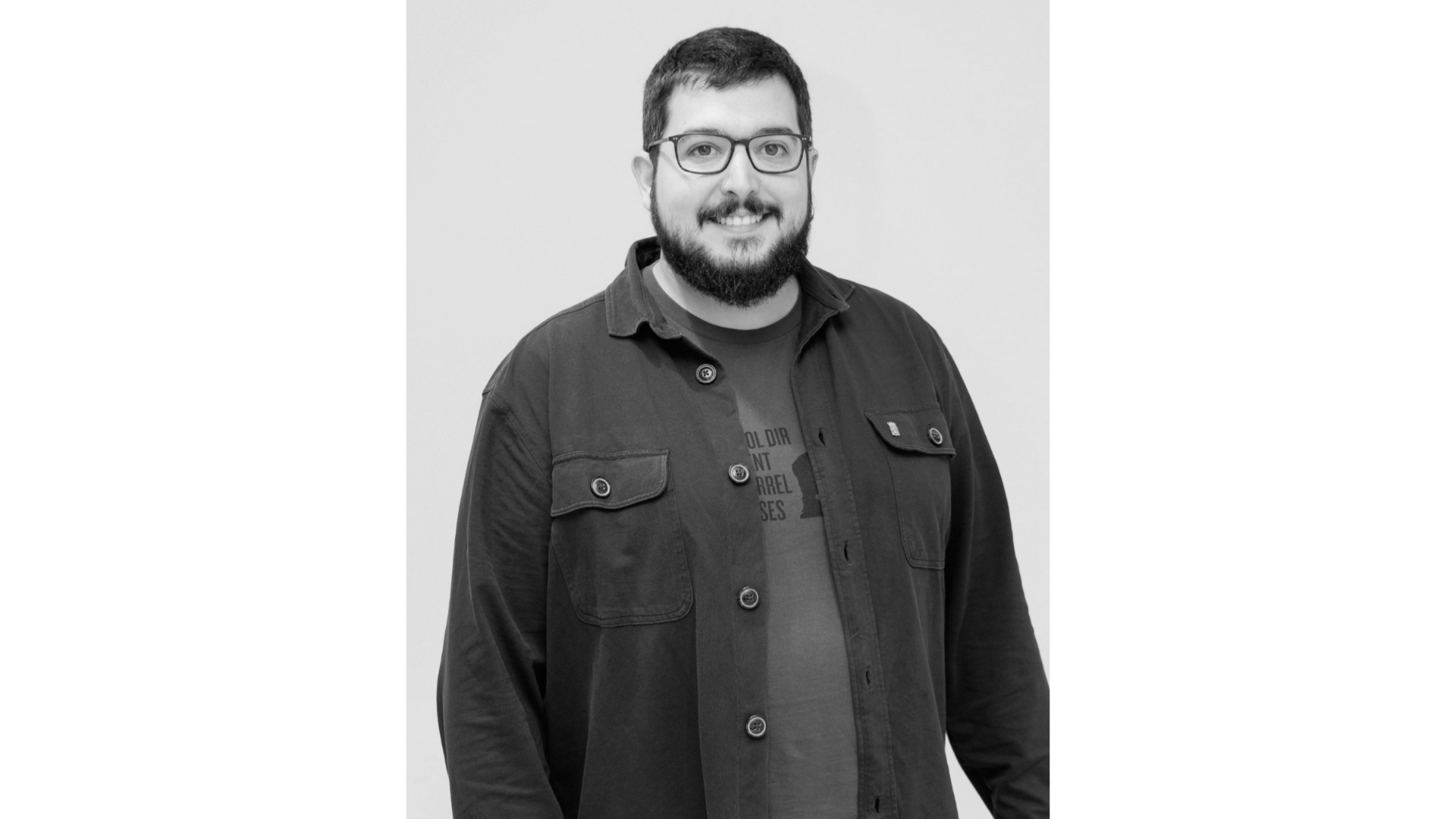
Delegate President of the Culture area of the Barcelona Provincial Council, he has a degree in Political Science and Administration from Pompeu Fabra University (2014) and is currently also a councilor of Barcelona en Comú in Barcelona. He is also delegate president of the Institut del Teatre, the Consortium of the Documentation Center and the Textile Museum of Terrassa and the Heritage Consortium of Sitges. As well as a member of the Xarxa Audiovisual Local, SL, the Consortium of the Center for Contemporary Culture of Barcelona (CCCB) and the Consortium of the Royal Shipyards and Maritime Museum of Barcelona.
Ricard Planas Camps. What are the main objectives proposed?
Pau Gonzàlez Val. A few months ago we developed a cultural rights plan that aims to guarantee access to culture for everyone. This is the point of view we apply: culture is a right that must be guaranteed by both institutions and society. We not only want to ensure access to culture, but we defend that we must go further: it is not only about having the right to enjoy it, but also the right to participate actively and express oneself through different artistic languages. This is the horizon we are considering, although we are aware that it is easier said than done.
RPC To do this we are lucky to have a powerful cultural fabric.
PGV Yes, we are lucky to have a very powerful cultural fabric and solid cultural communities. Our goal is to be another piece in a large mechanism that guarantees the right to culture and, to do so, from a model that we call well-understood decentralization.
RPC "New centralities"?
PGV Exactly. Well, new or not so new, because for many years many cities have been working with high added value proposals. What happens is that, historically, there has been a tendency to think that culture is created in the capital and then taken to the territory.
RPC Regarding more specific lines of work within the plastic and visual arts, what has been carried out?
PGV We have started from what the Provincial Council was already doing. It is often an institution that remains somewhat hidden, but in the cultural field it has been promoting structural policies for over a hundred years. A paradigmatic example is the libraries. We are an institution that allocates more than 10% of the budget to culture, few can say that. What we do is start from what we were already doing, such as traveling exhibitions, and we do this by interacting with large museums, local museums and smaller exhibition spaces throughout the territory.
RPC Is there any outstanding project you would like to highlight?
PGV I particularly like a project that we have started and that is related to the book buses, which bring reading closer to the smallest municipalities. In Catalonia there are fifteen book buses: thirteen from the Barcelona Provincial Council and two from the Generalitat for the rest of the country. In this framework, we have developed a nice project: one of the book buses stops at a juvenile justice center, generating an initial interaction with the young people who live there, who are citizens and, therefore, also have the right to access culture.
RPC And regarding the interactions between different areas of culture and the third sector, how do you perceive them?
PGV We want to work to expand and guarantee the right to culture, but we add a perspective that we consider key: the cultural perspective applied to the rest of the rights. In other words, culture can play a fundamental role in issues such as the climate emergency. This cultural perspective on the rest of the rights is a line of work that we have just begun. To give a concrete example: I recently signed an agreement with FESOCA, the Federation of Deaf People of Catalonia, with this logic that culture is a right for everyone. Whether you live in Eixample or Nou Barris, whether you have a high or low income, or some abilities or others, your right to enjoy, participate and express yourself through culture must be guaranteed.
RPC What are they working on in terms of education?
PGV The link between education and culture has always been one of my obsessions. In the past, from the City Council, there was more of a feeling of being there institutionally, but there was no clear line or real coordination between both areas. Now, on the other hand, we are in a very good moment. Barcelona City Council left a job that had been started and the Department of Culture and the Department of Education began working together in the previous legislature to strengthen this link. And not just in words, but by allocating personnel and financial resources. After all, making policies means putting people and money into activities and projects. One of the things that impressed me the most when I was the Councilor for Education in Barcelona was a study we did to find out which children were doing extracurricular activities and what type.
RPC And what were the results?
PGV In Nou Barris, many children were doing extracurricular activities, with sessions that could last up to eight hours a day. In contrast, in Eixample, the activities were theater, piano or dance. In addition, the average cost of an after-school program in Eixample was around 50 euros, while in Nou Barris they were free. This shows that a tool that could be, as we said before, an instrument of social transformation ends up becoming a reproducer of inequalities. Outside of school hours, instead of compensating, the same differences are perpetuated.
RPC In the Provincial Council there are centers like the CCCB that are developing a transformative and high-impact cultural policy. What is the framework for action, present and future, that you believe needs to be claimed or made more clearly evident through the different spaces in which the Provincial Council is present?
PGV The CCCB, the Institut del Teatre, the Museu Marítim and other large spaces that depend directly on the Barcelona Provincial Council, as well as institutions in which the Provincial Council participates, such as the Teatre Lliure or the Gran Teatre del Liceu, have a relevant role. For me, one of the main challenges is to break this logic of ultra-absorbent capital. After all, the Liceu is where it is, the Lliure too, and the main headquarters of the Institut del Teatre is where it is. But the DNA of the Provincial Council is that the culture that we promote, whether from the CCCB, the Institut del Teatre or any of these spaces, must have a return that reaches the entire territory where the Provincial Council of Barcelona has a presence.
RPC Give examples.
PGV Along these lines, we have now started a small project but with the idea that it can grow and go further, which is based on an existing initiative. We had a project called IT Teatre, at the Institut del Teatre, in collaboration with the Teatre Lliure, in which young postgraduates from the Institut del Teatre went for a week to do a play at the Teatre Lliure, an opportunity to try themselves in a professional environment after finishing their studies, within the ILFO framework.
At the same time, we had another project that consisted of taking works from the Teatre Lliure and paying for them to tour the territory, but these tours were only performances, without any other interaction.
Now we have merged these two projects and the young postgraduates, upon finishing their studies, do the entire tour through different municipalities, but adding a layer of mediation. When we arrive at each place, according to the needs and in collaboration with the local programmers —who know the territory better— we promote interaction between the company and local entities or facilities.
RPC On the Sixena case. What is your position?
PGV Personally, I think it is outrageous to put works of art at risk for disputes that go beyond their conservation. After all, there is a duty for everyone: to guarantee the survival of these works. I would open the door and invite Aragonese technicians to come and study how to preserve them while guaranteeing their conservation. We should prioritize what really matters: saving these works. If they are in good condition where they are now, changing them doesn't make much sense. It is a question that goes beyond the artistic or cultural.
RPC And, on the other hand, what do you think about the theme of the itinerant biennial MANIFESTA?
PGV Being able to open and popularize such an emblematic space as Les Xemeneies, or to highlight education in Barcelona, as the Gustau Gili headquarters did here, or so many other spaces, has been relevant. I have visited, I think, all the headquarters except Badalona, and I think it has been a success. However, I think we could have taken better advantage of the existing ecosystem and not have it be a UFO that lands here and manages pre-existing dynamics. In the case of Manifesta there is an added difficulty, it is very different to work in 12 or 13 cities than in just one and, in addition, it was the first time that this more metropolitan perspective was taken.
RPC There is often a misunderstood dichotomy between high culture and popular culture. High culture has often been labeled as an elitist culture. This even happens with top-level creators, from our country, who have sometimes been given little visibility. How do you see this dichotomy, or rather, this false dichotomy?
PGV Yes, there have been, at times, certain interests that have wanted to belittle popular culture or present the high culture that you mentioned as more elitist than it actually is. In any case, for me, it is a false dichotomy, as you mentioned. Our commitment, and also from the Cultural Rights Plan, is to set up mediation processes that guarantee that this high culture —which is increasingly difficult to access— is more accessible. What is missing here is precisely a mediation process, and to do things like —and we are trying to see if we can pull this off— distributing museum reserve funds, as was done in Barcelona, to some schools and educational centers.
RPC Should society appropriate art?
PGV Next year, as part of the exhibitions we are doing on tour and taking advantage of the anniversary of the MACBA, we will do it there. We will do it with this view that says that contemporary art belongs to everyone, that it is for everyone, and that everyone has the possibility of appropriating it, of criticizing it, of understanding it. You will understand it in one way, I in another, but in any case this is precisely the process that art seeks: to generate dialogues that may not make us agree, but that stir us all inside.


You may be
interested
...