Exhibitions
On the other side of the myth
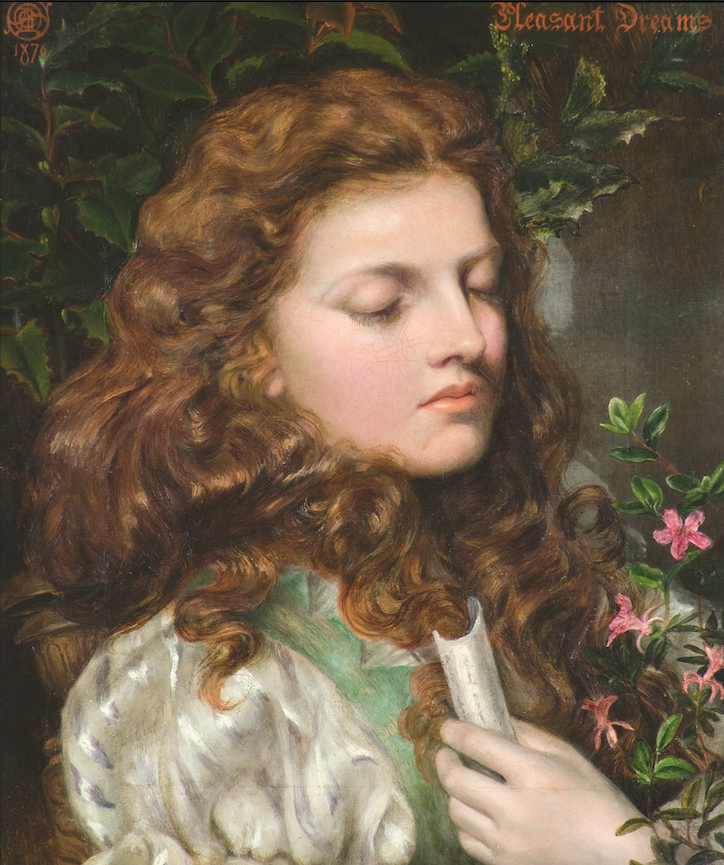
The most well-known names of the Pre-Raphaelite Brotherhood—Dante Gabriel Rossetti, William Morris, Edward Burne-Jones, John Everett Millais, and William Holman Hunt—have, for generations, constructed a narrative associated with painting, literature, medieval aesthetics, and a break with the academic conventions of Victorian England. But beneath this seemingly complete story existed another, less visible and far more complex: that of the women who participated in that world, reinterpreted it, and, at times, had to carve their own path within it from the margins.
The exhibition Pre-Raphaelitism: Female Itineraries (1850-1914) , presented by the Mapfre Foundation in Madrid from September 24 to January 10, proposes precisely to shift the focus of that gaze. Curated by Pamela Gerrish Nunn, the exhibition does not simply aim to incorporate female names into an already established narrative, but rather to revise that narrative itself from a social history perspective. More than forty female artists thus allow us to reconstruct an artistic landscape in which women's experience was neither secondary nor homogeneous, but rather shaped by diverse possibilities, limitations, and strategies.
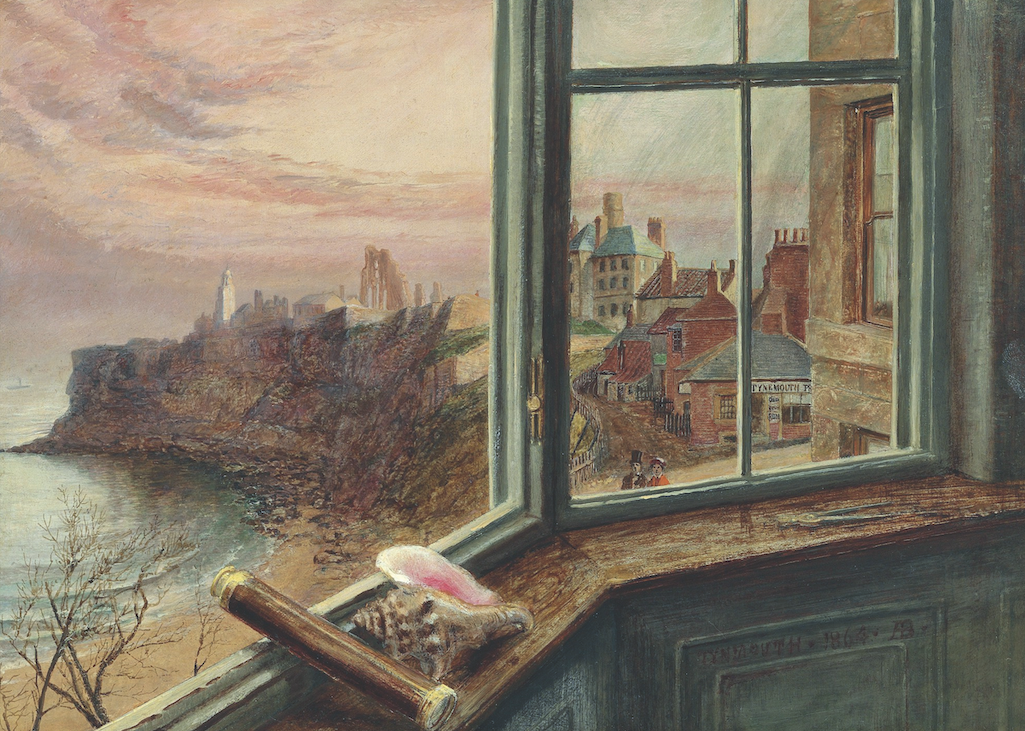
Alice Boyd, View from the Window of Balcony House, 1864 Oil on panel, Private Collection, courtesy of Christie's.
Pre-Raphaelitism was born in Great Britain in 1848, when seven young aspiring artists decided to form the Pre-Raphaelite Brotherhood. Their gesture embodied a desire for a break with tradition: in contrast to the academicism championed by the Royal Academy, they sought a source of renewal in art before Raphael. This look to the past was not, however, simply nostalgia. It involved a desire to recover a visual intensity, an attention to detail, and a different relationship between art and life.
The reaction was immediate. The movement generated controversy, finding both detractors and supporters, and, over the decades, it transformed in step with Victorian society. John Ruskin became one of its main proponents, and the Pre-Raphaelite aesthetic ended up extending far beyond painting. Its influence reached literature, design, the decorative arts, and a particular conception of beauty that would ultimately permeate much of late 19th-century British culture.
But this expansion also had a downside. While male names became part of the canon, many of the women associated with the movement remained in obscurity for a long time. This is not simply a matter of historical neglect. The social conditions of the time determined what they could study, where they could work, what themes they could explore, and to what extent they could build an independent artistic career.
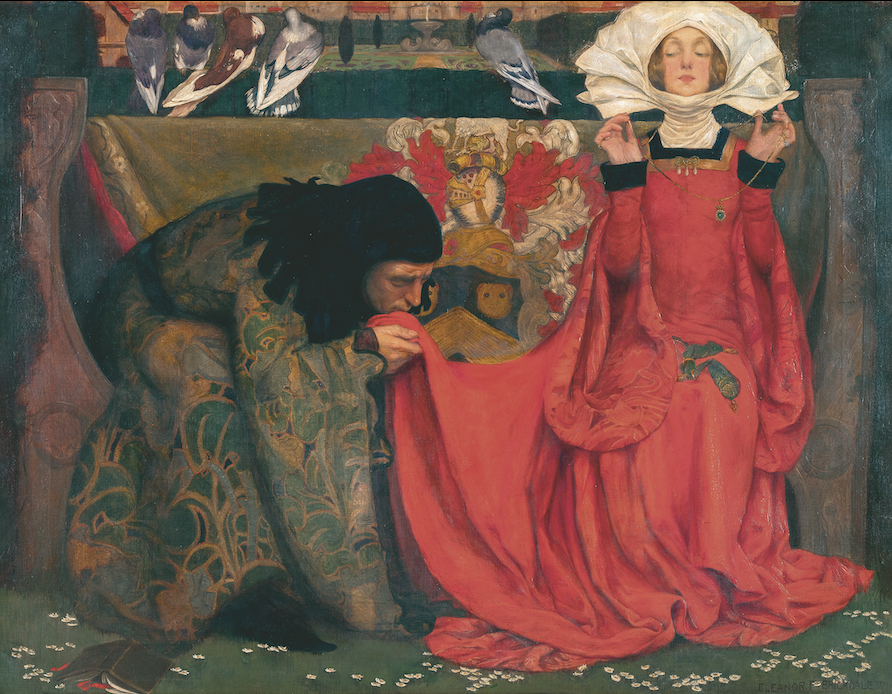
Eleanor Fortescue-Brickdale, The Pale Countenance of True Love, 1899, Musée d'Orsay, Paris. Gift of the Meyer Louis-Dreyfus Fund for the Development of Collections of Foreign Artists through the Société des Amis des Musées d'Orsay et de l'Orangerie, 2022, RF MO P 2023 10 © Musée d'Orsay, Dist. GrandPalaisRmn / Sophie Crépy.
The Mapfre Foundation exhibition transforms these difficulties into an essential part of its interpretation. Elizabeth Siddal, Joanna Boyce, Julia Margaret Cameron, May Morris, Marie Spartali Stillman, Evelyn De Morgan, and Eleanor Fortescue-Brickdale appear not as peripheral figures surrounding the great names of the Pre-Raphaelites, but as creators capable of establishing their own relationships with its aesthetic principles.
And therein lies one of the exhibition's main points of interest. There is no single female Pre-Raphaelite movement. Each artist found a different entry point. Some participated directly in the intellectual and artistic circles associated with the movement; others adopted certain visual techniques; still others transformed its codes, making them resonate with their own concerns. Influence, therefore, cannot be measured solely by formal similarity. It is also found in what each artist chose to modify, reject, or take in a different direction.
The result is a less linear story, and precisely for that reason, a truer one. Pre-Raphaelitism ceases to appear as a perfectly defined aesthetic doctrine and becomes instead a field of tensions. A territory where tradition and modernity, desire and representation, nature and artifice, the feminine ideal and feminine experience coexist.
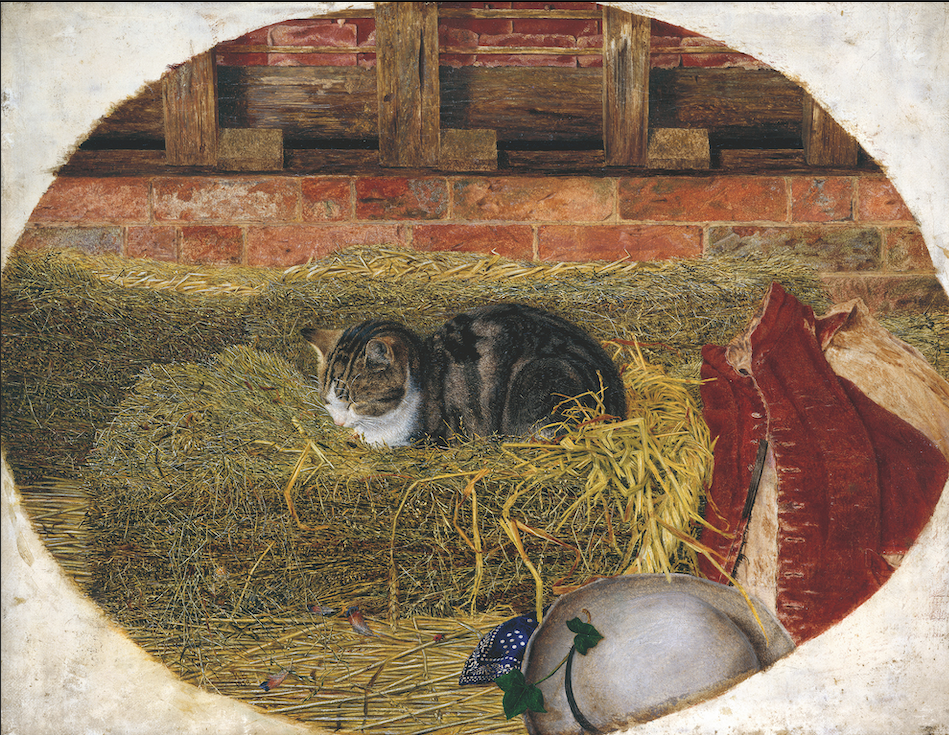
Rosa Brett, The Hayloft, 1858, Private Collection.
The way we look at images also changes. The Pre-Raphaelite woman, so often transformed into an idealized figure—ethereal, melancholic, sensual, suspended in an imaginary time—can now be observed from the other side of the mirror. Who constructed that image? Who looked at it? Who could become an artist and who was confined to being a model, muse, or character?
The female artists featured in the exhibition compel us to ask these questions. Their works introduce fissures into an iconography that for a long time seemed immutable. Where the canon had placed bodies to be contemplated, they also left behind gazes, decisions, and voices.
The feminist reassessment that began in earnest in the 1980s was fundamental in rescuing these trajectories. Art historiography then began to question not only who had been recognized, but also who had been left out and why. The Madrid exhibition follows this line of reassessment, but goes a step further by exploring the diverse paths taken by women associated with the Pre-Raphaelites.

You may be
interested
...