
Exhibitions
What does it mean to be American? Art revisits a contested identity
To coincide with the 250th anniversary of the founding of the United States, the Princeton University Art Museum presents " What is an American?": Artists Reflect , an exhibition that transforms a seemingly simple question into a starting point for exploring the multiple identities, conflicts, and contradictions that have shaped the nation's history. The exhibition, on view until November 8, 2026, brings together prints, drawings, and photographs created over the past century by more than twenty artists.
The title comes from a large-format work by Native American artist Jaune Quick-to-See Smith, whose question—"What is an American?"—serves as the exhibition's guiding thread. From this starting point, the museum proposes to examine how the idea of 'Americanness' has been constructed and how the rights, privileges, and belongings associated with it have been imposed, questioned, and redefined since the nation's founding.
The works collected here show that there is no single way to understand American identity. On the contrary, the concept is interwoven with racial, cultural, political, social, and sexual issues, as well as with the experiences of communities that have had to fight for decades to obtain basic rights and protections.
The exhibition pays particular attention to practices of protest, resistance, and civic engagement. Some of the works use recognizable symbols of American culture—such as the flag, historical events, or figures who have become national icons—while others explore how American identity intertwines with different cultural backgrounds and experiences.
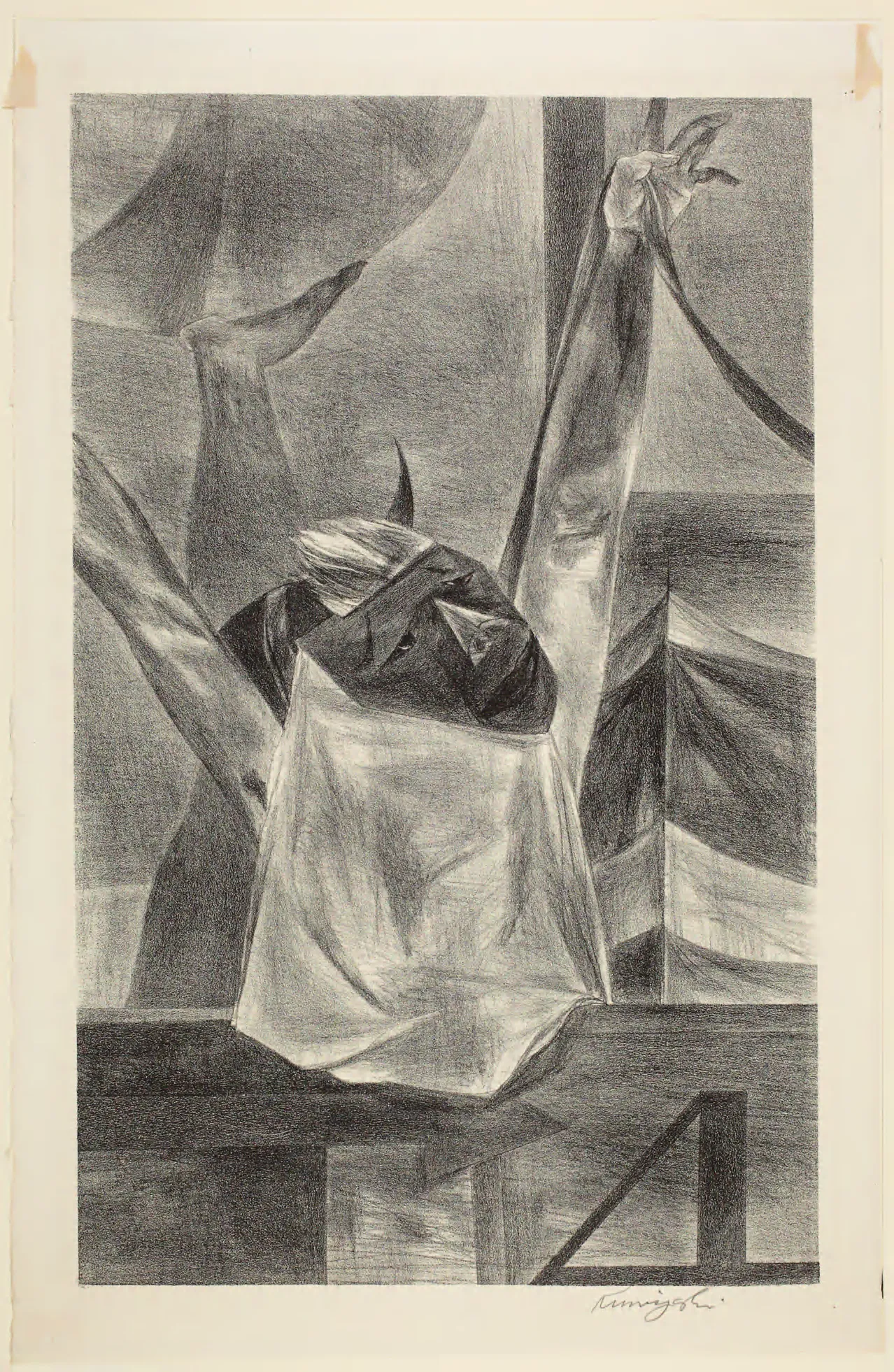
Yasuo Kuniyoshi, Carnival, 1949. Princeton University Art Museum. Gift of Walter M. Langsdorf. Photo: Virginia Pifko.
Among the examples is a drawing by Kemar Keanu Wynter, constructed from stories and recipes passed down by his Jamaican-born mother. Also featured is a photograph by Frank Espada documenting the integration of a child from the Puerto Rican diaspora into the Pennsylvania education system. These works highlight how the American experience can be constructed from multiple places of origin and belonging.
The exhibition also addresses episodes of exclusion and discrimination. One of David Wojnarowicz's pieces reflects his experience as a gay man during the worst years of the HIV/AIDS epidemic, in a context where the government and the media contributed to stigmatizing those affected. Meanwhile, a photograph by Minor White shows a San Francisco establishment in Chinatown shortly before the public celebration of the Lunar New Year, an initiative designed to combat the anti-Chinese sentiment that had intensified during the early years of the Cold War.
History is also revisited through figures who were once considered enemies of the nation but later came to occupy a prominent place in the American imagination. The portraits of Harriet Tubman, John Brown, and Angela Davis by Elizabeth Catlett, John Steuart Curry, and Wadsworth Jarrell, respectively, reclaim figures linked to the struggles against slavery, oppression, and the prison system. Their depictions show how what one era might consider "un-American" can, over time, become a symbol of struggle and freedom.
The personal histories of some of the artists included in the exhibition reinforce this tension. Hugo Gellert, Yasuo Kuniyoshi, and Joseph Hirsch were imprisoned, blacklisted, or persecuted by the U.S. government because of their political activism or their immigrant backgrounds. Their trajectories reveal the extent to which national boundaries have also been used as instruments of control.
One of the highlights of the exhibition consists of six prints from the Kent Bicentennial Portfolio , a project commissioned by the Lorillard tobacco company in 1976 during the American bicentennial celebrations. Later distributed among museums and institutions across the country, the works were intended to answer a seemingly open question: "What does independence mean to me?"
The company's commission sought to project an image of patriotism and generosity, but the artists' responses introduced nuances, tensions, and critiques that went beyond that initial purpose. Jacob Lawrence, for example, addressed the experience of African Americans who left the South during the Great Migration of the 1920s to escape violence and racial discrimination.
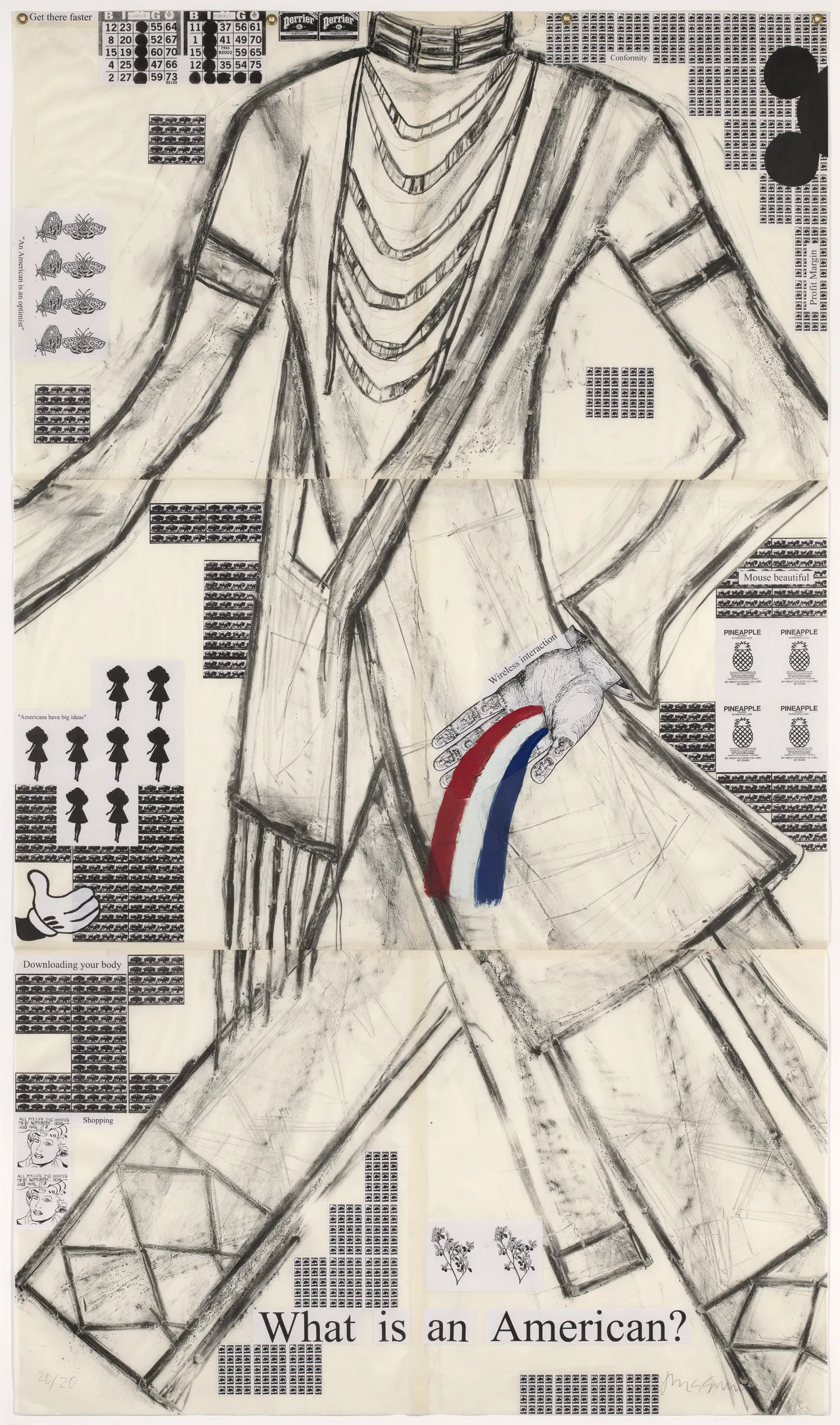
Jaune Quick-to-See Smith, What is an American?, 2003. Princeton University Art Museum. Promised gift of Dr. Ferris Olin. © Jaune Quick-to-See Smith. Photo: Joseph Hu.
Marisol dedicated her work to the suffragists and abolitionists Elizabeth Cady Stanton and Lucretia Mott, linking independence with the struggle for women's rights. Fritz Scholder, in *Bicentennial Indian* , focused on the demands of the Native American movement, while Colleen Browning recalled the gains achieved through the struggles of the labor movement in *Union Mixer *.
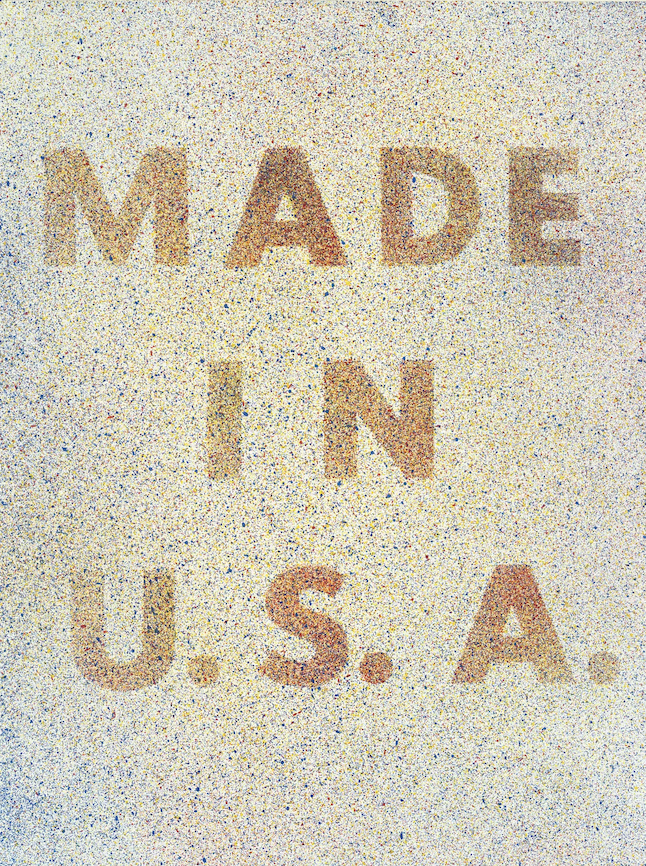
Ambiguity reaches one of its most interesting points in Ed Ruscha's *America, Her Best Product *. The book initially appears to be a celebration of the country, but by removing the phrase "Made in USA" from its usual context, it leaves open the question of what it truly means for the United States to be "its best product." In the context of Lorillard's patronage, the irony takes on an additional dimension: tobacco was one of the country's first major cash crops and was closely linked to the history of slavery.
Thus, “What is an American?”: Artists Reflect does not offer a definitive definition of American identity. Rather, it presents a series of possible answers and, above all, shows who has historically had the power to define what it means to belong to the nation.


You may be
interested
...