Exhibitions
Armando Villegas, the art of mestizaje as a language
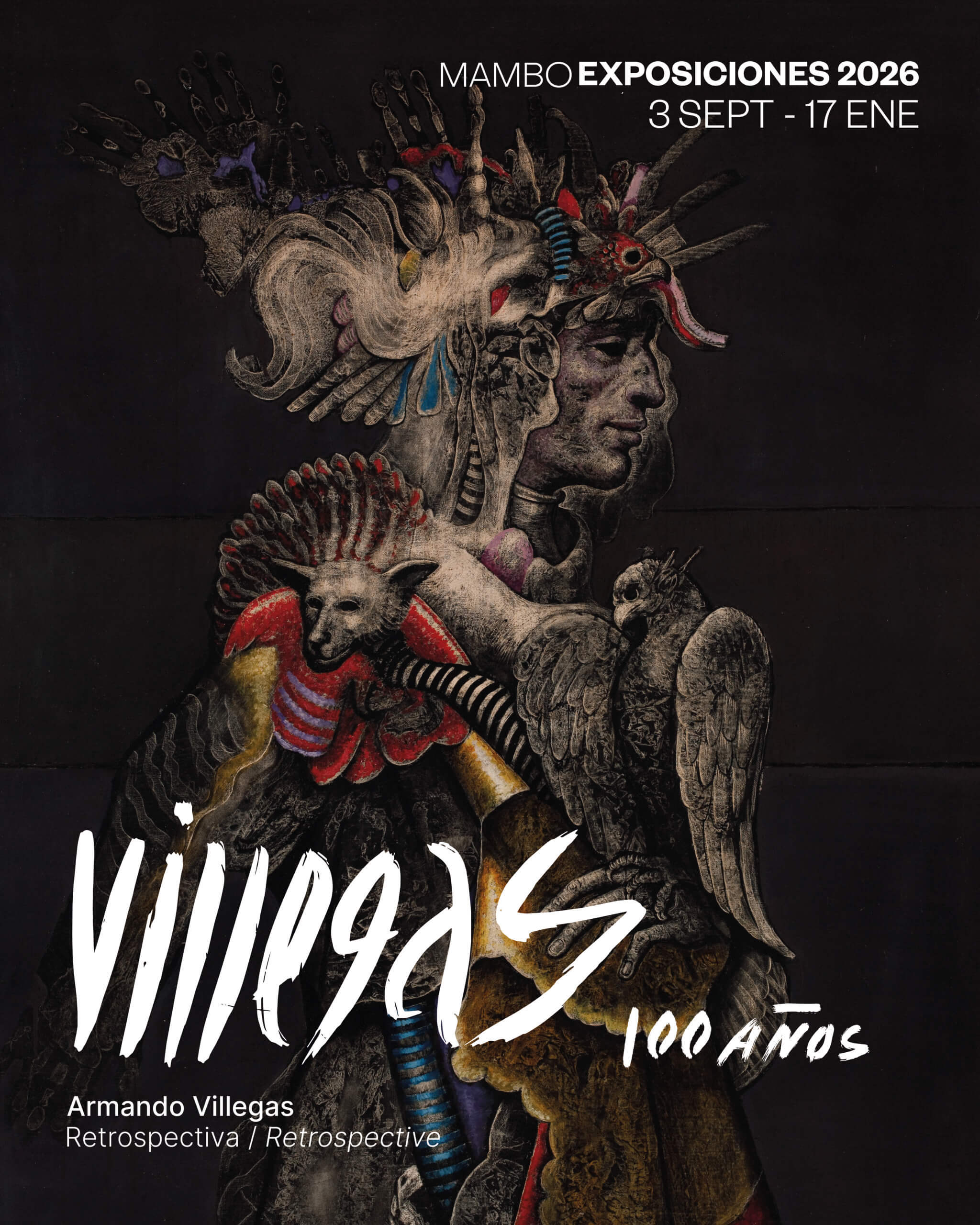
Armando Villegas occupies a unique place in the history of modern art in Colombia. His work, difficult to categorize within a single movement, ranged from abstraction and figuration to geometry and fantasy, Western tradition and pre-Hispanic imagery. On the centenary of his birth, a major retrospective celebrates the breadth of a career spanning more than six decades and offers a new interpretation of one of the key artists for understanding the consolidation of Colombian artistic modernity.
The exhibition, curated by Valentina Gutiérrez Turbay in collaboration with the Armando Villegas Foundation, brings together more than 150 works created between the 1950s and 2013. The exhibition allows visitors to observe the different stages of a constantly evolving body of work that culminated in over one hundred solo exhibitions. The show can be visited until January 17, 2027, in the Carlos Rojas Room on the third floor and the Marta Traba Room on the first floor of the museum.
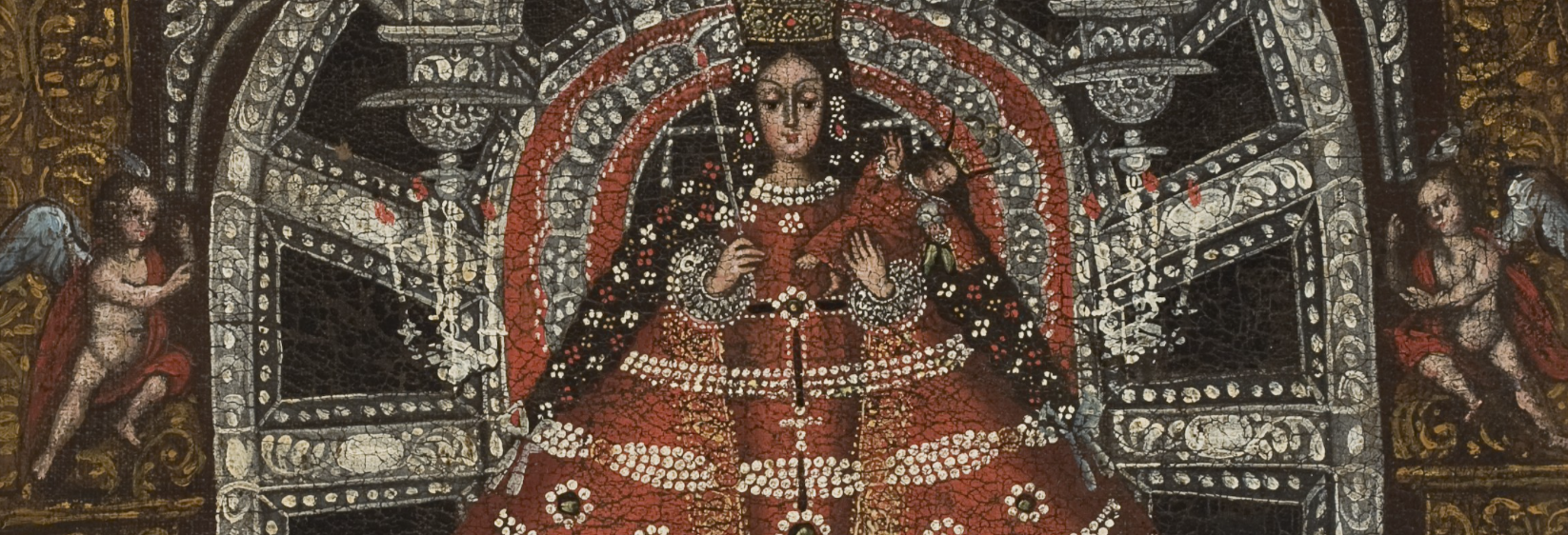
Born in Pomabamba, in the Peruvian Andes, in 1926, Villegas grew up in an environment steeped in colonial painting and a family tradition linked to crafts. This early immersion in art, craft, and material culture would ultimately prove decisive in his understanding of creation. In 1951, he moved to Bogotá on a scholarship to study mural painting at the National University of Colombia. His arrival coincided with a time of profound transformations in the country's art scene.
Three years later, he presented his first solo exhibition in Colombia. The show attracted the attention of critics and also of a young Gabriel García Márquez, who perceived from the beginning the potential of that painting. "I have the satisfying impression of witnessing the beginning of an astonishing pictorial work," wrote the future Nobel Laureate in Literature at the time.
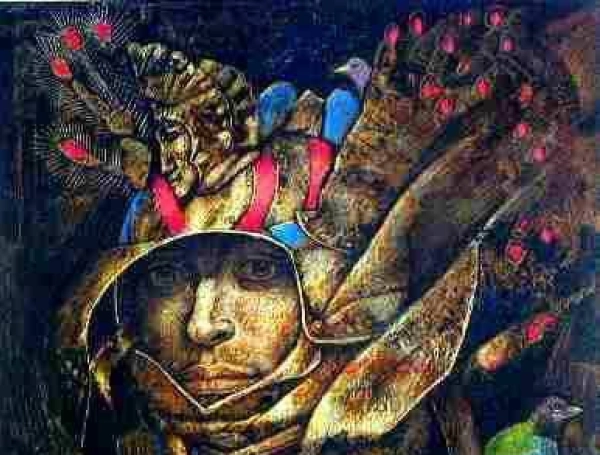
From that moment on, Villegas developed a career marked by constant experimentation. During the 1950s, he explored geometric abstraction, later incorporating figurative elements and constructing a universe populated by warriors, virgins, fantastical creatures, and references to pre-Hispanic cultures. His painting evolved toward a distinctive fantastic realism in which hybrid figures and ancestral symbols acquired increasing prominence.
But reducing his work to a specific iconography would mean overlooking one of its most interesting aspects. The exhibition, in particular, proposes a revision of the traditional interpretation that Villegas "painted mestizaje" through his characters and motifs. The curatorial approach argues that mestizaje is something much deeper in his work: not just a theme, but a genuine way of constructing his art.
In his paintings, collages, and assemblages, languages from seemingly disparate traditions coexist. Academic technique meets craftsmanship; the history of Western art engages with the geometric patterns of the Inca tocapu; abstraction relates to the figure, and pre-Hispanic references appear alongside formal solutions linked to Cubism. Villegas does not necessarily intend to fuse these elements to the point of indistinguishability, but rather to maintain their differences and establish new relationships between them.
This coexistence of worlds transforms hybridity into a formal and methodological matter. Her work functions as a meeting place where different traditions, materials, and systems of representation can coexist without completely losing their identity. It is precisely in this tension that much of the singularity of her approach resides.
His artistic exploration was accompanied by an intense dedication to teaching. For nearly fifty years, Villegas served as a professor at various universities in Bogotá. He was the Director of Visual Arts at the National University of Colombia and participated in the founding of the Fine Arts program at the University of the Andes. From the classroom, he contributed to the training of several generations of artists and played a prominent role in the renewal of art education in Colombia.
His cultural career was officially recognized in 1993, when the Colombian government, during the presidency of César Gaviria, granted him Colombian nationality in recognition of his contributions to the art and culture of the country and his extensive pedagogical work.
The retrospective, featuring over 150 pieces, traces this ongoing transformation. From his early abstract explorations to compositions populated by warriors, fantastical figures, and ancestral references, the exhibition reveals an artist willing to shift his style without abandoning his unique identity.
This desire to escape categorization also explains the enduring relevance of his work. "What cannot be allowed is pigeonholing," Villegas stated, a declaration that encapsulates much of his creative approach. In contrast to an art history that has frequently attempted to organize his work under specific labels, his oeuvre seems to demand precisely the opposite: to be understood through multiplicity.

You may be
interested
...