Exhibitions
Minia Biabiany listens to the memories of the ocean at the MUAC
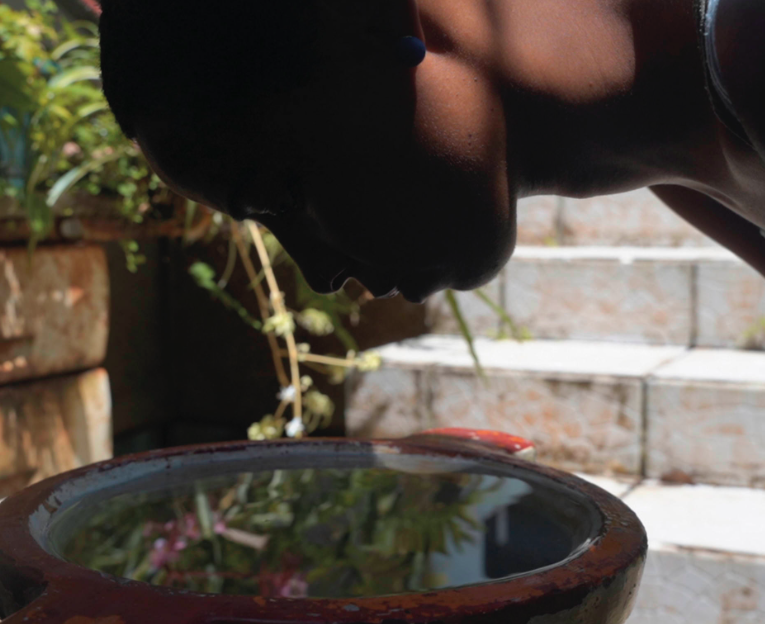
Water holds stories. It preserves traces of displacement, ways of life, violence, and knowledge that spans generations. From this perspective, Guadeloupean artist Minia Biabiany presents Our Listenings at the University Museum of Contemporary Art (MUAC) in Mexico City, an exhibition that explores the persistent traces of colonialism in the Caribbean and reclaims the ocean as a living, sensitive, and shared archive.
The exhibition, curated by Virginia Roy Luzarraga, will be on display in room 3 of the MUAC from September 5, 2026 to February 14, 2027. The project also represents a step towards collective creation within Biabiany's practice, bringing together family members, educators, a scientist, a permaculture specialist and an eight-year-old girl to investigate, from different perspectives, the daily and emotional relationship with water in Guadalupe.
The starting point is a territory deeply marked by colonial history and the consequences of pollution caused by the use of chlordecone in banana plantations between the 1970s and 1990s. The pesticide left a mark that continues to affect the territory and its inhabitants, making water an issue that transcends the ecological dimension to acquire a political, social and emotional dimension.
In Our Listenings , the sea does not appear as a border separating territories, but as a space of exchange and connection. Human and non-human experiences, memories and displacements, converge in its waters, as do different forms of knowledge. Biabiany thus proposes a perspective in which bodies, landscapes, and species form part of the same network of relationships.
The audiovisual installation occupies the center of the exhibition and is accompanied by six sculptures of sperm whales made from burnt wood. These large cetaceans are among the species present in the waters of Guadeloupe, although they have little presence in the local collective imagination. Their inclusion introduces an animal dimension that broadens the reflection on memory and communication beyond human limitations.
The echolocation of sperm whales is one of the project's fundamental points of reference. Using their sound waves and forms of communication, Biabiany develops a practice based on deep listening, also engaging with the texts of writer Alexis Pauline Gumbs. Sound thus becomes a way to approach that which remains hidden, silenced, or relegated to the margins of history.
Listening takes on a political dimension. Faced with the silences inherited from slavery and the structures of exploitation linked to colonialism and extractive capitalism, the artist proposes paying attention to the voices and signs that remain in the territory. The ocean appears as a witness that preserves the marks of domination and, at the same time, the ancestral knowledge, rituals, and ways of relating to the environment that have survived.
Water pollution thus acquires a historical dimension. The waters of Guadalupe speak not only of environmental degradation, but also of the economic and colonial structures that made it possible. The landscape is presented as a space where the consequences of the past continue to affect the present and where ecological memory is inextricably linked to political memory.
But the exhibition doesn't just point out the wounds of the land. Its collective dimension also proposes recovering other ways of relating to the environment. Shared listening is presented as a practice of presence and as a tool for establishing connections between generations, knowledge, and species.
Through images, sounds, sculptures, and stories linked to the ocean, Biabiany invites us to see the sea as a sensitive territory. A space that remembers, transmits, and preserves what official narratives have not always known or wanted to hear.
In Our Listenings , the ocean takes center stage. Its sounds and silences allow us to consider the history of Guadalupe from a perspective where nature, memory, and colonialism appear deeply intertwined. Water ceases to be merely an element of the landscape, revealing the stories it holds and the relationships it maintains among those who inhabit it.
You may be
interested
...