Exhibitions
Carlos Amorales imagines a paradise under the shadow of artificial intelligence
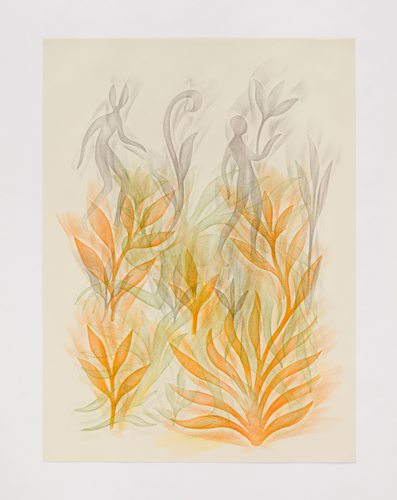
Imagination can be both a gateway to salvation and the stage for our own anxieties. It is in this ambiguous territory that Anteparaíso , the new exhibition by Carlos Amorales at the kurimanzutto gallery in Mexico City, is situated. The exhibition will be on view from November 5 to December 16, 2026. Through a collection of drawings and animations, the Mexican artist proposes a universe of imaginary characters whose relationships and movements articulate a visual narrative open to multiple interpretations.
With a career marked by multidisciplinary experimentation, Amorales has developed a unique language that blends analog and digital processes. Drawing, animation, installation, and graphic research are some of the tools he uses to construct fictional worlds that serve as spaces for reflection on the transformations of contemporary society. His works delve into power structures, cultural tensions, and the mechanisms that determine our relationship with technology, questioning the boundaries between human creativity and artificial production systems.
The exhibition's title alludes to the poetry collection Anteparaíso (1982) by Chilean writer Raúl Zurita, a work that evokes a place situated before paradise, a condition preceding the promise of fulfillment. This literary reference serves as a starting point for a proposal that moves between fascination and uncertainty. Amorales takes artificial intelligence as one of its main axes of reflection and examines the imagery that has been constructed around it: from the expectation of a liberating future to the most unsettling and apocalyptic visions that accompany its development.
The characters inhabiting this setting are not merely figures in a visual fiction, but elements of a narrative that allows us to address the contradictions of our present. Their interactions, unfolded through graphic and animated sequences, configure a space where technology appears simultaneously as both promise and threat. Instead of offering definitive answers, the artist poses a range of questions about what we are willing to delegate to machines and about the cultural, social, and symbolic consequences of this transformation.
You may be
interested
...